6 to 12 months baby food chart PDF
Download a free printable chart with 101 first foods, simple meal ideas, and a checklist for tracking what your baby tries from 6 months through 12 months.
Download Free PDFWhat is in the chart?
Starting solids gets easier when you can stop asking, "What should I offer next?" This baby food chart gives you a practical list of first foods for 6, 7, 8, 9, 10, 11, and 12 month olds, with enough variety to keep meals moving without turning every bite into a research project.
Use it as a fridge-friendly tracker, then open the Tummi food database when you need serving ideas, allergen notes, prep guidance, or food safety details for a specific ingredient.
The PDF includes
- 101 first foods organized by category
- Breakfast, lunch, dinner, and snack ideas
- Allergen-aware foods to track carefully
- Iron-rich and texture-friendly ideas
- A printable checklist for your fridge
How to use a baby food chart from 6 to 12 months
Age is a helpful guide, but readiness, texture, and supervision matter more than checking off a food by a certain date. Use the chart to plan ideas, then adjust for your baby and ask your pediatrician about medical or allergy concerns.
6 months
Start with soft, simple foods
Use the chart to pick easy first tastes like avocado, banana, sweet potato, yogurt, oatmeal, egg, and soft-cooked vegetables. Focus on texture, readiness, and one calm meal at a time.
7 to 8 months
Build variety and repeat exposures
Add more iron-rich foods, fruits, vegetables, grains, legumes, dairy, and common allergens your clinician says are appropriate. The checklist helps you see what your baby has already tried.
9 to 12 months
Use meals to practice real skills
Move toward more family foods with safe textures, soft finger foods, and simple combinations. Keep logging reactions, favorites, refusals, and foods you want to offer again.
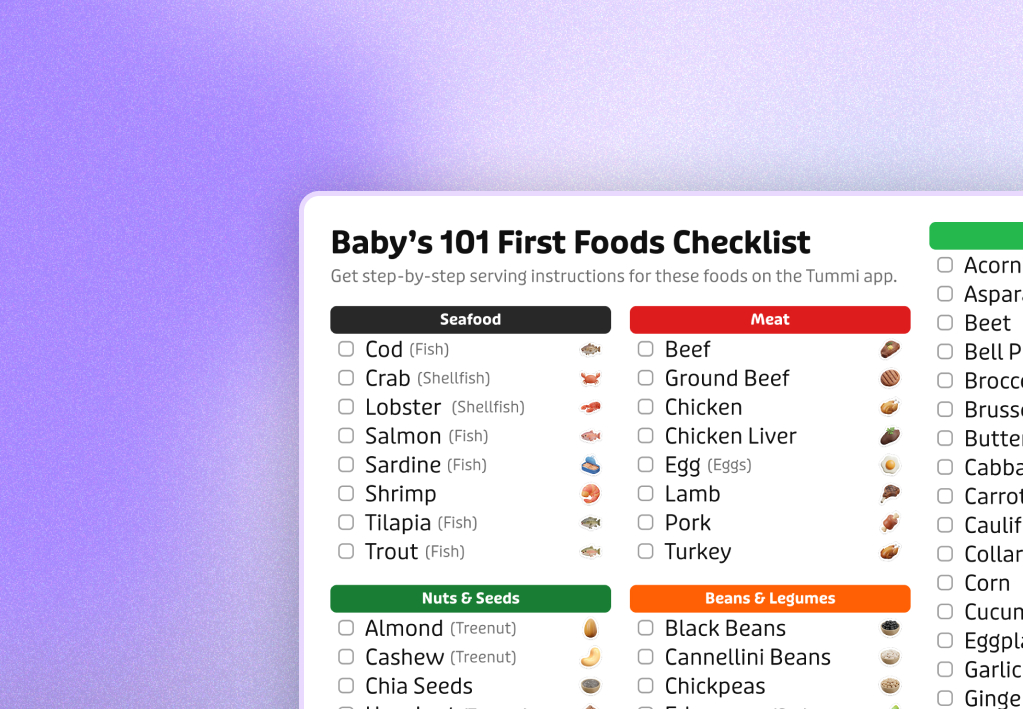
101 foods, one simple chart
From 6 month old food ideas to meals for 10 month olds, the chart groups fruits, veggies, grains, proteins, dairy, and more so you can find the next food quickly. Print it out and stick it on your fridge.

Track every food as you go
Use the checklist to mark off each food your baby tries. Whether you are working through breakfast ideas for your 8 month old or recipes for your 9 month old, track allergens, log reactions, and see what is left to explore.
Go further with the app
Track foods, log allergens, and keep age-aware prep notes from the same 400+ food library in one place.
Frequently asked questions
The chart covers 101 first foods organized by category — fruits, vegetables, grains, proteins, and more — with age-appropriate serving suggestions from 6 to 12 months.
Yes, the baby food chart PDF is completely free to download. No account or subscription required.
Absolutely! The chart is designed to be printed and stuck on your fridge or kept handy in the kitchen for quick reference during meal prep.
The chart uses foods from the same Tummi food library. Use it for planning, then open an individual guide for prep, texture, allergen, and supporting source details. It does not replace your child's clinician.
No, the chart works completely on its own. If you do have the Tummi app, it's a great companion for tracking which foods your baby has tried and logging any reactions.
At 6 months, babies can start with single-ingredient purees and soft foods like mashed avocado, sweet potato, banana, and iron-fortified cereals. The chart includes over 30 foods suitable for 6 month olds, with serving tips and portion guidance for how much solids a 6 month old should eat each day.
A 7 month old can eat most soft fruits, cooked vegetables, and simple grains. At this stage you can start combining flavors and introducing thicker textures. The chart helps you find new food ideas and shows what a 7 month old should be eating at each meal.
By 8 to 10 months, babies are ready for more variety. Great meal ideas include soft pasta with vegetables, scrambled eggs, shredded chicken, and toast strips with nut butter. The chart covers breakfast, lunch, and dinner ideas for 8, 9, and 10 month olds with safe serving sizes.
At 11 to 12 months, most babies can eat a wide range of family foods cut into small pieces. Popular food ideas include mini pancakes, soft fruit, cheese cubes, rice and beans, and fish. The chart covers 12 month old food ideas that help transition to toddler eating.
Most 6 month olds start with 1–2 small meals of solids per day alongside breast milk or formula. By 7 months, you can increase to 2–3 meals. The chart includes a simple 6 month old feeding schedule to help you plan meals without overcomplicating things.
Most pediatricians recommend waiting until 6 months to start solids, though some babies may show readiness signs around 4–5 months. If your pediatrician gives the go-ahead, the chart notes which foods are safest to start with for younger babies.
Plan the next bite with Tummi
The printable chart is a starting point. Tummi helps you look up each food, see how to serve it safely, track allergens and reactions, and keep your baby's food history in one place.