What Is the BLISS Feeding Method? Baby-Led Introduction to SolidS, Explained
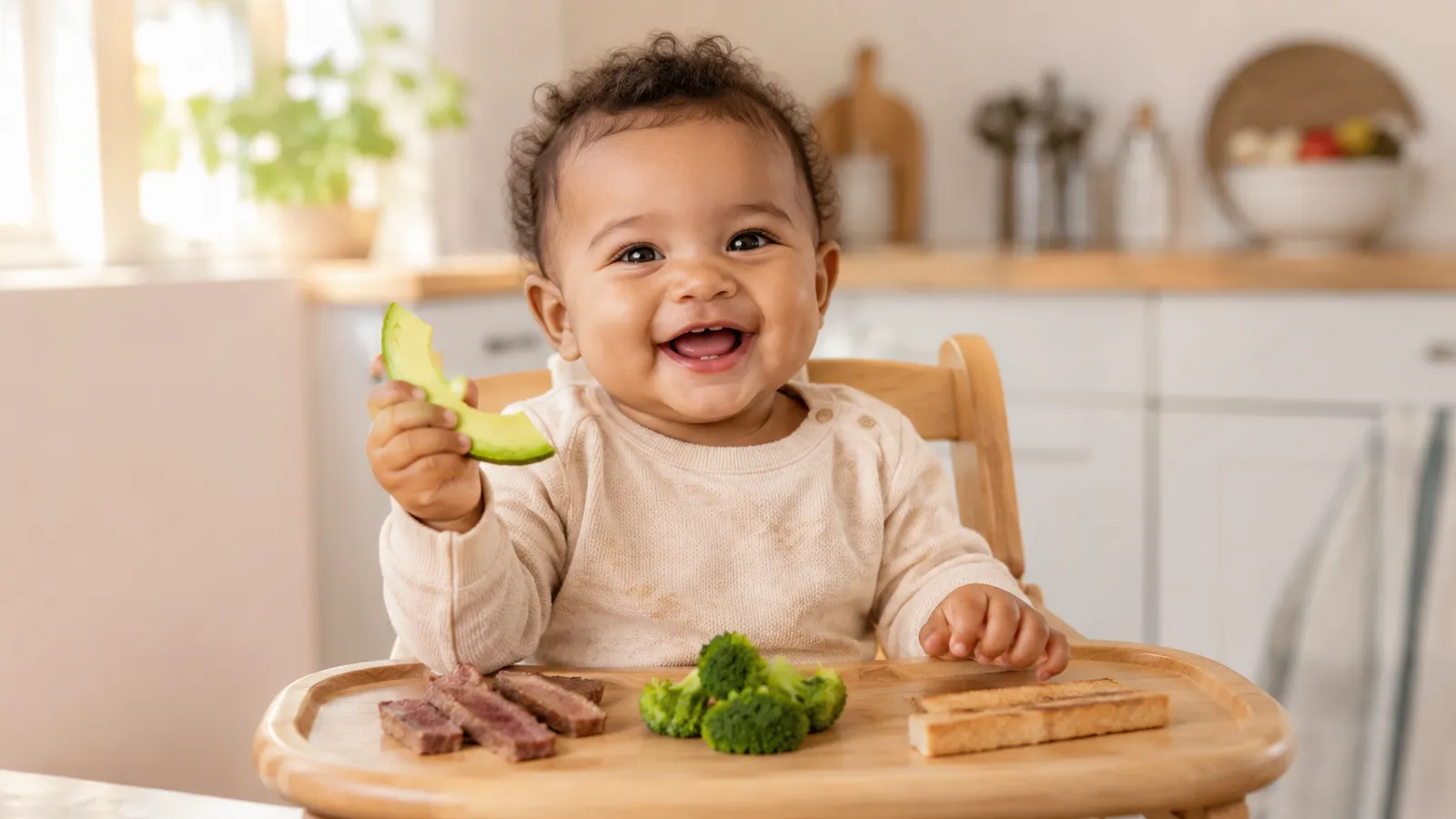
You finally hit the six-month mark, dusted off the high chair, and started Googling "best way to start solids." Within ten minutes you have hit baby-led weaning, purées, the "spoon vs. spear" debate, and now this mystery acronym: BLISS.
Spoiler: it is not just a vibey rebrand of baby-led weaning. Bliss is not just bliss.
BLISS stands for Baby-Led Introduction to SolidS. It was developed by researchers at the University of Otago in New Zealand as a modified, evidence-backed version of baby-led weaning designed to fix the three things pediatricians worry about most: iron, energy intake, and choking.
Here is what it actually means, how it differs from standard BLW, and how to do it without losing your mind (or your kitchen).
The Quick Answer (For the Skim Readers)
BLISS is baby-led weaning with three extra rules at every meal:
- Offer one iron-rich food (think red meat, iron-fortified cereal, lentils, eggs).
- Offer one high-energy food (think avocado, nut butter spread thin on toast, full-fat dairy).
- Avoid high-choking-risk foods and serve everything in baby-safe sizes and textures.

That is the whole framework. The point is to keep the freedom of BLW (baby self-feeds, family meals, no special purée-only menu) while closing the three nutrition and safety gaps researchers flagged in plain BLW.
Where BLISS Came From
Baby-led weaning blew up in the early 2000s thanks to UK midwife Gill Rapley. Babies skipped purées entirely, picked up soft finger foods from day one, and largely fed themselves. Parents loved it. Pediatricians, less so.
The clinical concerns were specific: would self-feeding babies get enough iron (a big deal between 6 and 12 months when stores from birth start running out)? Would they get enough calories to grow? And would they choke more often than spoon-fed babies?
In 2015, a team at the University of Otago led by Dr. Anne-Louise Heath and Dr. Sonya Cameron set out to answer those questions with an actual randomized controlled trial. They tweaked BLW into a more structured version, BLISS, and tested it against standard infant feeding in 200 New Zealand families followed from before birth through age two. The pilot work that preceded it specifically targeted the iron, energy, and choking concerns.
How BLISS Differs From Plain BLW
If BLW is "let the baby drive," BLISS is "let the baby drive, but with a few non-negotiable side dishes on the tray."
The vibe is the same: your baby sits at the table, eats roughly what you eat (in safe shapes), and decides how much. The differences live in three guardrails.
Plain BLW says: offer soft finger foods, let your baby explore.
BLISS says: offer soft finger foods, and make sure one of them is iron-rich, one is energy-dense, and none of them are high-choking-risk.
That is genuinely the whole delta. Same philosophy, more specific instructions.
The Three BLISS Rules, In Detail
Rule 1: Iron at every meal
Iron stores babies are born with start running low around 6 months, right when you are starting solids. The BLISS iron-intake trial found that when parents were specifically coached to offer iron-rich food at every meal, BLISS babies hit iron intakes comparable to spoon-fed babies. Without that coaching, plain BLW kids tended to fall short.
Iron-rich finger foods that work:
- Soft strips of well-cooked beef, lamb, or chicken thigh
- Iron-fortified baby cereal spread on toast soldiers
- Cooked lentils or beans mashed onto toast
- Eggs, scrambled or cut into strips of frittata
- Liver (yes, really; tiny amounts are an iron jackpot)
Rule 2: An energy-dense food at every meal
Babies have small stomachs and big calorie needs. Pile on the low-energy vegetables and they fill up before they have eaten enough to grow.
Energy-dense finger foods:
- Avocado strips
- Full-fat plain yogurt to dip a soft finger food into
- Cheese sticks (after 8-9 months and once they have a pincer grasp for smaller pieces)
- Nut or seed butter, thinly spread on toast
- Banana cut into long quarters

Rule 3: Avoid high-choking-risk foods (and shape everything for safety)
This is the rule plain BLW often hand-waves over, and the one BLISS makes explicit. Avoid:
- Whole nuts, popcorn, hard raw vegetables (carrot sticks, apple chunks), whole grapes, cherries with pits
- Hard candy, large globs of nut butter, marshmallows, hot dogs in coin shapes
- Anything you can't squash between your thumb and forefinger
The BLISS rule of thumb for shape: food should be soft enough to squash between your fingers, OR long and fibrous enough that a piece does not break off when sucked. The size should be roughly as long as your baby's fist, with one dimension big enough for them to grip and bite from.
Is Your Baby Ready for BLISS?
BLISS starts when your baby starts solids, which is around 6 months. But the calendar is the easy part. The real readiness signals are:
- Sits up with little or no support
- Has lost the tongue-thrust reflex (food does not get auto-pushed back out)
- Reaches for food and brings it to their mouth
- Shows curiosity at meal times
If your baby checks all four, they are ready. If not, give it another week or two and watch for the green lights.
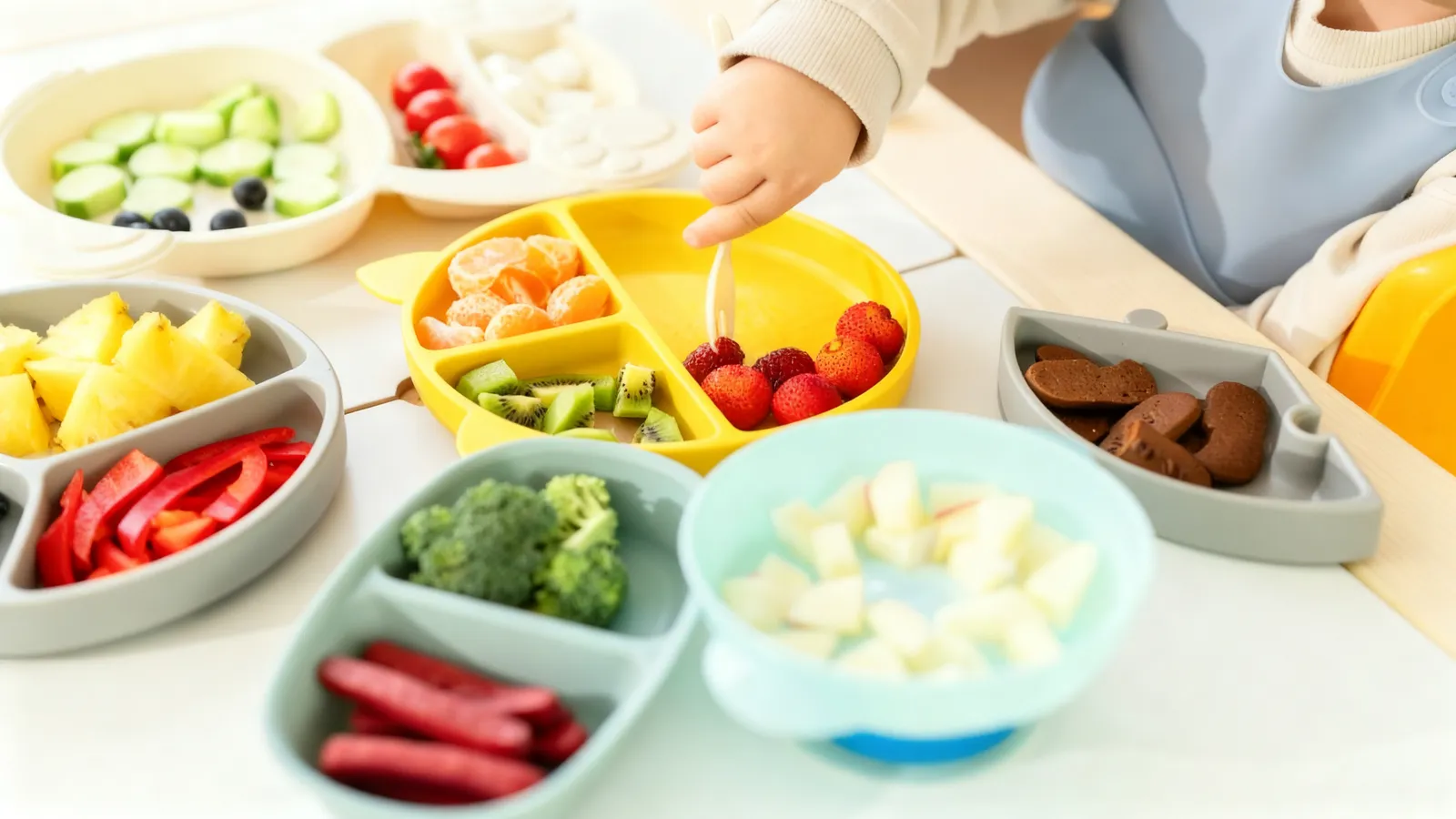
When and How to Start Solid Foods
Are you not sure when to start solids? Learn readiness signs around 6 months, best first foods, gagging vs choking, and safe allergen introduction—step by step.
The Research-Backed Benefits
BLISS was studied harder than almost any other complementary feeding approach. The actual data:
- No difference in choking rates compared with spoon-fed babies, as long as parents followed the choking-avoidance rules.
- Iron intake on par with spoon-fed babies when the iron-at-every-meal rule was followed.
- Less food fussiness later in toddlerhood compared with traditionally-fed peers.
- Better self-regulation of how much to eat (babies stop when full, rather than being spoon-fed past the cue).
- Easier family meals because everyone is eating roughly the same thing.
The catch: those benefits only show up when parents actually follow the three rules. BLISS without the iron-rich foods is just BLW that may or may not meet iron needs.
Allergens and BLISS
BLISS works neatly with the current AAP guidance to introduce common allergens (peanut, egg, dairy, fish) early and often, starting around 6 months, to reduce the risk of food allergies. Spread thin nut butter on toast soldiers, scramble in egg, mix Greek yogurt into oatmeal. Introduce one new allergen at a time so you can spot a reaction.
How to Introduce Allergens Safely And With Confidence
From introducing peanuts to babies to spotting reactions quickly to helping build tolerance early, here’s the 101 on food allergy prevention in babies.
How Tummi Helps With BLISS
The hardest part of BLISS for most parents is not the cooking, it is keeping mental track of: did she actually get iron today? When did we last try fish? Was that small rash from the strawberries or the new yogurt?
That is exactly what we built Tummi for. Log each food, mark allergens, track reactions, and check at a glance whether you have hit your iron and energy targets across the week.
Track every bite with confidence
Log first foods, allergens, and reactions so you never miss a sensitivity — and always know what's next.
The Takeaway
BLISS is baby-led weaning with the dial tightened: same self-feeding philosophy, plus three rules from researchers (iron at every meal, energy at every meal, no choking-risk foods) that fix the three things pediatricians worry about. It is not a different system, it is BLW with the bugs patched out.
Start when your baby shows readiness signs around 6 months, build each meal around an iron source and an energy source, keep the shapes safe, and let your baby drive. Then log it in Tummi so you can stop worrying and actually enjoy the avocado-on-the-forehead phase.
Find the perfect first food
Browse 400+ pediatrician-backed foods with prep guides and age-appropriate textures — all in one place.
Last updated