When Can Babies Have Juice? An Age-by-Age Guide (AAP-Backed)
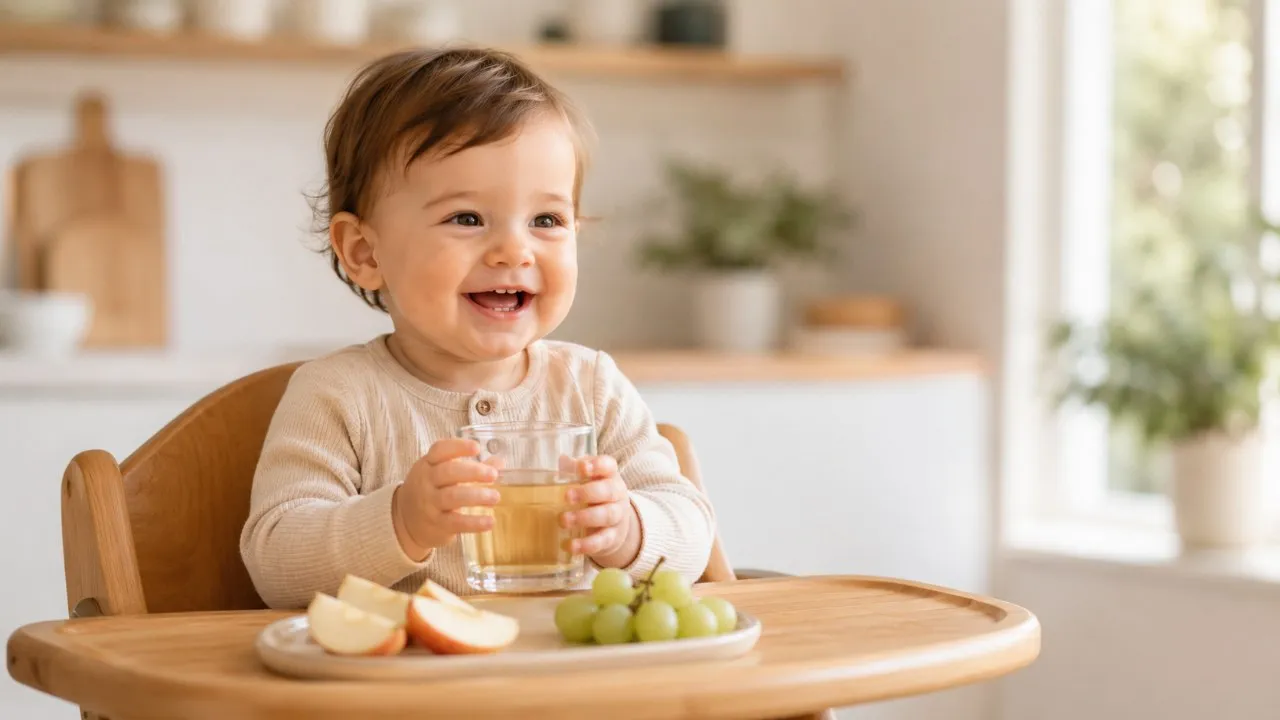
That little carton of "100% apple juice" with a smiling cartoon on it looks harmless enough. So when your baby reaches for your glass at brunch, you might wonder, "is a sip of juice really such a big deal?"
Short answer: yes, kind of.
The American Academy of Pediatrics (AAP) says no fruit juice at all before your baby's first birthday, and even then, juice is more of a "sometimes treat" than a daily drink. The CDC backs the same guidance, and most pediatricians will tell you the same thing.
But the "why" is the part most parents don't get a clear answer on. So let's break it all down: when juice is okay, when it isn't, what to do if your baby is constipated, and how to introduce it without setting up a lifetime of sugar cravings.
The Quick Answer (For the Skim Readers)
If you're standing in the kitchen with a sippy cup in one hand and your phone in the other, here's the bottom line:
- 0 to 12 months: No juice. Not even diluted. Not even a sip.
- 12 to 24 months: Up to 4 oz per day of 100% fruit juice, ideally diluted with water, served in an open cup with meals.
- 2 to 3 years: Up to 4 oz per day.
- 4 to 6 years: 4 to 6 oz per day.
- 7+ years: Up to 8 oz per day.
For everyone under 18, whole fruit beats juice every single time.
Find the perfect first food
Browse 400+ foods with prep guides, allergen notes, and age-appropriate textures — all in one place.
Why Pediatricians Say No Juice Before 1 Year
We know, we know. Juice is fruit, fruit is healthy, ergo juice is healthy, right?
Not quite. Here's what happens when fruit becomes juice:
Fiber gets stripped out. Whole fruit comes with fiber that slows down how fast sugar hits your baby's bloodstream. Juice is basically the sugar without the brake pedal.
Sugar shoots way up. A single 4 oz cup of apple juice has about 13 grams of sugar, roughly the same as a small soda. That's a lot for a tiny human.
It displaces better stuff. A bottle of juice fills up your baby's stomach with empty calories, which means less room for breast milk, formula, or actual food. For babies under 12 months, breast milk or formula should be the main drink. Full stop.
Tooth decay is real. Juice in a sippy cup throughout the day bathes those new baby teeth in sugar. Pediatric dentists consistently flag this as one of the top causes of early childhood cavities.
It can cause diarrhea. Babies' digestive systems aren't built for that much fructose at once. The result is usually loose stools, gas, and a very unhappy diaper.
So when your well-meaning aunt says "a little juice never hurt anyone," you can politely remind her that the AAP literally changed its recommendation in 2017 because it was hurting kids.
Age-by-Age: What to Actually Do
Birth to 6 Months
Breast milk or formula only. No juice. No water. No anything else.
Your baby's kidneys, gut, and immune system are still figuring out the basics. Anything beyond breast milk or formula at this stage isn't just unnecessary, it can actually be harmful.
If your 3 month old is fussy or constipated and a relative suggests "a little apple juice will fix that," please don't. Call your pediatrician instead.
6 to 12 Months
Still no juice as a regular drink. We know this is the age where everyone starts asking about it, but the answer is the same.
This is the window when solid foods get introduced and water can be offered in tiny amounts (about 4 to 8 oz per day) with meals. But juice stays off the menu.
The one exception is constipation, and even then, only under your pediatrician's guidance. We'll cover that below.
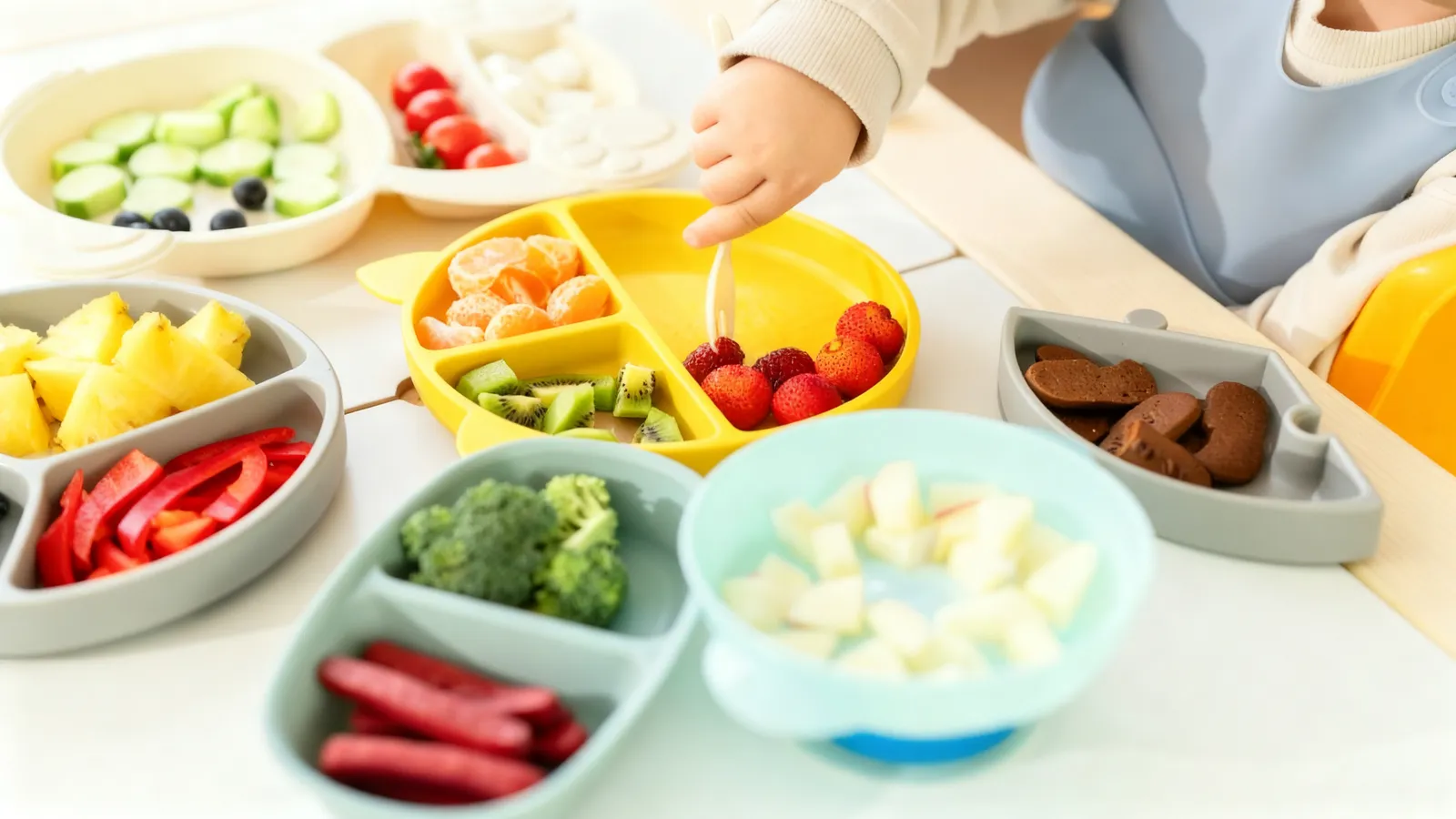
When and How to Start Solid Foods
Are you not sure when to start solids? Learn readiness signs around 6 months, best first foods, gagging vs choking, and safe allergen introduction—step by step.
12 to 24 Months
Welcome to the "you can have a little juice now" club. Sort of.
Once your baby hits their first birthday, you can offer up to 4 oz of 100% fruit juice per day. A few rules of thumb:
- Always dilute it. A 1-to-1 ratio with water is a good starting point. Half juice, half water.
- Serve it in an open cup or straw cup. Skip the bottle and the constant-sippy-cup setup. The goal is "juice with breakfast," not "juice on tap all day."
- Pair it with food. Juice with a meal hits the bloodstream slower than juice on an empty stomach.
- Pick 100% fruit juice. No "juice cocktail," no "juice drink," no added sugars. Read the label.
2 to 3 Years
Same 4 oz cap. Whole fruit is still the better choice, but a small daily cup of juice with breakfast is fine if you want it to be.
4 to 6 Years and Up
The AAP allows 4 to 6 oz per day for ages 4 to 6, and up to 8 oz per day for 7 and up. But again, "allows" doesn't mean "encourages." A glass of water plus a piece of actual fruit will pretty much always win this matchup.
"But My Baby Is Constipated. Can I Give Juice?"
This is the one question that comes up over and over, and the honest answer is "sometimes, yes, with rules."
For babies between 1 and 12 months who are dealing with constipation, your pediatrician may suggest a small amount of 100% prune, pear, or apple juice (about 2 to 4 oz per day) for short-term relief. The sorbitol in these juices helps pull water into the gut and gets things moving.
Important ground rules:
- Call your pediatrician first. Constipation in babies can be a sign of other things, and "more juice" isn't always the right answer.
- It's a short-term fix, not a daily habit. Once things are moving again, juice goes back off the menu.
- Use 100% juice only. Skip the "kid juice" pouches with added sugar.
If your baby is constipated and it's becoming a pattern, the better long-term plays are usually more fiber (pears, prunes, oats), more water with meals, and movement (tummy time, supported sitting, gentle leg "bicycle" motions).
How to Introduce Juice Safely (After 12 Months)
Okay, your baby is past their first birthday and you've decided to offer juice. Here's how to do it without setting up a lifetime of "I only drink things if they're sweet."
Step 1: Start with 100% fruit juice, diluted
Half juice, half water is a great starting ratio. Many parents stay at this dilution forever, which is completely fine. Your toddler doesn't know the difference, and the habits you build now stick.
Step 2: Use an open cup or straw cup
Bottles and traditional sippy cups encourage all-day sipping, which is the actual problem with juice (it's not just the juice itself, it's the constant exposure). An open cup or straw cup at meals keeps juice as a "with food" thing, not an "all day" thing.
Step 3: Pair it with a meal
Juice with breakfast or lunch is way better than juice mid-afternoon between meals. Food slows down sugar absorption and protects teeth.
Step 4: Cap it at 4 oz per day
The AAP limit is 4 oz total daily for ages 1 to 3. That's half a juice box. It feels small because it is small, and that's the point.
Pro tip: If your toddler asks for more, offer water or whole fruit instead. They'll usually take it. Tiny humans don't have strong "juice or nothing" opinions yet, so this is the easiest age to set the pattern.
Step 5: Log it in Tummi
Tracking when you introduce juice (and how your baby responds) makes it way easier to spot patterns later. Some kids tolerate it just fine. Others get loose stools, diaper rash, or "wired" behavior from the sugar. You won't know which camp your kid is in without a log.
Track every bite with confidence
Log first foods, allergens, and reactions so you never miss a sensitivity — and always know what's next.
What to Skip Entirely (Even After Age 1)
Just because your kid can have juice doesn't mean every drink in the juice aisle is fair game. Here's the "no thanks" list:
- Juice cocktails, juice drinks, or "from concentrate" blends with added sugar. Read the label. If it says anything other than "100% juice," put it back.
- Unpasteurized juice or cider. Raw juice can carry bacteria like E. coli that babies and toddlers can't handle. The FDA explicitly warns against it for kids under 5.
- Sports drinks, sweetened teas, flavored milks, and sodas. These aren't juice, but they often get lumped into the same "kid drink" category in a grocery cart. They shouldn't.
- Pedialyte (unless your pediatrician says so). It's an electrolyte solution, not a daily drink. Save it for actual sick days.
Better Alternatives to Juice
When your toddler is thirsty, here's the lineup in order of "this is great" to "okay sometimes":
- Water. Always the answer. Boring but true.
- Whole milk (after age 1, up to about 16 oz per day).
- Whole fruit. Fiber, vitamins, satisfying chew. A real win.
- Diluted 100% juice with a meal, capped at 4 oz.
That's the entire list. Anything else is dessert in a cup.
Quick FAQ
Can my 6 month old have juice? No. Babies under 12 months should not drink any juice, even diluted. If your baby is constipated, ask your pediatrician about a small amount of prune or pear juice as a short-term treatment.
Can my 7 month old have a sip of apple juice? Same answer. No juice before 12 months. A "sip" doesn't sound like much, but it sets up the taste preference and offers zero nutritional benefit.
What about Gerber baby juice? The baby food aisle can be confusing, but no, even juice marketed for babies is not recommended before 12 months. The AAP and CDC apply the same rule across the board.
When can I give my baby diluted juice? After the first birthday. Even then, dilution (half juice, half water) is still the safer move and helps cut down on sugar.
What's the 3-6-9 rule for babies? This usually refers to sleep, not feeding. For juice specifically, the rule is simpler: no juice before 12 months, then up to 4 oz per day from 12 to 36 months, ideally diluted.
Can juice help with constipation in babies? Sometimes, under pediatrician guidance. Small amounts of 100% prune, pear, or apple juice (2 to 4 oz) can help babies between 1 and 12 months. It's a short-term tool, not a daily drink.
Is fresh-pressed juice okay? Only if it's pasteurized. Skip raw, unpasteurized juices for any child under 5.
The Takeaway
Juice isn't evil. It's just a lot more sugar (and a lot less nutrition) than it looks like on the label. The "no juice before 1, then keep it small and diluted" rule isn't your pediatrician being uptight, it's based on decades of data on baby teeth, baby bellies, and lifelong taste preferences.
So skip the juice before your baby's first birthday. After that, a small splash with breakfast is fine. And when in doubt, water plus a piece of real fruit will always be the better call.
Want help keeping track of when your baby tried what (and how it went)? That's literally what Tummi was built for.
Track every bite with confidence
Log first foods, allergens, and reactions so you never miss a sensitivity — and always know what's next.
Last updated
Baby Feeding Tips, Straight to Your Inbox
Feeding tips, easy recipes, and a little reassurance. Delivered to your inbox.