6 Months Baby Food Chart
A simple chart for babies who are just starting solids at around six months. Use it to pick first foods, build one or two calm meals a day, and track what your baby has tried.
Sample day for a 6-month-old
Breast milk or formula is still the main source of nutrition at six months. Solids are practice. Offer milk first, then food, until your baby is clearly asking for more solids.
- 7:00 AMMilkBreast milk or formula on waking.
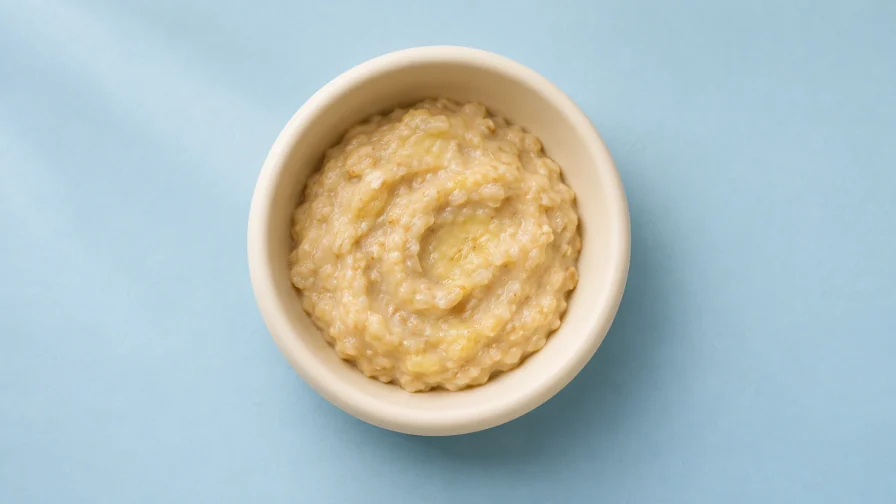
- 9:30 AMFirst solidsA few spoonfuls of iron-fortified oatmeal thinned with breast milk or formula, or soft mashed avocado on a pre-loaded spoon.
- 12:00 PMMilkBreast milk or formula.
- 3:00 PMNap-side milkBreast milk or formula before or after nap.
- 5:30 PMSecond solidsA finger-length strip of soft roasted sweet potato, with a side of smooth yogurt or iron-rich lentil puree.
- 7:30 PMBedtime milkBreast milk or formula.
Readiness
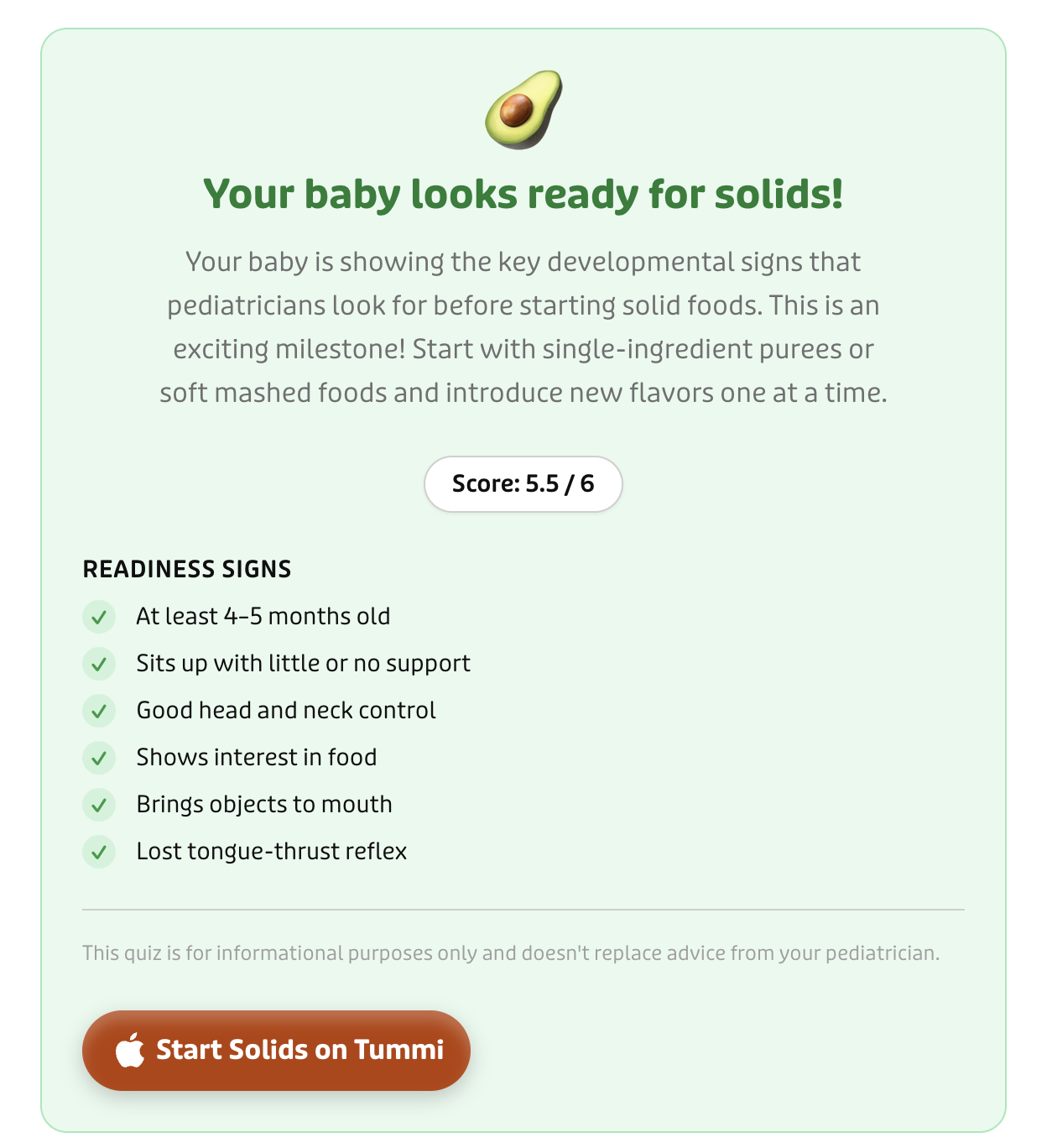
Before you start solids, your baby should sit up with little support, hold their head steady, show interest in food, and reach for and bring things to their mouth. If any of these are still a work in progress, keep offering milk and check with your pediatrician.
Textures
Smooth purees, soft mashes, and finger-length strips of soft food that squish between your fingers. Food should hold together in a soft piece, not break into small hard bits.
Amounts
Start with one or two small meals a day. Most six-month-olds eat a few spoonfuls at first and work up over the month. Follow your baby’s cues rather than a target amount.
Foods to try at 6 months
Tap a food to open its full Tummi guide for prep, textures by age, choking risk, allergen signs, and sources.
Easy first foods
Single-ingredient purees and soft mashes that are gentle on new palates.
Iron-rich foods
Iron needs climb at six months. Aim to offer an iron-rich food most days.
Soft vegetables
Steam or roast until soft enough to squish, then mash or offer as strips.
Soft fruits
Ripe and soft, peeled when the skin is tough or stringy.
Common allergens to introduce
Early, repeat exposures help. Offer one new allergen at a time and watch for a reaction for a few hours.
Allergen notes
Offer one new allergen at a time and watch for a reaction for a few hours. Once a food has been tried without issue, keep offering it a few times a week so exposures do not fade.
- Peanut and tree nuts
- Offer as a smooth thin layer of nut butter on a spoon or thinned into oatmeal or yogurt. Whole nuts and thick spoonfuls are choking risks.
- Egg
- Scrambled or hard-cooked until firm, in strips or small pieces your baby can grip. Introduce as a single new food on a calm day.
- Dairy
- Plain whole-milk yogurt, soft cheese, or ricotta. Cow’s milk as a main drink waits until 12 months; small amounts cooked into food are fine.
- Wheat and gluten
- Oatmeal with a little wheat cereal, small toast strips, or soft pasta. Introduce one grain at a time.
- Soy, fish, shellfish, and sesame
- Tofu, well-cooked flaked fish, or a thin tahini drizzle. Offer one new allergen per day and watch for a reaction for a few hours.
Log foods as you try them
Tummi tracks what your baby has tried, flags allergen progress, and keeps age-aware prep notes from the same 400+ food library. Free trial, no credit card required.
6 months baby food chart FAQs
At 6 months, babies can start with soft single-ingredient foods: mashed avocado, ripe banana, roasted sweet potato, iron-fortified oatmeal, plain yogurt, scrambled egg, and soft-cooked vegetables like butternut squash or green beans. Offer textures as smooth purees, soft mashes, or finger-length strips your baby can grip. Introduce one new food at a time.
Most 6 month olds start with one or two small meals a day — often just a few spoonfuls. Over the month, portions grow as your baby’s interest grows. Follow hunger cues more than a target amount. Breast milk or formula is still the main source of calories at this age.
Six months is the standard recommendation from the AAP and WHO. The key is readiness: sitting up with little support, holding the head steady, reaching for food, and bringing it to the mouth. Check with your pediatrician before starting earlier.
Iron stores from birth start to run low around 6 months, so prioritize iron-rich foods most days: iron-fortified cereal, lentils, tofu, soft-cooked meat, and dark leafy greens. Pair with a vitamin C food (pepper, kiwi, strawberry) to help absorption.
Yes — current guidance from the AAP and NIAID is to introduce peanut, egg, dairy, wheat, sesame, fish, shellfish, and soy around 6 months, one new allergen at a time. A thin layer of smooth peanut butter on a spoon or thinned into oatmeal is a baby-safe form. Talk to your pediatrician first if your baby has severe eczema or an existing food allergy.
Smooth purees, soft mashes, and finger-length strips of soft food that squish between your fingers. Avoid round, hard, slippery, or sticky foods. Cut small round items like grapes or cherry tomatoes lengthwise — in quarters for this age — and keep nut butters thin, not thick spoonfuls.