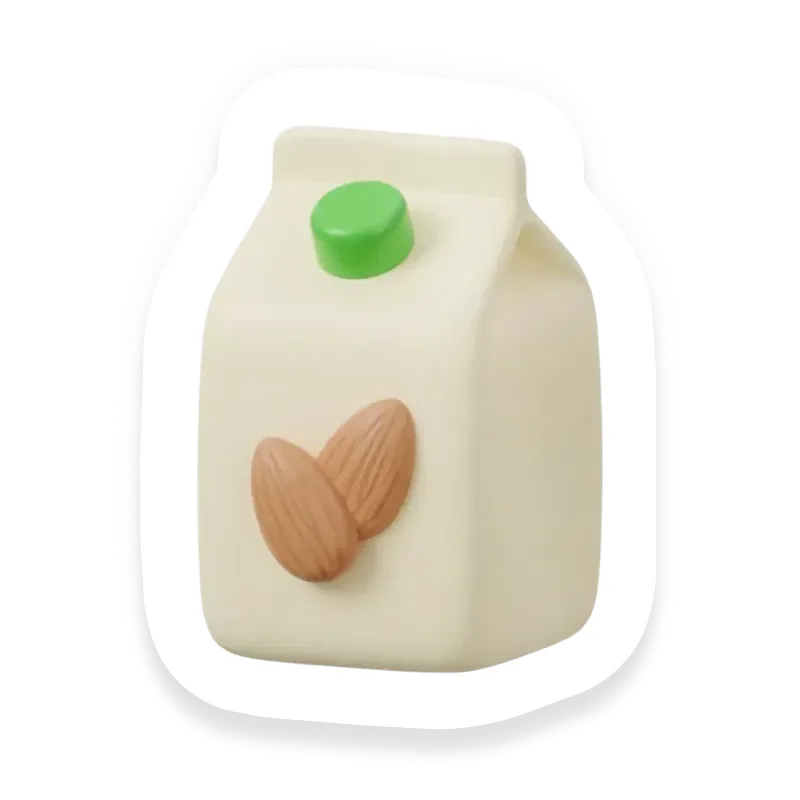
Almond Milk
Drink
Is Almond Milk Safe for Babies?
No, almond milk should be used only as an ingredient in solid foods after 12 months; it is not recommended as a drink before then.
Yes, but there are some things to know
At a Glance
Almond milk is made from almonds, a tree nut that can cause a tree nut allergy in sensitive children and adults. It is low in calories and contains vitamin E, and many commercial brands are fortified with calcium and vitamin D to help support bone health.
How Do You Serve Almond Milk?
- 1Add a small splash (start with 1–2 teaspoons) of unsweetened, fortified almond milk to porridges, purees, or mashed foods to thin and mildly flavor them.
- 2Mix well so the texture stays smooth; do not offer almond milk as a drink—breast milk or formula should remain the main beverage.
- 3Almond milk provides little protein or fat, so rely on breast milk or formula for most nutrition until after 12 months.
- 4Introduce almond-containing foods cautiously and watch for allergic reactions (rash, vomiting, wheeze); stop and seek medical care if symptoms appear.
Is Almond Milk a Common Allergen?
Contains almonds (a tree nut). Almond milk can trigger reactions in people with tree-nut allergies — read labels carefully for almond content and possible cross-contact warnings. Flavored or blended commercial varieties may include additional allergens; consult product packaging and an allergist if you’re unsure.
What Nutrients Does Almond Milk Have?
Almond milk is low in protein and calories compared with breastmilk, formula, or cow’s milk, so it should not replace infant feeds before 12 months and can displace more nutrient-dense foods if offered in excess. Fortified almond milks can provide calcium, vitamin D, and B12, and almond milk naturally supplies healthy unsaturated fats and vitamin E, but it typically contains little protein or iron. Choose unsweetened, fortified varieties for toddlers, avoid using almond milk as the main drink in the first year, and limit milk intake (about ≤16 oz/≈480 mL/day) to prevent nutrient gaps and reduced appetite.
Is Almond Milk a Choking Hazard?
Very Low Choking Risk
Almond milk presents a low choking risk for babies as a smooth liquid, though any added solids or thickened textures can increase risk. Watch for coughing, gagging, or changes in breathing as signs of trouble and be prepared to respond. Supervise feeds closely and seek emergency help if your baby cannot breathe, cough, or make sounds.
Have More Questions?
It depends. Almond milk should only be used as an ingredient in solid foods for babies under 12 months, not as a beverage, to prevent displacing breast milk or formula.
Yes, when fortified, almond milk can supplement a baby’s diet after their first year, providing calcium, vitamin D, and B12, but it should not replace breast milk or formula entirely.
No, almond milk is made from almonds, which are a common allergen, and can still pose a risk if allergies are present or unknown.
No, almond milk itself isn’t a choking hazard, but always serve it in an age-appropriate form and under supervision to ensure safety.
It depends. When serving almond milk to babies over 12 months, choose unsweetened, fortified varieties and serve in a safe, age-appropriate manner.
Is Almond Milk safe for your baby?
Get personalized guidance on introducing Almond Milk — with prep tips, allergen alerts, and age-specific serving ideas.
Sources
- What to feed young children - NHS nhs.uk
- Cow's Milk and Milk Alternatives | CDC cdc.gov
- Milk and Plant-Based Milk Alternatives: Know the Nutrient Difference - FDA fda.gov
- In Search of a Milk Alternative - Harvard Health health.harvard.edu
- Everything You Need to Know About Tree Nut Allergy - AAAAI aaaai.org
- Tree Nut - FoodAllergy.org (FARE) foodallergy.org
- Infant Choking: How To Help - American Red Cross redcross.org
- In the Middle Ages, the Upper Class Went Nuts for Almond Milk - Atlas Obscura atlasobscura.com
What Other Drink Can Babies Eat?
See all →
Backed by Science
Data you can trust.
Every food, guideline, and recommendation in Tummi is sourced from leading health institutions and peer-reviewed research.
 Centers for Disease Control and Prevention
Developmental milestones, nutrition guidelines, and allergen introduction timelines.
 American Academy of Pediatrics
Evidence-based feeding recommendations from the leading pediatric authority.
 National Institutes of Health
Peer-reviewed research on infant nutrition, allergies, and food safety.