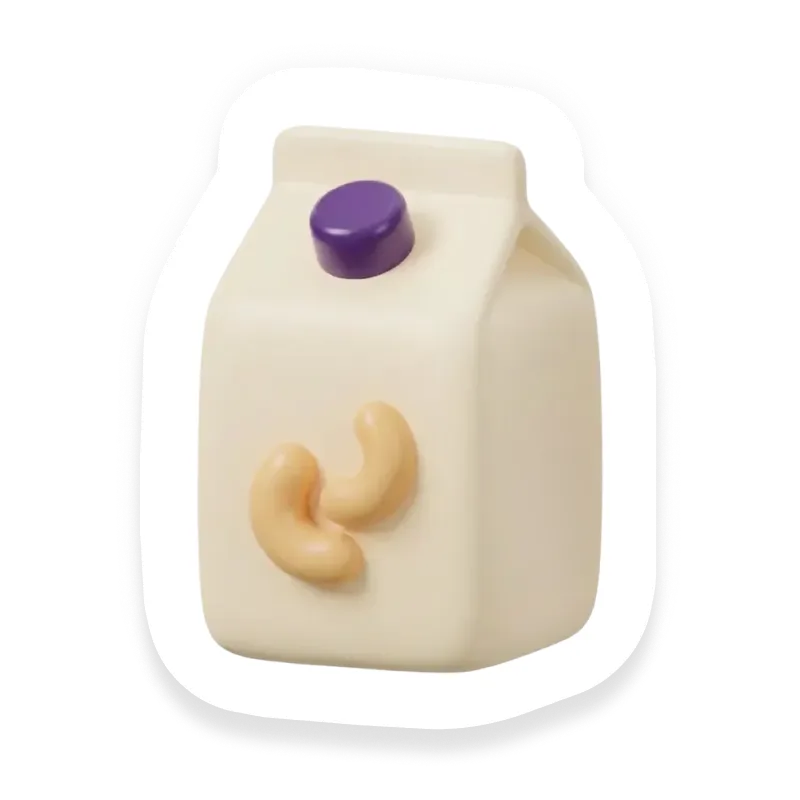
Cashew Milk
Drink
Is Cashew Milk Safe for Babies?
No, cashew milk should be used as an ingredient in solid foods from around 6 months; avoid giving it as a drink until after 12 months.
Yes, but there are some things to know
At a Glance
Because cashews are tree nuts, cashew milk can trigger allergic reactions in people with tree nut allergies. It also provides healthy unsaturated fats, vitamin E, and (when fortified) calcium and vitamin D, making it a lower‑saturated‑fat, dairy‑free option for those who can tolerate nuts.
How Do You Serve Cashew Milk?
- 1Start by mixing a small amount (about 1–2 teaspoons) of unsweetened cashew milk into porridges, purees, or mashed foods to add creaminess and calories; not as a drink.
- 2Choose plain, unsweetened cashew milk with no added sugars, salt, or thickeners.
- 3Continue to prioritize breast milk or formula as the main source of fluids and nutrition.
- 4Serve smooth, age-appropriate textures and introduce cashew-containing foods alone, waiting 3–5 days between new foods to monitor for intolerance or allergic reactions.
Is Cashew Milk a Common Allergen?
Cashew milk is made from cashews and is a tree‑nut product — do not give to anyone with a cashew or tree‑nut allergy. Many commercial cashew milks are dairy‑ and often soy‑free, but always read the ingredient list and any “may contain” or facility statements for cross‑contact with other allergens. If a child has a history of severe allergic reactions, consult their allergist before offering cashew milk. When in doubt, choose a product explicitly free of the specific allergens of concern.
What Nutrients Does Cashew Milk Have?
Cashew milk is low in protein and not iron‑rich but does supply some plant‑based protein and healthy unsaturated fats that support brain growth. Fortified commercial cashew milks can provide important micronutrients—calcium, vitamin D, and B12—while homemade versions usually lack those and are low in iron. Offer cashew milk as a drink only after 12 months and keep intake moderate (≤16 oz/480 mL/day) so it doesn’t displace breast milk, formula, or iron‑rich foods; note cashews are a common allergen and most cashew milk contains very little nut protein.
Is Cashew Milk a Choking Hazard?
Very Low Choking Risk
Cashew milk presents a low risk of choking, but any food or drink can pose a choking hazard. Always stay within arm’s reach and closely supervise your baby while they’re eating or drinking so you can respond immediately if needed. If your child frequently coughs, gags, or has trouble swallowing, consult your pediatrician or a feeding specialist.
Have More Questions?
No, cashew milk should not be given as a drink to babies under 12 months, as it does not provide complete nutrition and may displace breast milk or formula.
Yes, cashew milk can be used as an ingredient in solid foods for babies starting solids, but should not replace breast milk or formula during the first year.
Yes, cashew milk is considered safe allergen-wise if the child is not allergic to cashews, but it is still best to introduce it carefully and monitor for any reactions.
No, cashew milk is not a choking hazard if prepared appropriately and served in an age-appropriate way, but always supervise mealtime and use safe serving techniques.
Yes, commercially made cashew milk is usually fortified with nutrients like calcium and vitamin D, but homemade versions may lack these unless added later.
Is Cashew Milk safe for your baby?
Get personalized guidance on introducing Cashew Milk — with prep tips, allergen alerts, and age-specific serving ideas.
Sources
- Cow's Milk and Milk Alternatives | Infant and Toddler Nutrition - CDC cdc.gov
- Cow's Milk Alternatives: Parent FAQs - HealthyChildren.org (American Academy of Pediatrics) healthychildren.org
- Plant-Based Milks: Cashew - UF/IFAS EDIS edis.ifas.ufl.edu
- Plant-Based Milk Alternatives in Child Nutrition - PMC (NIH) ncbi.nlm.nih.gov
What Other Drink Can Babies Eat?
See all →
Backed by Science
Data you can trust.
Every food, guideline, and recommendation in Tummi is sourced from leading health institutions and peer-reviewed research.
 Centers for Disease Control and Prevention
Developmental milestones, nutrition guidelines, and allergen introduction timelines.
 American Academy of Pediatrics
Evidence-based feeding recommendations from the leading pediatric authority.
 National Institutes of Health
Peer-reviewed research on infant nutrition, allergies, and food safety.