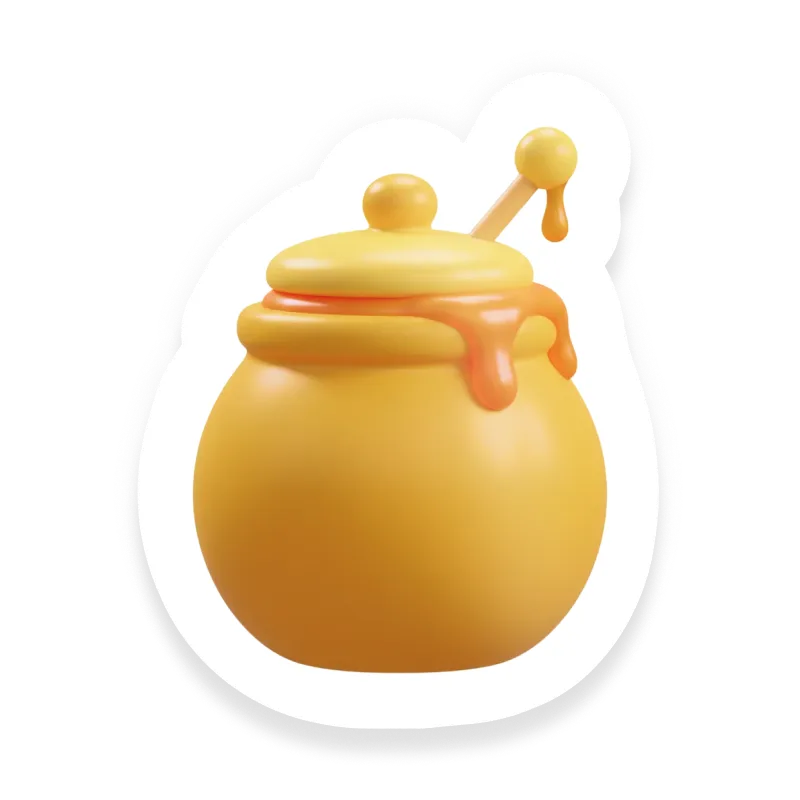
Honey
Sweetener
Is Honey Safe for Babies?
No, babies should not consume honey before age 12 months due to the risk of infant botulism.
Yes, but there are some things to know
How Do You Serve Honey?
- 1Do not give honey in any form — raw, cooked, or in processed foods — because it can contain spores that cause infant botulism.
- 2Avoid foods and baked goods that list honey, honey crystals, or bee pollen as ingredients.
- 3If the baby accidentally eats honey, stop offering that food and save any packaging or a sample if possible for the clinician.
- 4Monitor for symptoms for up to 30 days: watch for weakness, constipation, poor feeding, decreased movement, or limpness; seek medical care immediately if any appear.
- 5When unsure, call your pediatrician or local poison control for guidance.
Is Honey a Common Allergen?
Honey is not a common food allergen for older children or adults, though people with pollen-related allergies may rarely have oral allergy–type reactions. Critically, do not give honey to infants under 12 months because it can contain Clostridium botulinum spores that may cause infant botulism. If an older child or adult develops hives, throat swelling, breathing difficulty, or other allergic symptoms after eating honey, seek medical care.
What Nutrients Does Honey Have?
Honey is almost entirely simple sugars (glucose and fructose), so it provides quick energy but is not a meaningful source of protein, iron, fiber, or essential vitamins for babies. It does contain trace antioxidants and enzymes that may offer minor benefits and can help soothe coughs in children 12 months and older, but it is not iron-rich or particularly nutrient-dense for growth. Because honey is high in free sugars, offer only small amounts to toddlers (12+ months) to avoid excess calories, dental caries, and added-sugar habits.
Is Honey a Choking Hazard?
Very Low Choking Risk
Honey as a liquid or ingredient is not typically a choking hazard for older infants and toddlers. However, honeycomb’s waxy, chewy texture can become gummy in the mouth and may pose a choking risk, particularly if offered in large pieces. Keep in mind this texture-related risk and supervise closely when kids try honeycomb or similar chewy foods.
Have More Questions?
No. Honey should be avoided in babies under 12 months due to the risk of infant botulism, a serious condition caused by spores that can grow in a baby's intestines.
No. Cooking honey does not eliminate the spores that cause infant botulism, so it remains unsafe for babies under 12 months even when baked or processed.
No. Honey allergies are rare, but it can cause allergic reactions in some individuals, especially those with pollen sensitivities, so introduce it cautiously after one year.
No. Honey itself is not a choking hazard, but foods with honey, like candies, might be; always serve in age-appropriate forms and supervise eating.
If a baby ingests honey before age one, monitor for symptoms like constipation, weakness, or floppy muscle tone. Contact a pediatrician if symptoms of botulism occur.
Is Honey safe for your baby?
Get personalized guidance on introducing Honey — with prep tips, allergen alerts, and age-specific serving ideas.
Sources
- Spädbarnsbotulism – skäl att inte ge honung till barn under ett år (Wikström & Holst, 2017) pubmed.ncbi.nlm.nih.gov
- Botulism Prevention (Centers for Disease Control & Prevention, 2019) cdc.gov
What Other Sweetener Can Babies Eat?
See all →
Backed by Science
Data you can trust.
Every food, guideline, and recommendation in Tummi is sourced from leading health institutions and peer-reviewed research.
 Centers for Disease Control and Prevention
Developmental milestones, nutrition guidelines, and allergen introduction timelines.
 American Academy of Pediatrics
Evidence-based feeding recommendations from the leading pediatric authority.
 National Institutes of Health
Peer-reviewed research on infant nutrition, allergies, and food safety.