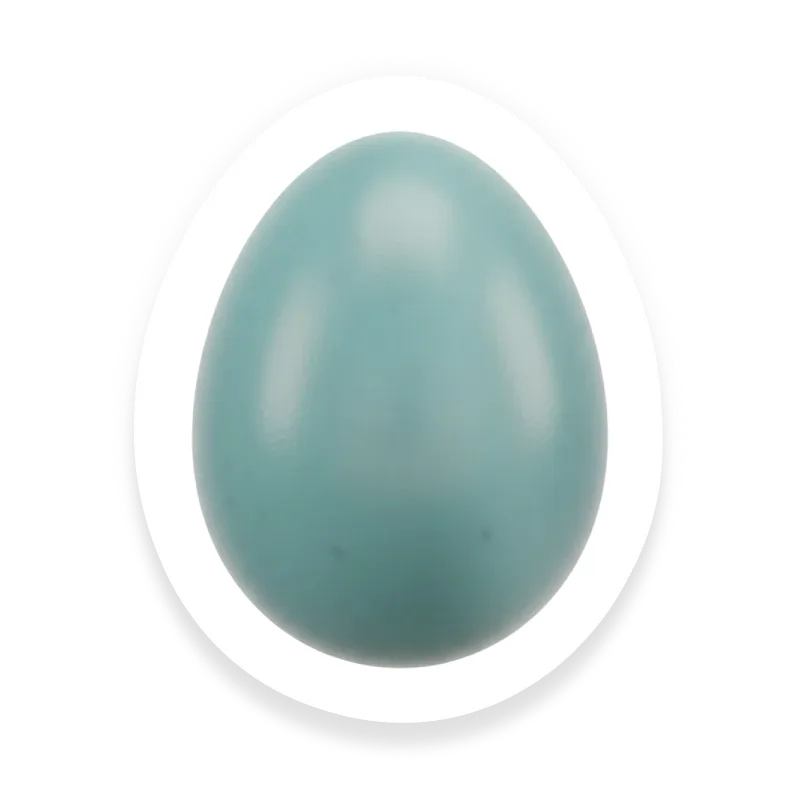
Duck Egg
Egg
Is Duck Egg Safe for Babies?
Yes, duck eggs can be introduced to babies around 6 months old when fully cooked and prepared safely, such as in an omelet.
Yes, but there are some things to know
At a Glance
Duck eggs have more iron than chicken eggs, so eating one can help your body make healthy blood. They also provide vitamin B12 and protein, nutrients that support red blood cell formation and energy.
Duck eggs can cause reactions in people sensitive to egg proteins because of egg white proteins that often trigger immune responses. They are also nutrient-dense, providing high quality protein and are rich in choline, plus vitamins A and D that help support growth and brain health.
How Do You Serve Duck Egg?
- 1Fully cook duck eggs until both yolk and white are firm — make a plain omelet or a well-cooked scramble so there are no runny parts.
- 2Slice the cooked omelet into rectangular strips roughly the size of the baby’s fist so each piece is easy to hold and reduces choking risk.
- 3Offer one strip at a time for self-feeding and place it in the baby’s palm or hand it to them to encourage grasping; always stay close and supervise each bite.
- 4Mix finely cooked egg into soft foods (mashed vegetables or porridge) to vary texture. Offer a tiny amount and watch for signs of allergy for several minutes before giving more; avoid adding salt, sugar, or honey.
Is Duck Egg a Common Allergen?
Duck eggs contain egg proteins and are a known egg allergen. Children with chicken egg allergy may also react to duck eggs due to cross-reactivity; cooking does not guarantee they will be safe. Consult your child's pediatrician or allergist before introducing duck eggs and be cautious of labeling and cross-contamination in prepared foods.
What Nutrients Does Duck Egg Have?
Duck eggs are nutrient-dense: high-quality protein and healthy fats plus particularly strong amounts of iron, choline, vitamin B12, vitamin D, selenium, and B‑vitamins—many of which support brain development, iron stores, and bone growth in infants. Because duck yolks are larger than chicken yolks, they deliver more of these nutrients per egg. Serve fully cooked in age-appropriate portions (start around 6 months) and don’t overdo frequency—duck eggs are high in cholesterol and calories—and always watch for allergic reactions and cook thoroughly to reduce salmonella risk.
Is Duck Egg a Choking Hazard?
Very Low Choking Risk
Duck eggs can be a choking hazard because firm or dense pieces may block a baby’s airway; closely supervise your baby while they eat and stay within arm’s reach. Watch for signs like persistent coughing, gagging, wheezing, or difficulty breathing and be prepared to act quickly—call emergency services if breathing is impaired. If you’re unsure how to respond, consult your pediatrician or take an infant first-aid course to learn choking response techniques.
Have More Questions?
Yes, you can store duck eggs in a cool, dry place or in the refrigerator for up to a month. Use them within that time for freshness and safety.
Yes, freezing cooked duck eggs in an airtight container is possible, but freezing raw eggs is not recommended as it alters the texture. Cooked eggs freeze best for later meals.
It depends. When choosing organic or conventional duck eggs for your baby, consider that organic eggs come from hens fed without synthetic pesticides or fertilizers, potentially offering fewer contaminants.
Yes, combining duck eggs with vegetables or grains can create nutritious, balanced meals for your baby, helping to introduce a variety of flavors and textures.
Portion sizes for babies vary by age and development, but a small, well-cooked portion of duck egg (around a teaspoon to a tablespoon) is appropriate starting at 6 months.
Is Duck Egg safe for your baby?
Get personalized guidance on introducing Duck Egg — with prep tips, allergen alerts, and age-specific serving ideas.
Sources
- Egg - FoodAllergy.org foodallergy.org

Backed by Science
Data you can trust.
Every food, guideline, and recommendation in Tummi is sourced from leading health institutions and peer-reviewed research.
 Centers for Disease Control and Prevention
Developmental milestones, nutrition guidelines, and allergen introduction timelines.
 American Academy of Pediatrics
Evidence-based feeding recommendations from the leading pediatric authority.
 National Institutes of Health
Peer-reviewed research on infant nutrition, allergies, and food safety.