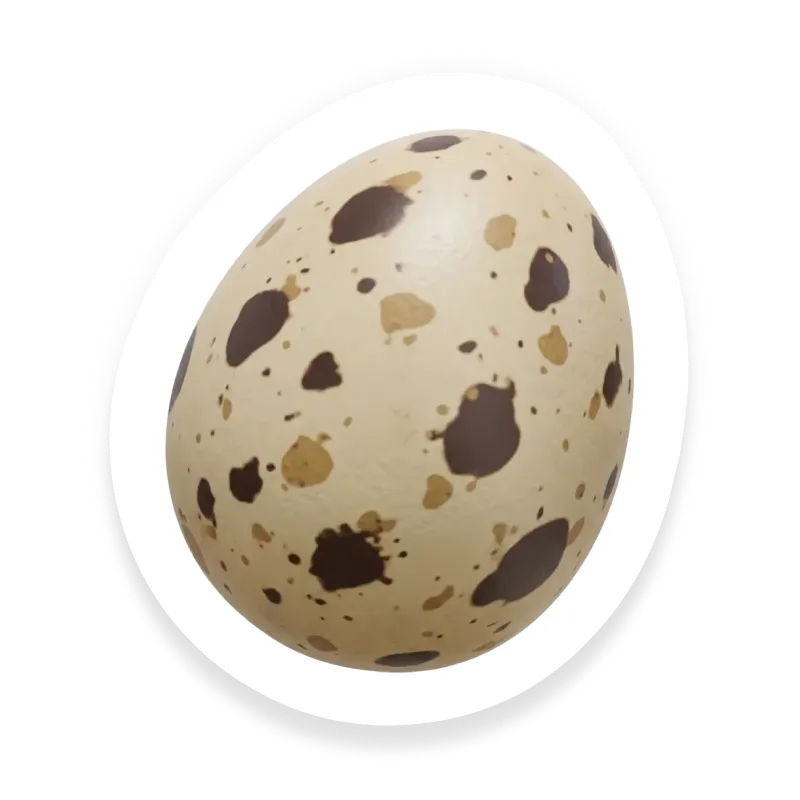
Quail Egg
Egg
Is Quail Egg Safe for Babies?
Yes, babies can eat cooked quail eggs from around 6 months, ensuring they are fully cooked to avoid the risk of infection.
Yes, but there are some things to know
At a Glance
Quail eggs are a good iron source that helps the body make healthy red blood cells. They also contain vitamin B12 and quality protein, which together support oxygen transport and provide energy.
Quail eggs may trigger reactions in people who are sensitive to bird or egg proteins. They are rich in protein and provide B vitamins, choline and selenium, nutrients that support growth, brain function and metabolism.
Is Quail Egg a Common Allergen?
Quail eggs contain the same egg proteins that commonly cause egg allergy and can trigger reactions in children with egg allergy; cross-reactivity with hen's (chicken) eggs is common though rare quail-only allergies have been reported. Cooking does not reliably remove allergenicity. If your child has a known egg allergy, avoid quail eggs unless cleared by an allergist; introduce only under medical supervision and be prepared to treat allergic reactions. For any history of anaphylaxis or uncertainty, consult your pediatrician or allergist before offering quail eggs.
What Nutrients Does Quail Egg Have?
Nutrient Snapshot: Quail eggs are nutrient-dense for their size—rich in high-quality protein, healthy fats, iron, selenium, B‑vitamins (especially B12 and riboflavin), choline, vitamin A and some vitamin D. These nutrients support iron stores and red blood cell formation, brain and nervous-system development (choline and B12), antioxidant protection (selenium), and bone development (vitamin D). Because quail eggs are small, 3–4 typically equal one chicken egg, so normal serving sizes are fine for babies; avoid raw/undercooked eggs (salmonella risk) and watch for egg allergy—introduce in small amounts and monitor for reactions.
Is Quail Egg a Choking Hazard?
Low Choking Risk
Quail eggs can be a choking hazard for infants because their small, firm shape (especially if served whole) can obstruct the airway. Always supervise closely during feedings and watch for sudden gagging, coughing, silence, or difficulty breathing—signs your baby may be choking. Be prepared to act quickly and review infant choking first aid so you can respond immediately if needed.
Have More Questions?
It depends. Quail eggs can be stored in the refrigerator for up to 1 week once purchased, ideally in their original carton.
Yes. You can freeze pureed or chopped cooked quail eggs for up to 3 months to extend their shelf life.
It depends. Organic quail eggs are often more expensive but are less likely to contain antibiotics or hormones compared to conventional ones.
Yes. Combining quail eggs with vegetables or grains can introduce your baby to new flavors and textures while providing balanced nutrition.
It depends. Portion sizes for babies typically start small, such as a teaspoon or a small slice, and increase as they grow older and better at chewing.
Is Quail Egg safe for your baby?
Get personalized guidance on introducing Quail Egg — with prep tips, allergen alerts, and age-specific serving ideas.
Sources
- Egg — Food Allergy Research & Education foodallergy.org
Backed by Science
Data you can trust.
Every food, guideline, and recommendation in Tummi is sourced from leading health institutions and peer-reviewed research.
 Centers for Disease Control and Prevention
Developmental milestones, nutrition guidelines, and allergen introduction timelines.
 American Academy of Pediatrics
Evidence-based feeding recommendations from the leading pediatric authority.
 National Institutes of Health
Peer-reviewed research on infant nutrition, allergies, and food safety.