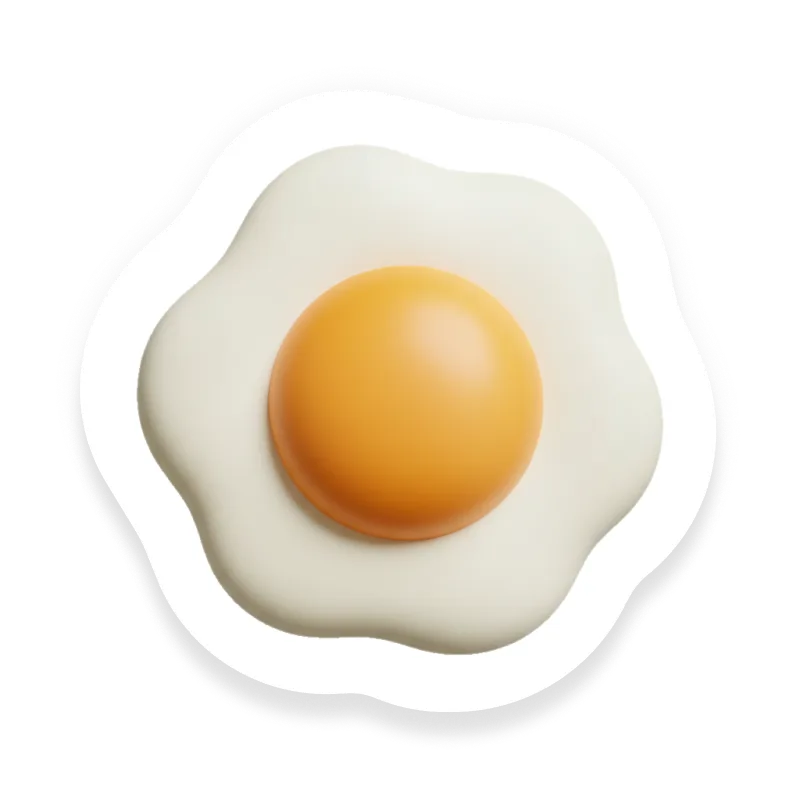
Egg
Egg
Is Egg Safe for Babies?
Yes, eggs can be introduced around 6 months of age, ensuring they are well-cooked to reduce allergy and foodborne illness risks.
Yes, but there are some things to know
At a Glance
Eggs are a modest source of iron, concentrated mostly in yolk, which helps the body make hemoglobin. That iron along with the egg’s protein and vitamin B12 supports healthy red blood cells and oxygen delivery.
Eggs are one of the most common causes of food allergy in young children and can trigger skin, stomach, or breathing reactions. They are also nutrient-dense, giving high-quality complete protein and essential B vitamins, plus choline and vitamin D to support growth, brain development, and eye health.
How Do You Serve Egg?
- 1Offer a tiny taste first (about a pea-sized amount) and watch closely for 5–10 minutes for any signs of an allergic reaction.
- 2If no reaction appears, continue by offering the rest at the baby’s normal feeding pace.
- 3Use fully cooked egg only. Cut an omelet into strips about the width of two adult fingers pressed together for easy grasp, or mash a hard‑boiled egg with breast milk, formula, or water until smooth.
- 4Remove any hard, rubbery, or stringy pieces to reduce choking risk, and avoid undercooked or runny yolks.
- 5If you notice hives, swelling, vomiting, persistent coughing, difficulty breathing, or other concerning symptoms, stop feeding and seek medical help immediately.
Is Egg a Common Allergen?
Eggs are a common childhood allergen and can cause reactions from mild hives to severe anaphylaxis—follow your child’s allergy action plan. Many children who tolerate baked eggs may outgrow the allergy more quickly; ask your clinician about testing and supervised reintroduction (egg ladder). Read labels carefully and avoid cross-contact—eggs appear in baked goods, mayonnaise and many processed foods. Routine vaccines (including MMR and most flu vaccines) are generally considered safe for people with egg allergy, but confirm with your healthcare provider.
What Nutrients Does Egg Have?
Eggs are a nutrient-dense food for babies — they provide high-quality protein, healthy fats (including DHA), choline, iron, iodine, selenium, zinc, folate, and vitamins A, B12 and D, plus lutein and zeaxanthin to support vision and brain development. Regular inclusion can help support growth, neurodevelopment, and iron status and are an affordable, versatile way to add key micronutrients. There’s no need to restrict eggs for cholesterol concerns in infants, but serve them as part of a varied diet to avoid overreliance. Because egg is a common allergen, introduce well-cooked in small amounts and keep offering regularly once tolerance is established.
Is Egg a Choking Hazard?
Very Low Choking Risk
Eggs are generally a low choking risk, but hard‑boiled yolks can be dry and chalky and may be difficult for young babies to manage. Egg can also stick to the tongue or roof of the mouth and trigger gagging. Stay within arm’s reach and supervise closely during meals, and make sure you know the signs of choking and basic infant choking first aid.
Have More Questions?
Yes. Eggs can be safely stored in the refrigerator for up to 3-5 weeks from purchase, but it's best to use them within this period for quality and safety.
Yes. You can freeze cooked egg purees or well-formed egg portions for up to 1 month, but raw eggs should not be frozen in their shells to prevent cracking.
Yes. Organic eggs are grown without synthetic pesticides or fertilizers and often come from hens with more natural living conditions, but both organic and conventional eggs are nutritious for babies.
Yes. Eggs can be combined with a variety of baby-safe foods like pureed vegetables, fruits, or grains to create balanced meals or snacks for your baby.
Yes. Serving appropriate portions depends on your baby's age and appetite but generally includes small spoonfuls to about 1-2 tablespoons of cooked egg for toddlers.
Is Egg safe for your baby?
Get personalized guidance on introducing Egg — with prep tips, allergen alerts, and age-specific serving ideas.
Sources
- Perkin MR et al. (2016) Randomized Trial of Introduction of Allergenic Foods in Breast-Fed Infants (NEJM) pubmed.ncbi.nlm.nih.gov
- Fleischer DM et al. (2021) A Consensus Approach to the Primary Prevention of Food Allergy Through Nutrition (J Allergy Clin Immunol Pract) pubmed.ncbi.nlm.nih.gov
- Caffarelli C et al. (2018) Solid Food Introduction and the Development of Food Allergies (Nutrients) doi.org
- Whiley H & Ross K (2015) Salmonella and eggs: from production to plate (International Journal of Environmental Research and Public Health) doi.org
- Davis AL et al. (2008) Validation of cooking methods using shell eggs inoculated with Salmonella (Poultry Science) doi.org
- Lutter CK et al. (2018) The potential of a simple egg to improve maternal and child nutrition (Maternal & Child Nutrition) doi.org
- Schmid A & Walther B (2013) Natural vitamin D content in animal products (Advances in Nutrition) doi.org
- Karsten H et al. (2010) Vitamins A, E and fatty acid composition of the eggs of caged hens and pastured hens (Renewable Agriculture and Food Systems) doi.org
- Guo J et al. (2018) 25(OH)D3-enriched or fortified foods are more efficient... (Proceedings of the Nutrition Society) doi.org
- Blesso CN & Fernandez ML (2018) Dietary Cholesterol, Serum Lipids, and Heart Disease: Are Eggs Working for or Against You? (Nutrients) doi.org
Backed by Science
Data you can trust.
Every food, guideline, and recommendation in Tummi is sourced from leading health institutions and peer-reviewed research.
 Centers for Disease Control and Prevention
Developmental milestones, nutrition guidelines, and allergen introduction timelines.
 American Academy of Pediatrics
Evidence-based feeding recommendations from the leading pediatric authority.
 National Institutes of Health
Peer-reviewed research on infant nutrition, allergies, and food safety.