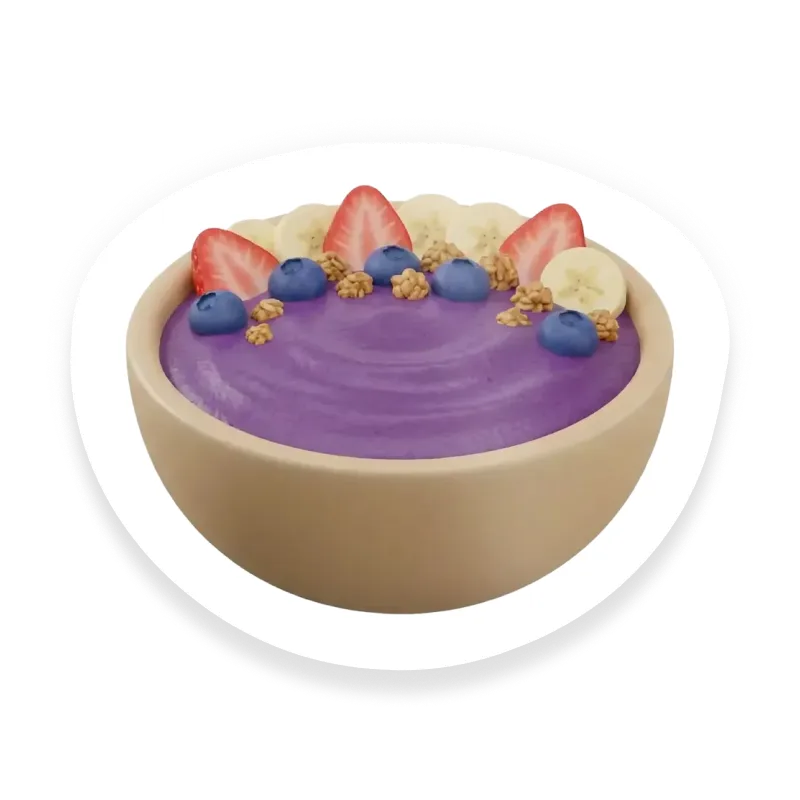
Açaí
Fruit
Is Açaí Safe for Babies?
Yes, babies can eat açaí starting around 6 months, when they are ready to start solids, with mashed or de-seeded preparations.
Yes, but there are some things to know
At a Glance
Acai is rich in fiber, which helps add bulk to stool and keeps digestion regular. Its anthocyanins and polyphenols feed friendly bacteria, helping to support a healthy gut.
How Do You Serve Açaí?
- 1Puree or mash açaí until very smooth and serve plain or stirred into soft, scoopable foods like porridge or yogurt for an easy introduction.
- 2Make baby-friendly popsicles by mixing unsweetened açaí purée or powder with breastmilk, formula, or mashed banana and freezing in molds.
- 3Remove or finely chop any crunchy or hard toppings (granola, whole nuts, large seeds, whole grapes) to eliminate choking risks, and never add honey.
- 4Choose unsweetened açaí products to avoid added sugar and introduce new foods one at a time while watching for any allergic reactions.
Is Açaí a Common Allergen?
Pure açaí isn’t a common allergen, but allergic reactions have been reported and are possible. The main concerns for children are cross‑contamination during processing and common açaí‑bowl toppings or mix‑ins (nuts, peanuts, dairy, soy, granola). Always check labels or ask vendors about shared equipment, and consult an allergist if your child has a history of severe food allergy.
What Nutrients Does Açaí Have?
Açaí is high in antioxidants (notably anthocyanins), contains fiber and healthy fats, and provides modest amounts of iron, calcium, zinc and vitamin B6—nutrients that support digestion, blood and bone health, and overall development. For babies, the fiber aids gut function and the antioxidants offer protective benefits, while the small amounts of iron and B6 contribute to blood and metabolic health but won’t replace iron-rich first foods. Avoid açaí supplements, unpasteurized juice, and sweetened bowls; too much açaí or açaí juice can add excess sugars/calories and displace other nutrient-dense foods. Serve in baby-safe forms (mashed/deseeded pulp, powder, or pasteurized frozen purée) and offer in appropriate portions.
Is Açaí a Choking Hazard?
Very Low Choking Risk
Fresh açaí berries pose a choking risk for babies because their round shape, small size, and central seed can easily block a young airway. Stay within arm’s reach during feeding and avoid offering whole berries or similarly shaped pieces to infants.
Have More Questions?
Yes. Açaí can be stored in the freezer for months, making it convenient to keep for future use, but always ensure it is stored in an airtight container to prevent freezer burn.
Yes. You can freeze pureed or chopped açaí in ice cube trays for easy portioning, then transfer to a sealed bag for longer storage, which helps preserve flavor and nutrients.
It depends. Organic açaí is generally available, but conventional açaí is more common; choose organic if you want to avoid pesticides, though both are safe for babies.
It depends. You can combine açaí with other baby foods like bananas or berries to introduce new flavors and textures, but always consider age-appropriate preparation and avoid introducing allergenic mixes early.
It depends. A typical portion for babies is about 1-2 teaspoons of açaí puree or small serving of açaí bowl, depending on baby’s age and appetite; consult your pediatrician for personal guidance.
Is Açaí safe for your baby?
Get personalized guidance on introducing Açaí — with prep tips, allergen alerts, and age-specific serving ideas.
Sources
- Acai (U.S. Department of Health and Human Services / NCCIH, 2011) nccih.nih.gov
- Kwaasi AA et al., Allergy to date fruits (Allergy, 1999) doi.org
- Mayoral M et al., Anaphylactic reaction following ingestion of fresh heart of palm (Allergy, 2006) doi.org
- WHO Guideline for complementary feeding of infants and young children 6-23 months of age (World Health Organization, 2023) who.int
- Fidler Mis N et al., Sugar in Infants, Children and Adolescents: A Position Paper (J Pediatr Gastroenterol Nutr, 2017) doi.org
What Other Fruit Can Babies Eat?
See all →


Backed by Science
Data you can trust.
Every food, guideline, and recommendation in Tummi is sourced from leading health institutions and peer-reviewed research.
 Centers for Disease Control and Prevention
Developmental milestones, nutrition guidelines, and allergen introduction timelines.
 American Academy of Pediatrics
Evidence-based feeding recommendations from the leading pediatric authority.
 National Institutes of Health
Peer-reviewed research on infant nutrition, allergies, and food safety.