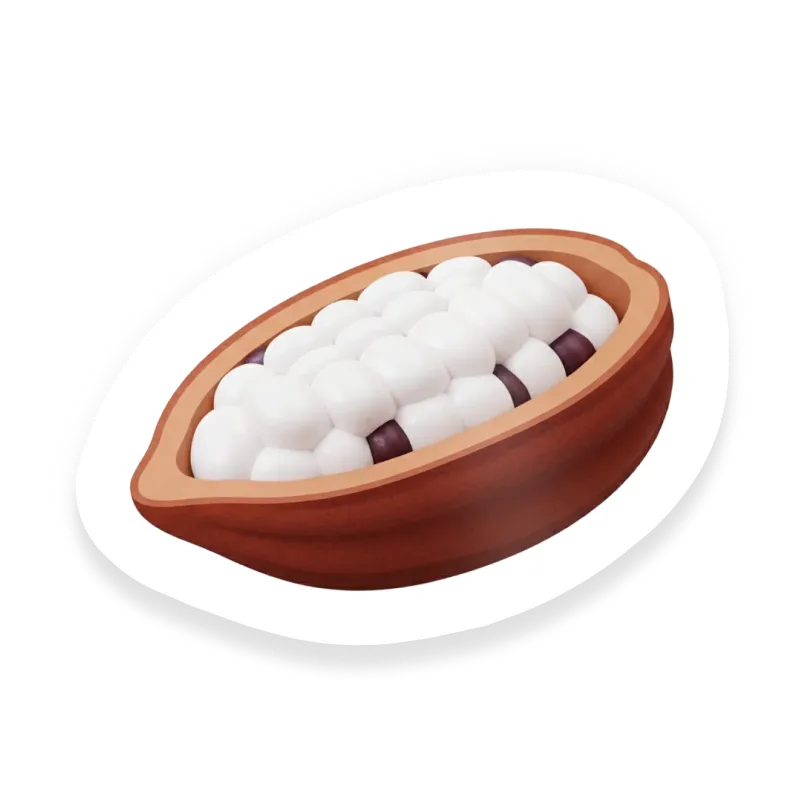
Cacao
Fruit
Is Cacao Safe for Babies?
Yes, it can be introduced around 6 months in small amounts, but avoid cacao products with caffeine and choking hazards.
Yes, but there are some things to know
At a Glance
Raw cacao is naturally rich in fiber, which adds bulk and helps keep bowel movements regular. Its polyphenols, especially cocoa flavanols, also feed good bacteria in the gut and support gentle digestion.
How Do You Serve Cacao?
- 1Offer cacao in small amounts as part of a balanced diet and be mindful of its caffeine content.
- 2Only allow tasting when the child reliably takes small bites and follows instructions; avoid overfilling the mouth to lower choking risk.
- 3Demonstrate a small bite and show the bean so the child knows what to expect. Spit the bean into a napkin or container and practice once while supervised.
- 4Keep a calm, seated environment, stay within arm’s reach, and remove distractions so you can respond quickly.
Is Cacao a Common Allergen?
True allergy to cacao (cocoa) is uncommon but has been reported and can cause hives, gastrointestinal or respiratory symptoms, and rarely anaphylaxis. More often, reactions to chocolate products come from added ingredients (milk, nuts, soy) or cross-reactivity (for example with latex or certain tree nuts), so always check labels and possible cross-contact. If your child has known severe food or/or latex allergies, treat cacao-containing products with caution and discuss testing with an allergist. For breathing difficulty or anaphylaxis seek emergency care immediately.
What Nutrients Does Cacao Have?
Cacao provides carbohydrates and fiber plus key minerals—iron, magnesium, potassium, and zinc—and is rich in antioxidants and plant compounds. These nutrients can support iron status and healthy red blood cell formation, muscle and nervous system function (magnesium, potassium), and immune and gut health (zinc and antioxidants). Because cacao contains caffeine/theobromine and many cacao products have added sugar or common allergens, offer only small, age‑appropriate portions and avoid frequent servings; excessive intake can cause jitteriness, reduced appetite, or sleep disruption. Choose plain cacao or fruit pulp without added sugar, and avoid whole nibs/beans for infants due to choking risk.
Is Cacao a Choking Hazard?
Very Low Choking Risk
Whole cacao beans and cacao nibs are hard and round, making them a high choking hazard for infants and young toddlers. The slippery cacao fruit pulp is less risky once the inner bean has been removed, but always keep children seated and within arm’s reach while they eat. Be prepared to act if a child gags or struggles to breathe—seek immediate help if they cannot cough, cry, or breathe.
Have More Questions?
Yes, babies can have small tastes of cacao from around 6 months once they start solids. However, due to its caffeine content, it's best to limit their intake and avoid regular exposure.
Yes, cacao can be part of a balanced diet for toddlers, but due to caffeine, it should be given sparingly and not as a regular snack. Always consider the product's ingredients for allergens.
It depends. Cacao itself is not a common allergen, but products may contain or be processed with common allergens like soy or nuts, so always check labels before offering to your baby.
Yes, cacao beans are firm and round, increasing choking risk, especially if served as nibs or chunks. Prepare appropriately and supervise feeding to minimize this hazard.
Yes, cacao fruit pulp is safe for babies from 6 months, provided the bean is removed. It offers natural sugars and nutrients without significant caffeine.
Is Cacao safe for your baby?
Get personalized guidance on introducing Cacao — with prep tips, allergen alerts, and age-specific serving ideas.
Sources
- The Safety of Ingested Caffeine: A Comprehensive Review frontiersin.org
- Psychopharmacology of theobromine in healthy volunteers link.springer.com
- Caffeine Intake from Food and Beverage Sources and Trends among Children and Adolescents pmc.ncbi.nlm.nih.gov
- Cocoa and Dark Chocolate Polyphenols: From Biology to Clinical Applications frontiersin.org
- Not so sweet: True chocolate and cocoa allergy pmc.ncbi.nlm.nih.gov
- Potential Applicability of Cocoa Pulp (Theobroma cacao L) as an Adjunct for Beer Production onlinelibrary.wiley.com
- GRN No. 947 - GRAS Notices (U.S. Food & Drug Administration) cfsanappsexternal.fda.gov
- WHO Guideline for complementary feeding of infants and young children 6–23 months of age who.int
- Sugar in Infants, Children and Adolescents: A Position Paper of ESPGHAN Committee on Nutrition pubmed.ncbi.nlm.nih.gov
What Other Fruit Can Babies Eat?
See all →




Backed by Science
Data you can trust.
Every food, guideline, and recommendation in Tummi is sourced from leading health institutions and peer-reviewed research.
 Centers for Disease Control and Prevention
Developmental milestones, nutrition guidelines, and allergen introduction timelines.
 American Academy of Pediatrics
Evidence-based feeding recommendations from the leading pediatric authority.
 National Institutes of Health
Peer-reviewed research on infant nutrition, allergies, and food safety.