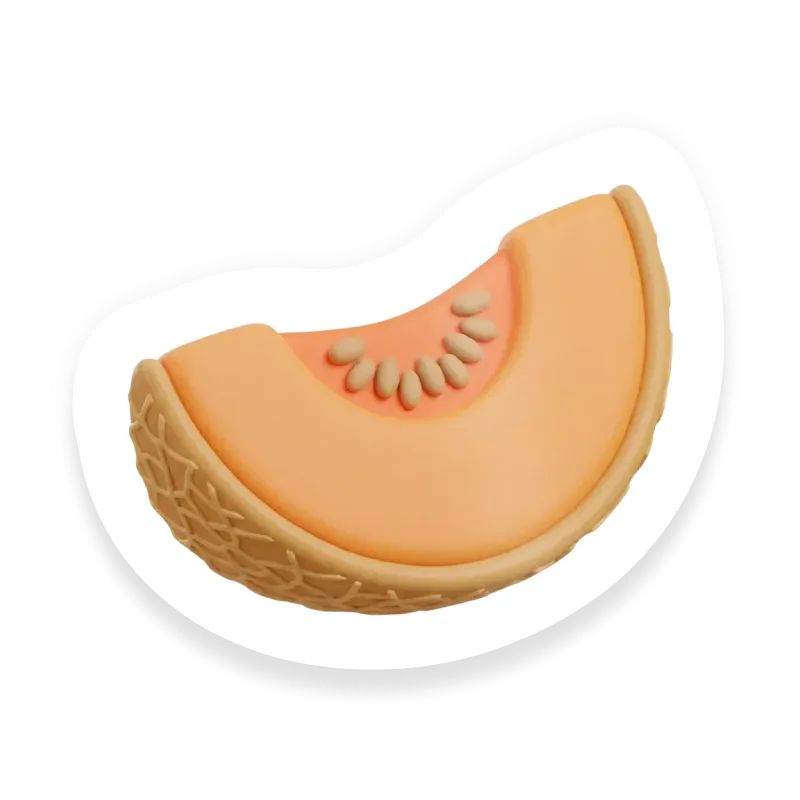
Cantaloupe
Fruit
Is Cantaloupe Safe for Babies?
Yes, cantaloupe can be introduced to babies around 6 months old, when they are ready for solids, ensuring it is ripe, properly prepared, and served in safe, manageable pieces.
Yes, but there are some things to know
At a Glance
Cantaloupe is high in water and contains dietary fiber, which help keep stools soft. It also provides potassium and vitamins A and C that support digestion and hydration.
How Do You Serve Cantaloupe?
- 1Cut very ripe cantaloupe into long, flat crescent moons or thin rectangles and remove all seeds and rind.
- 2Choose fruit that is soft and fragrant so pieces are easier for little mouths to chew.
- 3Hold a piece in front of baby to encourage grasping and self-feeding and offer small amounts to start.
- 4Avoid melon balls or large chunks because their firm, slippery texture increases choking risk.
- 5Always supervise closely and keep baby seated upright while they eat.
Is Cantaloupe a Common Allergen?
Cantaloupe can trigger oral allergy syndrome (OAS) in people who are allergic to pollens—especially ragweed and some grasses—causing itching, tingling or mild swelling of the mouth and throat. True systemic (anaphylactic) reactions are uncommon but reported, so be cautious if your child has known pollen allergies or prior food reactions. Peeling, cooking, or avoiding raw melon often prevents OAS symptoms; seek medical care immediately for any breathing difficulties, widespread hives, or fainting.
What Nutrients Does Cantaloupe Have?
Cantaloupe is high in vitamin A (as beta‑carotene) and vitamin C, and provides potassium, folate, lutein/zeaxanthin and other antioxidants; it’s also ~90% water so helps hydration. These nutrients support vision, immune function, growth, skin health and electrolyte balance, making cantaloupe a nutritious choice for babies once they start solids. Offer age‑appropriate pieces and serve in moderation—large amounts can cause loose stools due to natural sugars and water content, and excess potassium is only a concern in children with kidney disease; beta‑carotene from fruit is not toxic at normal servings.
Is Cantaloupe a Choking Hazard?
Moderate Choking Risk
Cantaloupe can be a choking hazard because it’s firm and slippery, making pieces more likely to block an infant’s airway. The risk is greater with underripe fruit and large, slippery pieces. Caregivers should stay within arm’s reach during meals and know the signs of choking and basic infant choking first aid.
Have More Questions?
Yes. Cantaloupe can be grated or pureed for babies to reduce choking risk and ensure easier swallowing.
It depends. Freezing is safe and can preserve puree, but ensure the fruit is thoroughly washed, prepared, and the puree is stored in airtight containers to prevent spoilage.
Yes. Organic cantaloupe is a good choice, but washing all melons well before serving is essential to remove dirt and bacteria, regardless of whether they are organic or conventional.
It depends. Combining cantaloupe with other soft fruits like bananas can introduce variety and help your baby get accustomed to different textures and flavors.
The recommended portion size varies, but start with small spoonfuls, about 1-2 teaspoons, and gradually increase as your baby shows readiness and interest.
Is Cantaloupe safe for your baby?
Get personalized guidance on introducing Cantaloupe — with prep tips, allergen alerts, and age-specific serving ideas.
Sources
- Nutritional Composition and Health Benefits of Various Botanical Types of Melon (Cucumis melo L.) ncbi.nlm.nih.gov
- Food safety tips for melons (Government of Canada, 2013) open.canada.ca
- Oral Allergy Syndrome (OAS) Defined — American Academy of Allergy, Asthma & Immunology aaaai.org
- Oral Allergy Syndrome: An Update for Stomatologists (Kashyap & Kashyap, 2015) doi.org
What Other Fruit Can Babies Eat?
See all →

Backed by Science
Data you can trust.
Every food, guideline, and recommendation in Tummi is sourced from leading health institutions and peer-reviewed research.
 Centers for Disease Control and Prevention
Developmental milestones, nutrition guidelines, and allergen introduction timelines.
 American Academy of Pediatrics
Evidence-based feeding recommendations from the leading pediatric authority.
 National Institutes of Health
Peer-reviewed research on infant nutrition, allergies, and food safety.