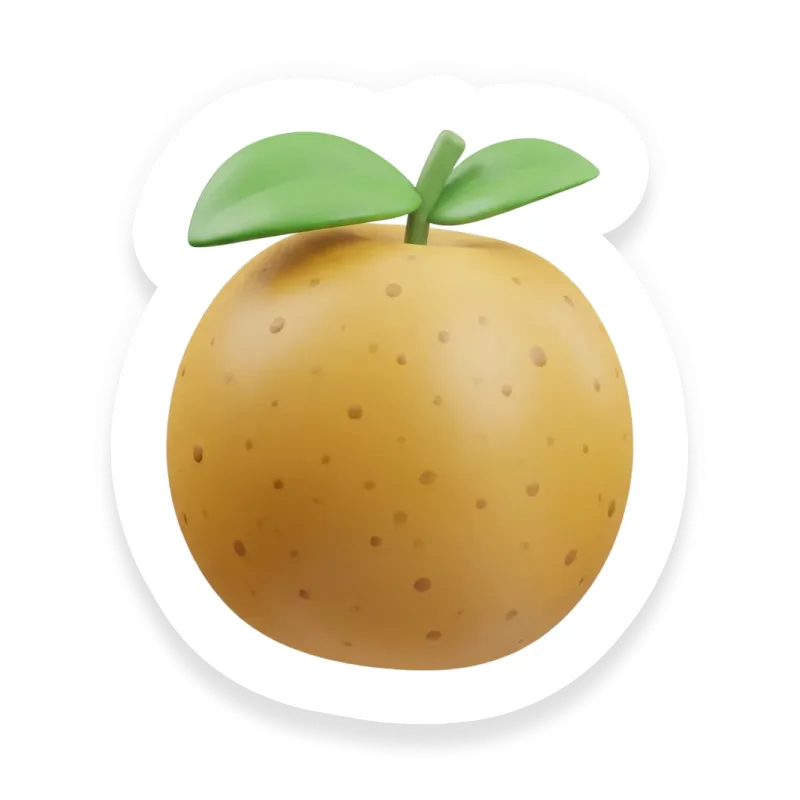
Asian Pear
Fruit
Is Asian Pear Safe for Babies?
Yes, Asian pear can be introduced around 6 months of age when your baby is ready for solids, with appropriate preparation to reduce choking risk.
Yes, but there are some things to know
At a Glance
Asian pears are juicy and high in fiber, which helps soften stool and keeps digestion regular. They also contain water, vitamin C and natural sorbitol, so they support healthy digestion and gentle bowel movements.
How Do You Serve Asian Pear?
- 1Cook until very soft — remove the core and stem; peeling is optional, then steam, simmer, or roast until the flesh is easily mashed.
- 2Offer large, easy-to-grasp wedges or halves with the cooked flesh facing up so your baby can hold and nibble; keep skin on only if it’s soft and your baby manages textures well.
- 3Reserve some mashed pear for scooping or stirring into yogurt or cereal to introduce a softer texture and make eating easier.
- 4For extra grip and mild flavor, roll pieces in finely ground seeds or shredded coconut; ensure any seeds are finely ground to reduce choking risk.
Is Asian Pear a Common Allergen?
Asian pear is not a common major allergen, but people with birch or apple pollen allergies can get oral allergy syndrome (itchy or swollen mouth/throat) after eating fresh pears. Pear seeds contain trace cyanogenic compounds—typical ingestion of a few seeds is not harmful, but avoid letting toddlers eat seeds. Cut pear into small, age-appropriate pieces to reduce choking risk. If a child has known pollen-related food reactions, introduce pear cautiously and watch for symptoms.
What Nutrients Does Asian Pear Have?
Asian pears are a low‑calorie, nutrient‑dense fruit high in dietary fiber and a modest source of vitamin C and copper, plus antioxidant polyphenols; they are not a significant source of iron. For babies, the fiber supports healthy digestion and regular stools, and vitamin C and copper help immune function and aid iron absorption from other foods. Typical servings are safe when prepared age‑appropriately, but very large amounts of fruit can deliver excess sugar and fiber that may cause loose or frequent stools.
Is Asian Pear a Choking Hazard?
Moderate Choking Risk
Asian pear is firm and slippery, which increases choking risk for babies because pieces can be hard to control in the mouth. Stay within arm’s reach during meals, watch closely for gagging or choking, and give your child a moment to manage a piece before intervening. Be familiar with infant choking first aid so you can act quickly if needed.
Have More Questions?
It depends. When introducing Asian pears, consider peeling and slicing them into small, manageable pieces to ensure easy chewing and digestion for your baby.
It depends. You can freeze Asian pear purees for later use, but ensure they are stored in airtight containers and thawed safely before offering to your baby.
It depends. Organic Asian pears are grown without synthetic pesticides, making them a good option if you prefer organic produce for your baby's diet.
It depends. Combining Asian pears with other fruits or vegetables can introduce a broader range of flavors and nutrients, but do so gradually and observe for any reactions.
It depends. For portion sizes, start with small quantities like a few teaspoons and gradually increase as your baby's appetite and tolerance grow.
Is Asian Pear safe for your baby?
Get personalized guidance on introducing Asian Pear — with prep tips, allergen alerts, and age-specific serving ideas.
Sources
What Other Fruit Can Babies Eat?
See all →

Backed by Science
Data you can trust.
Every food, guideline, and recommendation in Tummi is sourced from leading health institutions and peer-reviewed research.
 Centers for Disease Control and Prevention
Developmental milestones, nutrition guidelines, and allergen introduction timelines.
 American Academy of Pediatrics
Evidence-based feeding recommendations from the leading pediatric authority.
 National Institutes of Health
Peer-reviewed research on infant nutrition, allergies, and food safety.