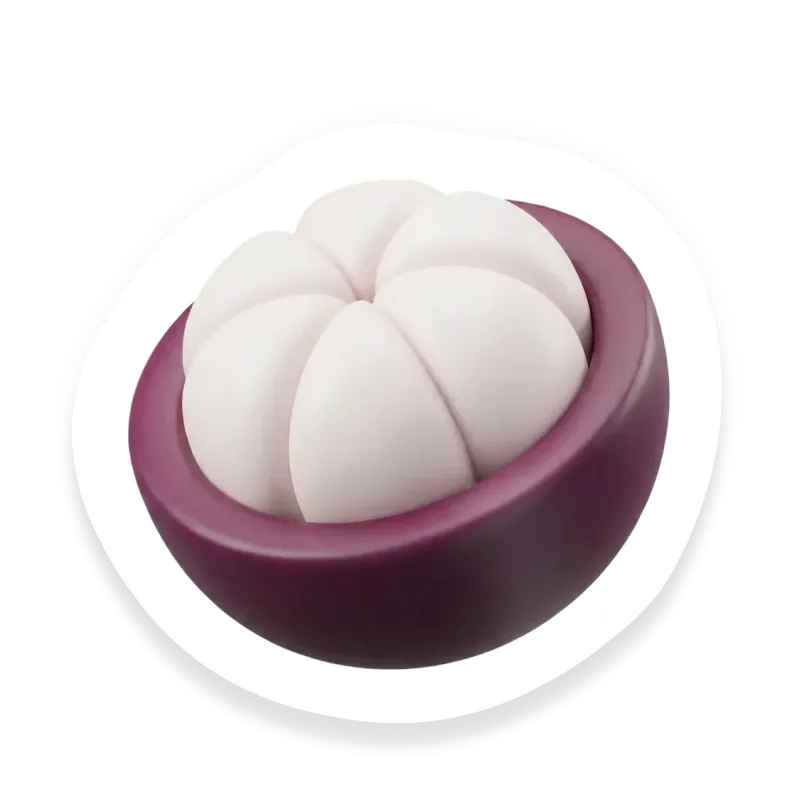
Mangosteen
Fruit
Is Mangosteen Safe for Babies?
Yes, mangosteen can be introduced to babies around 6 months old, once ripe, seedless, and ready for solids.
Yes, but there are some things to know
At a Glance
Mangosteen's dietary fiber content helps add bulk to stool and supports regular bowel movements. Its natural antioxidants and plant compounds like xanthones help feed and protect beneficial bacteria, supporting a healthy gut microbiome.
How Do You Serve Mangosteen?
- 1Choose fully ripe mangosteen, remove the thick rind and discard any seeds.
- 2Mash or very finely chop the flesh until it forms soft, scoopable pieces with no hard or stringy bits.
- 3Remove and check for seeds carefully. Double-check visually before serving to ensure no seed fragments remain.
- 4Serve at room or lukewarm temperature on a pre-loaded spoon or as small scoopable pieces for easy self-feeding.
- 5Always supervise closely and offer one small piece at a time, watching for choking or allergic reactions.
Is Mangosteen a Common Allergen?
Mangosteen is not a common food allergen and allergic reactions are rarely reported. However, some tropical fruits show cross‑reactivity with latex (latex‑fruit syndrome); while mangosteen is not commonly implicated, people with known latex allergy or fruit allergies should introduce it cautiously. For children with existing food or latex allergies, try a small amount under supervision and seek medical care for hives, swelling, vomiting, or breathing difficulties. When in doubt, check with your child's pediatrician or allergist before offering mangosteen.
What Nutrients Does Mangosteen Have?
Mangosteen supplies baby‑useful nutrients — notably folate (supports growth and red blood cell formation), vitamin C (immune support and enhances iron absorption), fiber (helps digestion and a developing gut microbiome) — and contains antioxidant xanthones. It is low in protein and iron, and contains natural sugars, so offer whole de‑seeded pieces in age‑appropriate textures and limit juice or frequent servings to avoid excess sugar and dental/caloric concerns. When served appropriately, mangosteen can be a nutritious, antioxidant‑rich addition to a varied infant diet.
Is Mangosteen a Choking Hazard?
Low Choking Risk
Mangosteen segments are small, tapered, slippery and can contain hard seeds, so they pose an increased choking risk for young children. Keep baby within arm’s reach and closely supervise during eating, and ensure caregivers know basic choking-first aid so they can respond quickly if needed.
Have More Questions?
Yes, mangosteen can be stored in the refrigerator for up to a week when kept in a breathable bag or container.
Yes, freezing mangosteen in small portions is possible, making it convenient to serve as purees or snacks later.
Yes, choosing organic mangosteen may reduce exposure to pesticides, though conventional fruit is also safe if properly washed.
Yes, combining mangosteen with other fruits or purees can diversify your baby's diet and introduce new flavors.
Yes, offering appropriate portion sizes depends on your baby's age and feeding schedule, but start small to observe tolerance.
Is Mangosteen safe for your baby?
Get personalized guidance on introducing Mangosteen — with prep tips, allergen alerts, and age-specific serving ideas.
Sources
- Valorization of mangosteen, 'The Queen of Fruits,' and new advances in postharvest and in food and engineering applications: A review sciencedirect.com
- Medicinal properties of mangosteen (Garcinia mangostana L.): A comprehensive update pubmed.ncbi.nlm.nih.gov
- Oral Allergy Syndrome (OAS) (American Academy of Allergy, Asthma & Immunology) aaaai.org
- Oral Allergy Syndrome: An Update for Stomatologists pubmed.ncbi.nlm.nih.gov
- WHO Guideline for complementary feeding of infants and young children 6–23 months of age who.int
- Sugar in Infants, Children and Adolescents: A Position Paper of the ESPGHAN Committee on Nutrition pubmed.ncbi.nlm.nih.gov
What Other Fruit Can Babies Eat?
See all →




Backed by Science
Data you can trust.
Every food, guideline, and recommendation in Tummi is sourced from leading health institutions and peer-reviewed research.
 Centers for Disease Control and Prevention
Developmental milestones, nutrition guidelines, and allergen introduction timelines.
 American Academy of Pediatrics
Evidence-based feeding recommendations from the leading pediatric authority.
 National Institutes of Health
Peer-reviewed research on infant nutrition, allergies, and food safety.