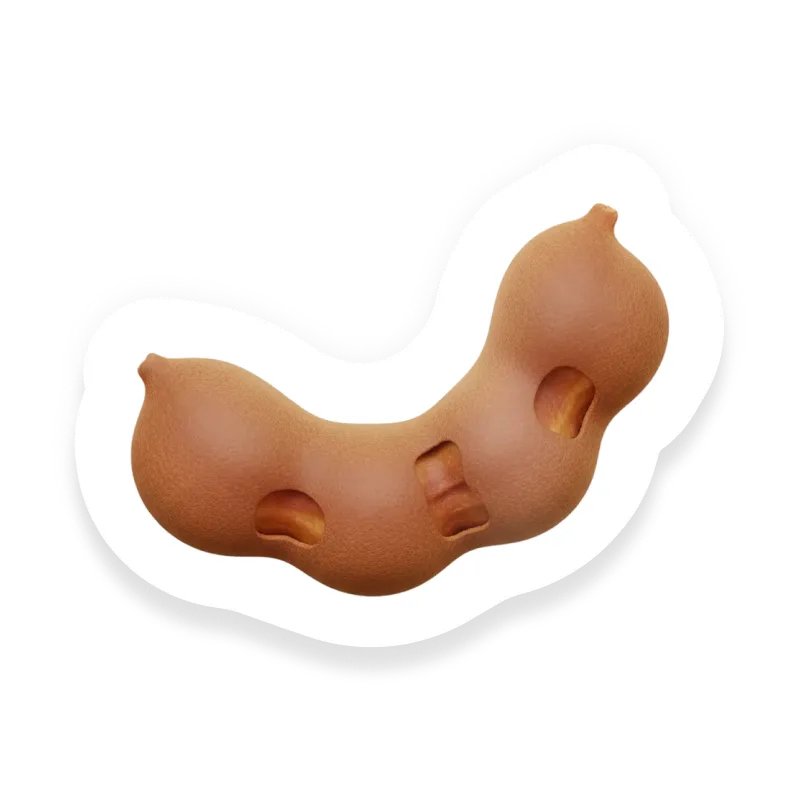
Tamarind
Fruit
Is Tamarind Safe for Babies?
Yes, tamarind can be introduced around 6 months when your baby starts solids, but use it in small amounts due to its strong flavor.
Yes, but there are some things to know
How Do You Serve Tamarind?
- 1Use a very small amount (about 1/4 teaspoon) of tamarind paste or softened pulp and stir into sauces, chutneys, or purees. Thin the mixture with warm water, breastmilk, or formula until runny to avoid sticky clumps.
- 2Add to cooked apple halves, gentle fish cakes, or thin, tender meat strips to introduce mild tang and flavor; ensure each piece is soft and easy to gum.
- 3Remove all seeds and inspect 'de-seeded' products for stray seeds to prevent choking; avoid thick, tacky amounts that can stick to the mouth or throat.
- 4For oral-motor practice, spread a thin layer on a safe, sturdy teether (silicone or washable teether) or on a small, well-cooked, soft piece of meat—never give whole bones or hard items. Always supervise while the child is eating or using a teether.
Is Tamarind a Common Allergen?
Tamarind is not a common top-9 allergen, but rare allergic reactions (including skin reactions and very occasional anaphylaxis) have been reported. It is a legume, so people with severe legume allergies should be cautious about possible cross-reactivity. Dried or processed tamarind products may contain sulfite preservatives or be processed near nuts, and sulfites can trigger asthma-like or allergic-type reactions in sensitive children. If a child has known legume allergy, sulfite sensitivity, or any reaction after eating tamarind, avoid it and consult an allergy specialist; follow emergency plans for severe reactions.
What Nutrients Does Tamarind Have?
Tamarind offers modest amounts of iron (non‑heme), potassium, magnesium, fiber and several B vitamins, plus antioxidant compounds—nutrients that can help support iron stores, electrolyte balance, digestion, and energy metabolism in babies. Because tamarind is typically used in small amounts for flavoring, it shouldn’t be relied on as a primary nutrient source; large servings can add sugars, acidity, and may cause stomach upset or a laxative effect. Introduce de‑seeded tamarind in small first servings, watch for any reactions, and use it to enrich flavors rather than as a staple food.
Is Tamarind a Choking Hazard?
High Choking Risk
Tamarind’s seeds are large, rounded, and hard, making the fruit a choking hazard; seeds can sometimes remain even in products labeled “de‑seeded.” Carefully check for and remove any seeds, stay within an arm’s reach while your baby is eating, and watch closely for signs of choking.
Have More Questions?
Yes. Tamarind can be stored in an airtight container at room temperature for up to a week or in the refrigerator for longer. Freeze pureed tamarind in ice cube trays for convenient use.
Yes. To freeze tamarind puree, place it in an airtight container or ice cube trays, then transfer to a bag or jar once frozen for longer storage.
It depends. Organic tamarind may have fewer pesticides but isn't necessarily more nutritious; choose based on your preference and availability.
Yes. Tamarind pulp is potent, so it's best to combine small amounts with other foods to balance flavor and avoid overwhelming your baby's palate.
Start with about 1 teaspoon of pureed tamarind once your baby is accustomed to solids, then increase as tolerated based on your baby's appetite and preferences.
Is Tamarind safe for your baby?
Get personalized guidance on introducing Tamarind — with prep tips, allergen alerts, and age-specific serving ideas.
Sources
- Tamarind: A diet-based strategy against lifestyle maladies doi.org
- Legumes (Including Pulses) — Anaphylaxis Campaign anaphylaxis.org.uk
- Clinical implications of cross-reactive food allergens — Sicherer SH doi.org
What Other Fruit Can Babies Eat?
See all →



Backed by Science
Data you can trust.
Every food, guideline, and recommendation in Tummi is sourced from leading health institutions and peer-reviewed research.
 Centers for Disease Control and Prevention
Developmental milestones, nutrition guidelines, and allergen introduction timelines.
 American Academy of Pediatrics
Evidence-based feeding recommendations from the leading pediatric authority.
 National Institutes of Health
Peer-reviewed research on infant nutrition, allergies, and food safety.