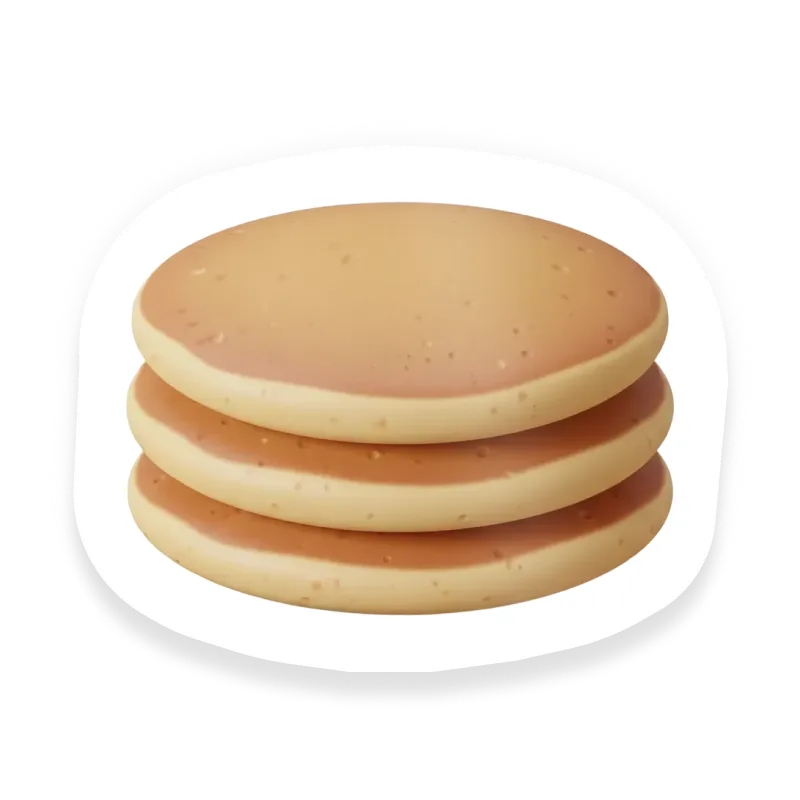
Pancakes
Prepared
Is Pancakes Safe for Babies?
Yes, babies can eat pancakes around 6 months old, ensuring they are plain, soft, and free from honey or other allergens.
Yes, but there are some things to know
At a Glance
Pancakes often include wheat flour, eggs, and milk, which are among the foods that frequently cause allergic reactions. They also give quick energy and nutrients — eggs provide protein and milk provides calcium.
How Do You Serve Pancakes?
- 1Cut pancakes into strips about the width of two adult fingers pressed together to make them easier for baby to grasp; if your baby struggles, hold a strip so they can take it.
- 2Prefer pancakes with a slightly crisp exterior or lightly warm them in a pan to firm the surface, which helps pieces hold their shape and makes pinching easier.
- 3If pancakes are very dry, spread a thin layer of yogurt, applesauce, or mashed fruit to reduce sticky gumming and improve texture.
- 4Never offer pancakes that contain or are topped with honey, and always supervise your baby while feeding to ensure pieces are an appropriate size and texture.
Is Pancakes a Common Allergen?
Pancakes typically contain wheat (gluten), eggs, and dairy (milk/butter), so they are not safe for children with those allergies. For children with gluten, egg, or dairy allergies, use safe alternatives—gluten-free flour, an egg replacer (e.g., flax or commercial binder), and plant-based milk. Watch for cross-contamination on shared cooking surfaces and utensils, and check toppings (nuts or peanut butter) before serving. If allergies are severe, always confirm ingredients with the cook or manufacturer.
What Nutrients Does Pancakes Have?
Nutrient snapshot: Pancakes are primarily a source of carbohydrates for energy and provide some protein and fat (especially when made with milk and eggs), which support growth and brain development. They can contribute calcium (from dairy), B vitamins and folate (from flour and eggs), and small amounts of iron, though pancakes are not typically iron-rich unless made with fortified flour. Be mindful of added sodium and sugar in boxed mixes and toppings; limit honey for infants under 12 months and introduce common allergens (wheat, dairy, eggs) separately before serving in mixed dishes.
Is Pancakes a Choking Hazard?
Low Choking Risk
Pancakes are generally low risk for choking, though any food can pose a risk for an individual child. Dry or sticky pancakes can cling to the tongue and may trigger gagging, so watch for persistent coughing, inability to cry or breathe, or changes in skin color. Stay within arm’s reach while baby is eating and make sure you know infant choking first aid so you can act quickly if needed.
Have More Questions?
Yes, you can freeze pancakes to store them for later use. Make sure they are completely cooled, then layer with parchment paper and store in an airtight container or zip-top bag in the freezer.
It depends on how you prepare and store the purees. When freezing baby food purees, use airtight containers or ice cube trays to prevent freezer burn and maintain freshness.
It depends if you choose organic or conventional ingredients; both can be safe for babies, but organic options might reduce exposure to pesticides and chemicals, which is a consideration for many parents.
It depends on your child's taste and dietary needs. Combining foods like fruit or vegetables into pancake batter can enhance flavor and nutrition, but introduce new ingredients separately first.
The appropriate portion size varies based on your baby's age and appetite. Typically, a small pancake or a portion equivalent to your baby's fist is a good starting point, then adjust as needed.
Is Pancakes safe for your baby?
Get personalized guidance on introducing Pancakes — with prep tips, allergen alerts, and age-specific serving ideas.
Sources
- CDC — Infant Botulism and Honey cdc.gov
- HealthyChildren.org (American Academy of Pediatrics) — Starting Solid Foods healthychildren.org
- American Red Cross — Infant Choking redcross.org
- NHS — Foods to avoid giving babies nhs.uk
What Other Prepared Can Babies Eat?
See all →
Backed by Science
Data you can trust.
Every food, guideline, and recommendation in Tummi is sourced from leading health institutions and peer-reviewed research.
 Centers for Disease Control and Prevention
Developmental milestones, nutrition guidelines, and allergen introduction timelines.
 American Academy of Pediatrics
Evidence-based feeding recommendations from the leading pediatric authority.
 National Institutes of Health
Peer-reviewed research on infant nutrition, allergies, and food safety.