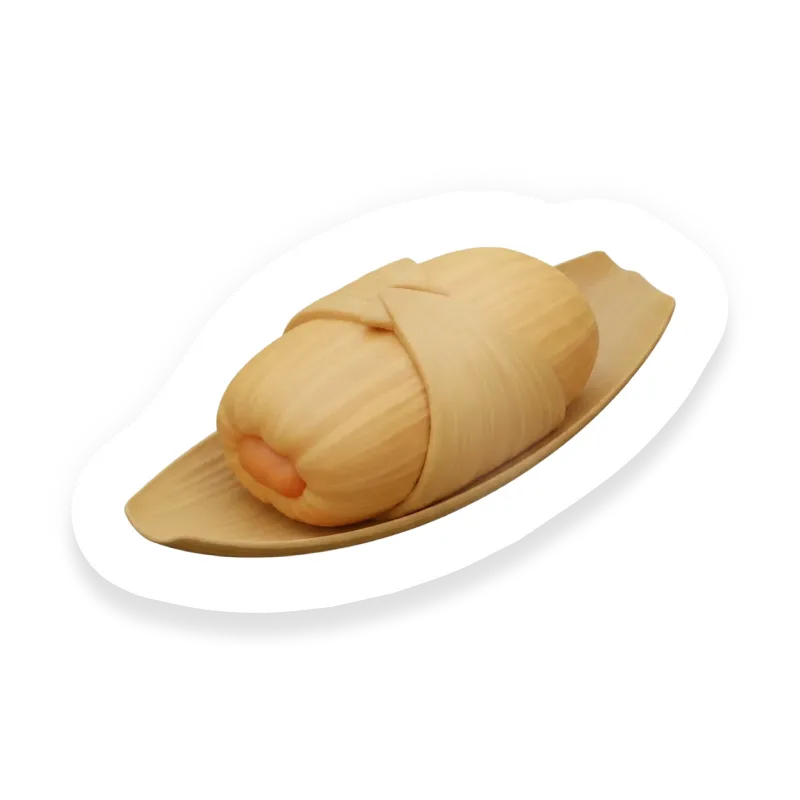
Tamales
Prepared
Is Tamales Safe for Babies?
Yes, soft tamales with age-appropriate fillings can be introduced around 6 months; avoid fried types and modifications for safety.
Yes, but there are some things to know
At a Glance
Tamales often include fillings or toppings with milk, eggs, soy, which can trigger allergic reactions in some people. They can also be nourishing because corn masa gives carbohydrates and fiber while fillings like meat or beans provide protein and iron.
How Do You Serve Tamales?
- 1Unwrap the tamal and cut it lengthwise into a thin, manageable strip that your baby can grasp.
- 2Carefully remove hard or large pieces—such as corn kernels, whole olives, large meat or cheese chunks, seeds, nuts, or dried fruit—so the texture is soft and uniform.
- 3Let your baby hold and nibble the soft masa or offer the scoopable filling on a pre-loaded spoon, guiding their hand if needed.
- 4Choose steamed or baked tamales with tender fillings. Avoid fried tamales as they can be too hard or greasy for early eaters.
Is Tamales a Common Allergen?
Tamales may contain dairy (cheese, butter, or crema), soy (in seasonings or oils), eggs (in some fillings), and could be exposed to peanuts or sesame through sauces or cross-contact—avoid if your child is allergic. Masa is typically corn-based (not gluten), but recipes and preparation vary; lard may be used (not a dairy ingredient) and fillings differ by vendor. Always ask the cook or check labels for cheese, eggs, soy-based sauces, or peanut/sesame cross-contamination before serving to a child with allergies. If unsure, choose clearly labeled dairy-free/egg-free options or avoid tamales altogether.
What Nutrients Does Tamales Have?
Tamales provide carbohydrate-rich energy from masa plus meaningful protein (from meats or cheese), dietary fat (often including saturated fat when lard or butter is used), and some fiber; they can also contribute iron, B vitamins (like niacin/folate), and calcium if cheese is included. These nutrients support growth, neurodevelopment (fat), and red blood cell formation (iron), making tamales potentially beneficial as an occasional age‑appropriate first food when fillings are modified. Because tamales can be high in saturated fat, sodium, calories, and common allergens, serve small age‑appropriate portions, choose lean fillings and pasteurized cheese, and limit frequency to avoid excess fat/salt intake.
Is Tamales a Choking Hazard?
Low Choking Risk
Tamales can be a choking hazard because they often contain firm or chewy fillings and some varieties (especially fried) are dense and harder for young mouths to manage. Small, hard pieces—like nuts, chunks of meat, cheese, firm vegetables, dried fruit, and large seeds—raise the risk. Stay within arm’s reach while your child is eating and be prepared to respond quickly if they gag or choke.
Have More Questions?
Yes. Soft tamales with age-appropriate fillings may be introduced around 6 months, but wait until 24 months for fried tamales due to choking risks. Always modify ingredients to ensure safety for your baby.
Yes. Tamales can be healthy for babies as they provide carbs, protein, fats, and fiber, supporting energy, growth, and gut health. Opt for versions with pasteurized cheese to reduce foodborne illness risk.
Yes. Tamales often contain dairy, egg, fish, shellfish, and sesame, among other common allergens. Introduce and observe each allergen carefully to prevent reactions when sharing tamales.
Yes, they can pose a choking hazard due to firm or chewy fillings like cheese chunks, meat, or dried fruits. Serve age-appropriate portions and textures, and supervise during meals.
Yes. Babies can have tamales made with lard or butter, as these fats support growth and development. Ensure the tamale is prepared safely and appropriate for your child's age.
Is Tamales safe for your baby?
Get personalized guidance on introducing Tamales — with prep tips, allergen alerts, and age-specific serving ideas.
Sources
- Unpasteurized Milk Can Pose a Serious Health Risk - FDA fda.gov
- Raw Milk | Food Safety - CDC cdc.gov
- Consumption of Raw or Unpasteurized Milk and Milk Products by Pregnant Women and Children - Pediatrics (PubMed) pubmed.ncbi.nlm.nih.gov
- Saturated Fat and Cardiometabolic Risk Factors... - Micha & Mozaffarian (PMC) pmc.ncbi.nlm.nih.gov
- Is Butter Back? A Systematic Review and Meta-Analysis - PLoS ONE journals.plos.org
What Other Prepared Can Babies Eat?
See all →



Backed by Science
Data you can trust.
Every food, guideline, and recommendation in Tummi is sourced from leading health institutions and peer-reviewed research.
 Centers for Disease Control and Prevention
Developmental milestones, nutrition guidelines, and allergen introduction timelines.
 American Academy of Pediatrics
Evidence-based feeding recommendations from the leading pediatric authority.
 National Institutes of Health
Peer-reviewed research on infant nutrition, allergies, and food safety.