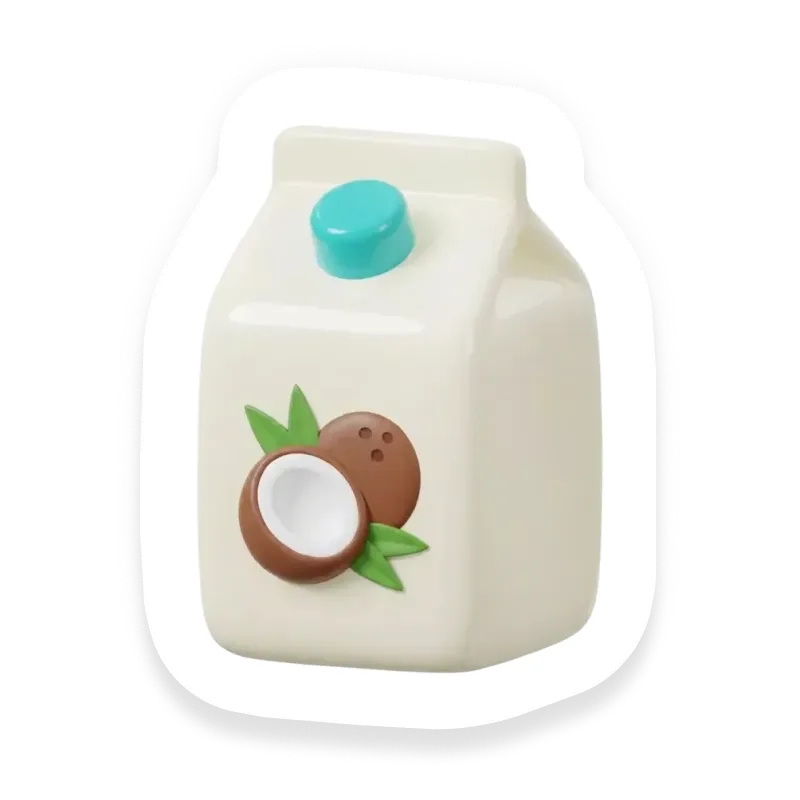
Coconut Milk
Vegan
Is Coconut Milk Safe for Babies?
Yes, coconut milk can be introduced as an ingredient in solid food at around 6 months; wait until after 12 months to serve as a drink.
Yes, but there are some things to know
At a Glance
Canned coconut milk provides a measurable amount of dietary iron content (about 3–4 mg per cup), which helps the body make hemoglobin and carry oxygen. It also contains medium chain triglycerides, like lauric acid, plus minerals such as manganese and copper that support energy use and other body functions.
How Do You Serve Coconut Milk?
- 1Shake or stir the can well until solids and liquids are recombined to a smooth consistency.
- 2Warm and whisk coconut milk into sauces, curries, or soups to create a creamy base and improve texture.
- 3Pour over cooked oats, rice, or warm cereals instead of water or regular milk for extra fat and flavor.
- 4Stir a small amount (start with 1 tablespoon) into mashed fruits or vegetables to add moisture and healthy fat; increase to taste.
- 5If the can is very separated or chilled, scoop solids into a jar and blend or gently heat before mixing for a smooth result.
Is Coconut Milk a Common Allergen?
Although coconut is botanically a fruit, the FDA classifies it as a tree nut for labeling. True coconut allergy is uncommon and many people with tree-nut allergies tolerate coconut, but reactions can occur. Coconut milk is dairy-free and typically free of eggs, peanuts, soy, fish/shellfish, sesame and gluten unless other ingredients or cross-contact are present. Check product labels for added allergens or shared-facility warnings and consult your child's allergist before offering coconut milk to a child with a tree-nut or other severe allergy.
What Nutrients Does Coconut Milk Have?
Coconut milk is a calorie‑dense source of fat (mostly saturated) and supplies modest amounts of iron, magnesium, potassium, selenium, zinc, some B‑vitamins and a little fiber — useful for energy and to boost nutrient density when added to solid foods. It is not a nutritionally complete milk replacement (low in protein, calcium and some vitamins), so avoid as a drink before 12 months and don’t let it displace breastmilk or formula. Use coconut milk in moderation to add calories and flavor to purees/cereals; introduce slowly to watch for rare coconut allergy and prioritize iron‑rich, fortified, or protein‑rich complementary foods.
Is Coconut Milk a Choking Hazard?
Very Low Choking Risk
Coconut milk presents a low choking risk when handled appropriately for your child’s developmental stage, but any food can potentially cause choking. Stay within arm’s reach during feeds and maintain a calm, attentive eating environment. Know the signs of choking and be prepared to respond if needed.
Have More Questions?
No, coconut milk should not be used as a primary drink for babies under 12 months. It can be included in solid foods from around 6 months but should complement breast milk or formula.
Yes, it's generally safe for babies when used as an ingredient in solid foods, and coconut milk offers beneficial fats and nutrients. It shouldn't replace breast milk or formula as the main drink during the first year.
It depends. Coconut allergy is rare but possible, so introduce coconut products gradually and watch for adverse reactions, especially if there's a family history of allergies.
No, coconut milk is not a choking hazard when prepared properly for a baby’s age. Serve it in age-appropriate textures and quantities to minimize choking risks.
It depends on the baby’s individual dietary needs; generally, small portions of coconut milk can be incorporated into balanced meals. Consult a pediatrician for personalized guidance.
Is Coconut Milk safe for your baby?
Get personalized guidance on introducing Coconut Milk — with prep tips, allergen alerts, and age-specific serving ideas.
Sources
- Food Allergen Labeling Guidance for Industry - FDA (Basics for Industry: Section 201(qq)) fda.gov
- Coconut Allergy Revisited (Anagnostou, 2017) mdpi.com
- Coconut anaphylaxis: Case report and review (Michavila et al., 2015) pubmed.ncbi.nlm.nih.gov
- Prevalence of food allergy in 137 latex-allergic patients (Kim & Hussain, 1999) pubmed.ncbi.nlm.nih.gov
What Other Vegan Can Babies Eat?
See all →
Backed by Science
Data you can trust.
Every food, guideline, and recommendation in Tummi is sourced from leading health institutions and peer-reviewed research.
 Centers for Disease Control and Prevention
Developmental milestones, nutrition guidelines, and allergen introduction timelines.
 American Academy of Pediatrics
Evidence-based feeding recommendations from the leading pediatric authority.
 National Institutes of Health
Peer-reviewed research on infant nutrition, allergies, and food safety.