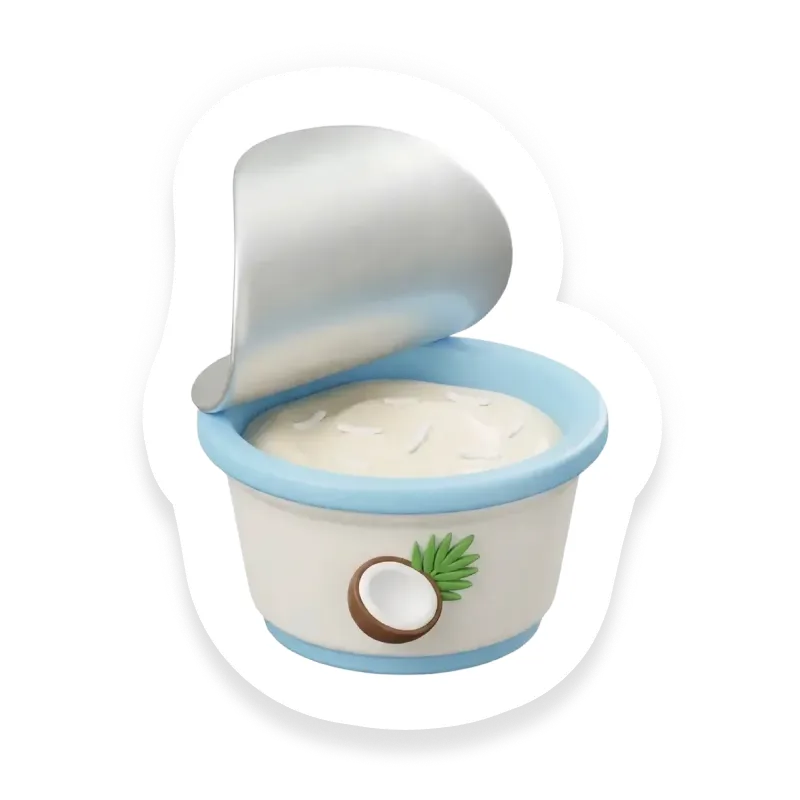
Coconut Yogurt
Vegan
Is Coconut Yogurt Safe for Babies?
Yes, coconut yogurt can be introduced around 6 months, ensuring it is age-appropriate and free of added allergens.
Yes, but there are some things to know
At a Glance
Coconut yogurt often contains live probiotics, meaning friendly bacteria from fermentation that can help balance the gut microbiome. It also has some natural fiber and many brands add prebiotic fibers like inulin, so the mix of probiotics and fiber can support healthy digestion.
How Do You Serve Coconut Yogurt?
- 1Serve coconut yogurt in a shallow bowl or on a small plate so baby can reach it and explore with fingers or a child-sized spoon.
- 2Pre-load a small spoon with a thin smear and offer it at mouth level to reduce gagging; offer only small spoonfuls to let them practice scooping.
- 3If nut or seed butters have been introduced and tolerated, stir in a small amount (about ½–1 teaspoon per 3 tablespoons yogurt) to thicken and add calories. Only if introduced, watch closely for any reactions and serve a thin smear on the spoon to reduce choking risk.
- 4Use yogurt as a neutral base—mix in mashed banana, pureed avocado, or mild cooked vegetable purées in small amounts to introduce sweet or savory flavors.
Is Coconut Yogurt a Common Allergen?
Coconut can cause allergic reactions in some people—especially those with tree‑nut allergies—so verify with an allergist if your child has a tree‑nut allergy. Many coconut yogurts are dairy‑free (made from coconut milk), but always check ingredient labels for added dairy, soy, or other allergens and for cross‑contact warnings. If there is any history of severe food allergy, avoid products without clear allergen and cross‑contact labeling.
What Nutrients Does Coconut Yogurt Have?
Coconut yogurt is energy-dense and rich in fat (including medium‑chain triglycerides), which helps support infants’ brain development and growth; many brands are fortified with calcium and vitamin D and some contain live probiotics that may aid digestion. It is typically lower in protein and iron than dairy yogurt, so pair servings with iron-rich foods. Choose unsweetened, fortified varieties and offer in moderation because coconut yogurt can be high in saturated fat and calories.
Is Coconut Yogurt a Choking Hazard?
Very Low Choking Risk
Coconut yogurt is generally low risk for choking due to its smooth, spoonable texture, but any food can pose a hazard. Keep your baby within arm’s reach during feeding and watch closely for signs of coughing, gagging, or trouble breathing. Be cautious of added mix-ins or toppings that could present a choking risk and introduce such items separately once your child handles plain yogurt safely.
Have More Questions?
Yes, coconut yogurt can be stored in the refrigerator for up to a week after opening, provided it's kept in a sealed container.
Yes, you can freeze unopened coconut yogurt to extend its shelf life, but once opened, it should be used within a few days for safety and quality.
Yes, select organic coconut yogurt to avoid pesticides and support cleaner ingredients, especially for your baby.
Yes, you can mix coconut yogurt with pureed fruits or veggies to introduce new flavors and textures to your baby.
Yes, portions should be appropriate for your baby's age, typically starting with 1-2 tablespoons and increasing as they get used to eating solids.
Is Coconut Yogurt safe for your baby?
Get personalized guidance on introducing Coconut Yogurt — with prep tips, allergen alerts, and age-specific serving ideas.
Sources
- Coconut Allergy Revisited (Anagnostou, 2017) mdpi.com
- Coconut anaphylaxis: Case report and review (Michavila et al., 2015) pubmed.ncbi.nlm.nih.gov
- Prevalence of food allergy in 137 latex-allergic patients (Kim & Hussain, 1999) pubmed.ncbi.nlm.nih.gov
- FDA Basics for Industry: Section 201(qq) — Food FAQs fda.gov
What Other Vegan Can Babies Eat?
See all →
Backed by Science
Data you can trust.
Every food, guideline, and recommendation in Tummi is sourced from leading health institutions and peer-reviewed research.
 Centers for Disease Control and Prevention
Developmental milestones, nutrition guidelines, and allergen introduction timelines.
 American Academy of Pediatrics
Evidence-based feeding recommendations from the leading pediatric authority.
 National Institutes of Health
Peer-reviewed research on infant nutrition, allergies, and food safety.