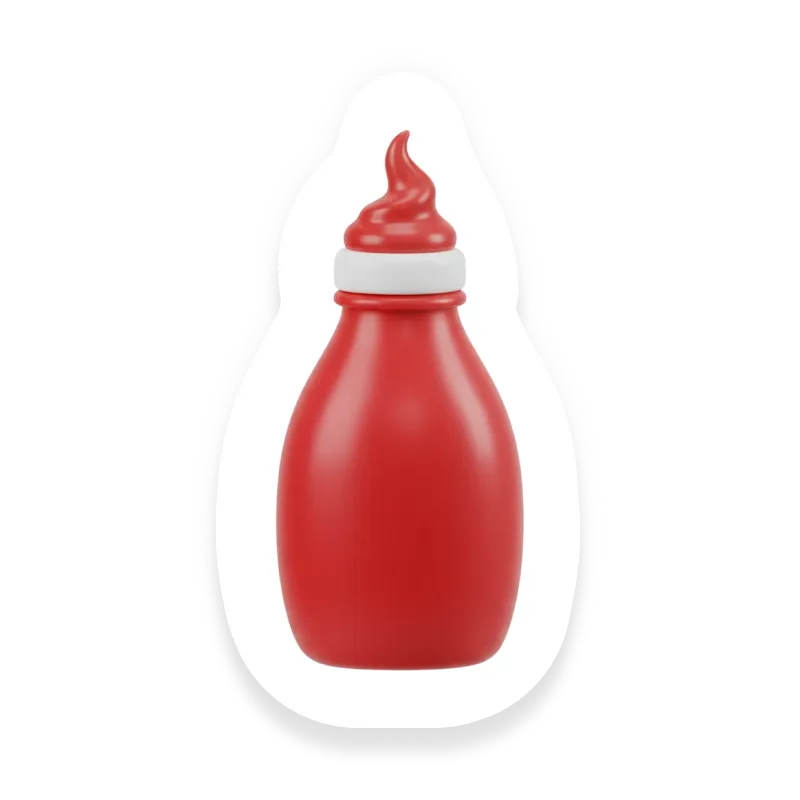
Ketchup
Condiment
Is Ketchup Safe for Babies?
Yes, babies can have ketchup around 6 months old once they are ready for solids, preferably in moderation and free of honey.
Yes, but there are some things to know
How Do You Serve Ketchup?
- 1Offer a tiny taste on a spoon to check if the baby likes it and to watch for any adverse reaction.
- 2Use only honey-free ketchup and read ingredient labels carefully for hidden honey or other allergens.
- 3Keep portions very small and use ketchup sparingly in family meals since it’s often high in sodium and sugar.
- 4Serve while supervising and adjust the texture and amount to match the baby’s chewing and swallowing skills.
Is Ketchup a Common Allergen?
Most commercial ketchups are free of the eight major allergens (milk, eggs, fish, shellfish, peanuts, tree nuts, wheat/gluten and soy), but recipes and labeling vary by brand and region. Some formulations list 'spice' or 'spice extracts' and may explicitly include celery (noted on some product sheets); cross-contact in shared facilities is possible, so always read the ingredient list and any "may contain" or allergen statements. For severe allergies (especially celery, gluten, or sulfites) contact the manufacturer or choose a clearly labeled allergy‑friendly product.
What Nutrients Does Ketchup Have?
Ketchup contributes small amounts of tomato-derived nutrients—notably the antioxidant lycopene and trace vitamin A, vitamin C, and potassium—but it is not a meaningful source of iron or core baby nutrients. The main downside is added sugar and sodium (commercial ketchups are roughly 15–20 kcal, ~4 g sugar and ~150–190 mg sodium per tablespoon), so offer only small tastes, choose reduced-sodium/low-sugar versions when possible, and avoid honey. Used sparingly as a flavoring, ketchup can help babies accept savory foods, but avoid frequent or large servings to prevent excess sodium and sugar intake.
Is Ketchup a Choking Hazard?
Very Low Choking Risk
Ketchup itself is low risk for choking because of its smooth, runny texture, so it rarely causes an obstruction. That said, any food can lead to choking, so stay within arm’s reach during meals and watch for sudden coughing, gagging, trouble breathing, or inability to cry or make sounds. Be prepared to act quickly by knowing basic infant and toddler choking first aid.
Have More Questions?
Yes. Ketchup can be introduced to babies around 6 months of age when they start solids, as long as it contains no honey. Use in moderation due to its high sodium content.
Yes. Ketchup is safe for babies once they are ready for solids, provided it is free of honey and served in small amounts. Its sodium level is high, so it should be offered sparingly.
No, ketchup generally does not contain common allergens, but always check labels for ingredients like soy or wheat, especially in flavored varieties.
No. Ketchup is not a choking hazard when served in appropriate textures and quantities for babies. Always supervise feeding and serve in a suitable form.
It depends. Ketchup is typically a condiment and not a primary food, but it can be paired with a variety of foods to introduce new flavors to your baby’s diet.
Is Ketchup safe for your baby?
Get personalized guidance on introducing Ketchup — with prep tips, allergen alerts, and age-specific serving ideas.
Sources
- Cleveland Clinic — Sulfite Sensitivity my.clevelandclinic.org
Backed by Science
Data you can trust.
Every food, guideline, and recommendation in Tummi is sourced from leading health institutions and peer-reviewed research.
 Centers for Disease Control and Prevention
Developmental milestones, nutrition guidelines, and allergen introduction timelines.
 American Academy of Pediatrics
Evidence-based feeding recommendations from the leading pediatric authority.
 National Institutes of Health
Peer-reviewed research on infant nutrition, allergies, and food safety.