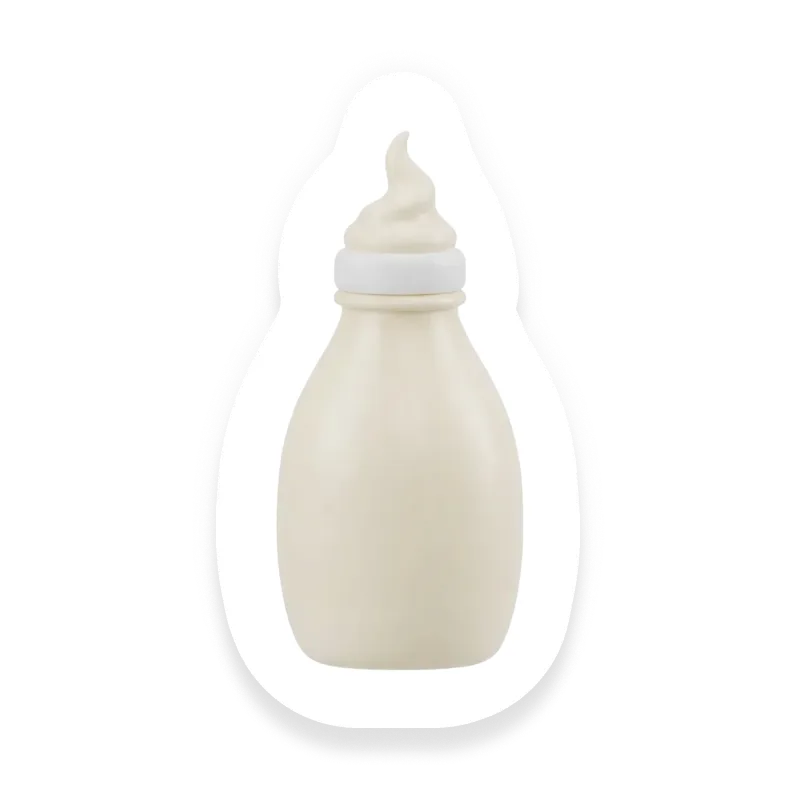
Mayonnaise
Condiment
Is Mayonnaise Safe for Babies?
Yes, babies can eat mayonnaise made with pasteurized eggs, typically around 6 months when starting solids, avoiding honey-containing varieties.
Yes, but there are some things to know
At a Glance
Mayonnaise often contains eggs and can trigger allergic reactions in people with egg allergy. It also provides healthy unsaturated fats from the oil and contains egg proteins that supply choline and vitamin E.
How Do You Serve Mayonnaise?
- 1Use store-bought mayonnaise labeled “pasteurized eggs” or an eggless mayonnaise to minimize risk of foodborne illness.
- 2Never offer homemade mayonnaise made with raw eggs or any product containing honey.
- 3Spread a thin layer on soft, easy-to-grasp finger foods or stir a small amount into scoopable soft foods so the baby can self-feed.
- 4Choose low-sodium varieties when possible, refrigerate after opening, use clean utensils, and discard mayo or mayo-covered food left out more than 2 hours.
Is Mayonnaise a Common Allergen?
Mayonnaise is normally made with egg yolks, so regular mayonnaise is not safe for children with an egg allergy — commercial mayonnaise must contain egg to meet its standard definition. Many brands use pasteurized eggs (which help food‑safety) but pasteurization does not remove allergy risk. Some products are egg‑free/vegan or labeled accordingly, but parents should always read ingredient labels and watch for other allergens (e.g., mustard, soy) or cross‑contact. If your child has a known egg allergy, avoid regular mayonnaise and check with your allergist about safe alternatives.
What Nutrients Does Mayonnaise Have?
Mayonnaise is an energy-dense, high-fat condiment that supplies calories, fat-soluble vitamins (notably vitamin K and vitamin E), choline from egg yolks, and polyunsaturated/monounsaturated fats (and sometimes omega-3s depending on the oil). These fats and choline support infants' rapid growth, brain development, and absorption of fat-soluble nutrients. Mayonnaise is low in protein, iron, and fiber and can be high in sodium, so too much can displace more nutrient-dense foods and contribute to excess sodium intake. Choose pasteurized, low‑sodium, full‑fat or eggless varieties as appropriate for babies.
Is Mayonnaise a Choking Hazard?
Very Low Choking Risk
Mayonnaise itself isn’t a common choking hazard because it’s smooth and spreadable, but the foods it’s served with can be. Be mindful of higher-risk items it may accompany and always supervise closely—stay within arm’s reach during meals.
Have More Questions?
Yes, mayonnaise made with pasteurized eggs can be introduced around 6 months when babies start solids, but avoid varieties with honey due to botulism risk.
Mayonnaise is made from oil, egg yolk, and an acid; recipes vary for vegan and allergy-friendly options, but its origin is European and it is popular worldwide.
Yes, most store-bought mayonnaise is safe for babies when made with pasteurized eggs; choose full-fat, low-sodium versions for healthy growth and development.
No, mayonnaise is not a common choking hazard, but always supervise your baby during meals and serve foods safely, especially with foods that accompany mayonnaise.
Mayonnaise contains egg, and possibly other allergens like mustard or soy, so introduce any new allergen, including mayonnaise, gradually and observe for reactions.
Is Mayonnaise safe for your baby?
Get personalized guidance on introducing Mayonnaise — with prep tips, allergen alerts, and age-specific serving ideas.
Sources
- 10 Dangerous Food Safety Mistakes cdc.gov
- Infants' and Children's Salt Taste Perception and Liking: A Review ncbi.nlm.nih.gov
- Dietary Reference Intakes for Sodium and Potassium (2019) nap.edu
- Sodium (CDC) cdc.gov
- Sulfite Sensitivity (Cleveland Clinic) my.clevelandclinic.org
Backed by Science
Data you can trust.
Every food, guideline, and recommendation in Tummi is sourced from leading health institutions and peer-reviewed research.
 Centers for Disease Control and Prevention
Developmental milestones, nutrition guidelines, and allergen introduction timelines.
 American Academy of Pediatrics
Evidence-based feeding recommendations from the leading pediatric authority.
 National Institutes of Health
Peer-reviewed research on infant nutrition, allergies, and food safety.