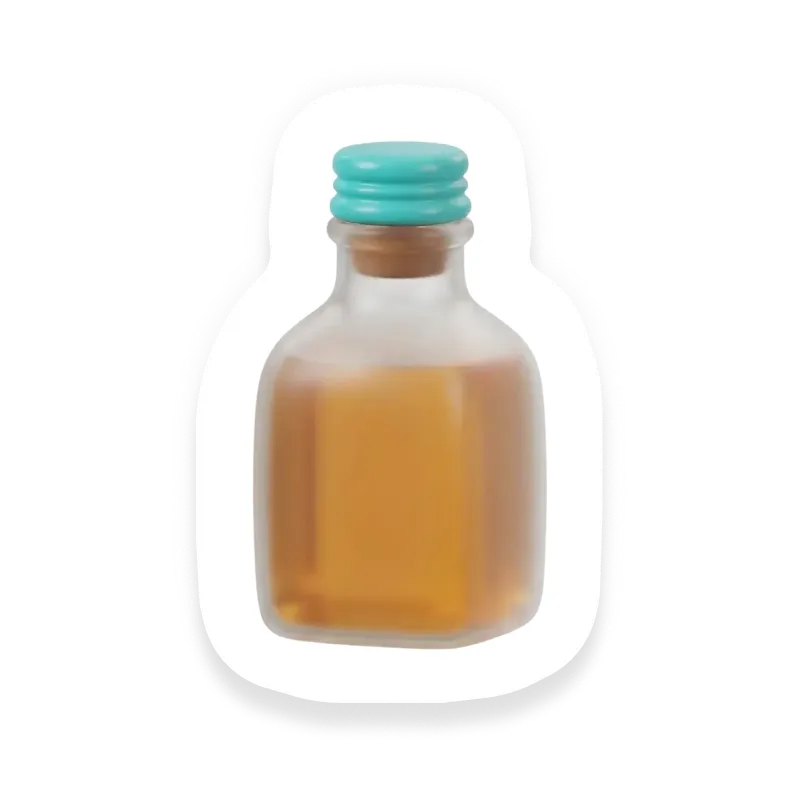
Vinegar
Condiment
Is Vinegar Safe for Babies?
No, vinegar should not be given directly to babies; it's used as a cooking ingredient in small amounts from 6 months onward.
Yes, but there are some things to know
How Do You Serve Vinegar?
- 1Use vinegar sparingly as an ingredient in cooked foods, sauces, or dressings, or drizzle a small amount over fruits and vegetables — do not serve vinegar alone.
- 2Start with a very small amount for the first few servings (about 1/8–1/4 teaspoon mixed into a full portion) and increase gradually only if no adverse reaction occurs.
- 3Always check the product label to ensure it contains no honey; when in doubt, choose a plain distilled or labeled honey-free vinegar.
- 4Acidic foods can irritate the skin or worsen diaper rash, so wipe the baby's face and diaper area promptly after meals. Clean skin gently if contact occurs.
Is Vinegar a Common Allergen?
Most plain vinegars (apple cider, distilled white, rice, balsamic) are not common major allergens, but malt vinegar (made from barley) can contain gluten and should be avoided by people with celiac disease or gluten allergy. Wine-based vinegars may contain or have been exposed to sulfites, which can trigger reactions in sulfite-sensitive individuals. Flavored or infused vinegars can include added allergens (herbs, mustard, nuts, soy), so always read labels and avoid any vinegar with ingredients your child is allergic to.
What Nutrients Does Vinegar Have?
Vinegar is very low in calories and not a significant source of macronutrients, though it contains trace amino acids, polyphenols and other bioactive compounds depending on the type. Its main benefit for babies is as a flavoring that can encourage acceptance of vegetables and varied foods rather than as a nutrient-dense food. Parents should avoid vinegars containing honey for infants under 12 months and watch for sulfites or added allergens; excessive consumption can cause tooth erosion, digestive upset, or skin/diaper irritation from acidity.
Is Vinegar a Choking Hazard?
Very Low Choking Risk
Vinegar itself is not a choking hazard and generally presents a low risk when included in foods; the greater choking concern comes from solid items served with vinegar (for example, whole pickles or large chunks). Supervise meals closely and stay within arm’s reach so you can respond quickly if your child gags or chokes. If you have concerns about your child’s feeding or choking risk, consult your pediatrician for personalized advice.
Have More Questions?
Yes. Vinegar can be used as an ingredient in baby foods from about 6 months old, but it should be added in small amounts and not contain honey or other unsafe ingredients.
Yes. Vinegar contains antioxidants and compounds that are generally safe in small amounts used in cooking, but avoid giving it directly or in large quantities to babies.
No. Vinegar is naturally low in common allergens, but it may contain sulfites, which can cause reactions in sensitive individuals, so check labels if necessary.
No. Vinegar itself isn't a choking hazard when prepared properly for babies, but always serve it in age-appropriate forms and supervise eating.
No. Most vinegars contain only trace amounts of alcohol, making them generally safe for use in cooking with babies, provided alcohol hasn't been added.
Is Vinegar safe for your baby?
Get personalized guidance on introducing Vinegar — with prep tips, allergen alerts, and age-specific serving ideas.
Sources
- Vinegar - The Nutrition Source (Harvard T.H. Chan School of Public Health) nutritionsource.hsph.harvard.edu
- Missouri Poison Center missouripoisoncenter.org
- Kacik J, Wróblewska B, Lewicki S, Zdanowski R, Kalicki B. Serum Diamine Oxidase in Pseudoallergy in the Pediatric Population (Adv Exp Med Biol, 2018) pubmed.ncbi.nlm.nih.gov
- Tan, S.C. Vinegar fermentation (LSU Master's Thesis, 2005) repository.lsu.edu
- Vally H, Misso NL. Adverse reactions to the sulphite additives (Gastroenterol Hepatol Bed Bench, 2012) pubmed.ncbi.nlm.nih.gov
- Cleveland Clinic. Sulfite Allergy & Sensitivity my.clevelandclinic.org
- Anderson S, Gonzalez LA, Jasbi P, Johnston CS. Evidence That Daily Vinegar Ingestion May Contribute to Erosive Tooth Wear in Adults (J Med Food, 2021) pubmed.ncbi.nlm.nih.gov
Backed by Science
Data you can trust.
Every food, guideline, and recommendation in Tummi is sourced from leading health institutions and peer-reviewed research.
 Centers for Disease Control and Prevention
Developmental milestones, nutrition guidelines, and allergen introduction timelines.
 American Academy of Pediatrics
Evidence-based feeding recommendations from the leading pediatric authority.
 National Institutes of Health
Peer-reviewed research on infant nutrition, allergies, and food safety.