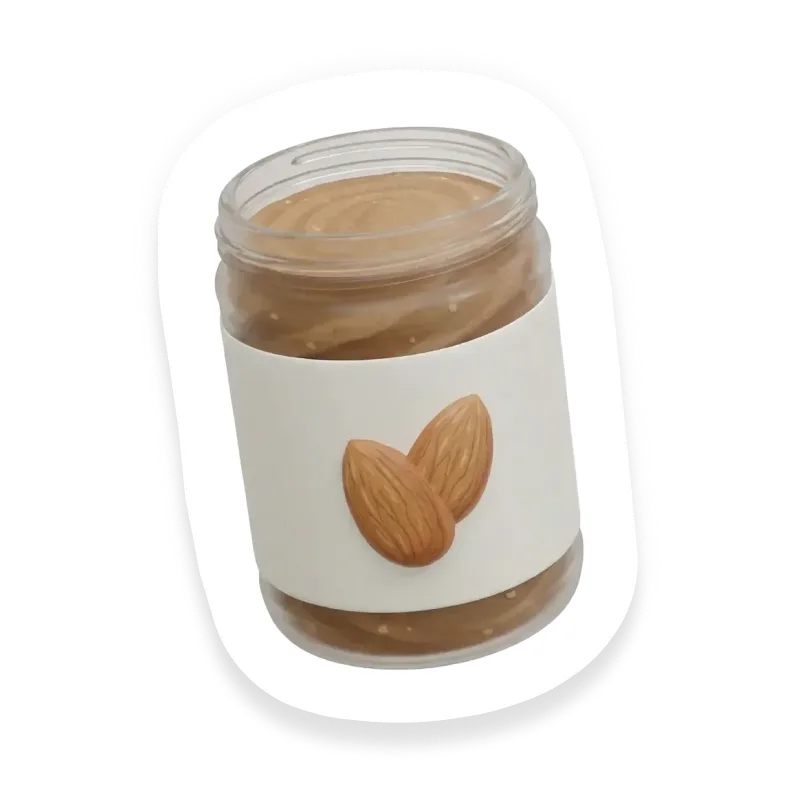
Almond Butter
Treenut
Is Almond Butter Safe for Babies?
Yes, almond butter can be introduced around 6 months when thinned with liquids, but ensure it is served in a safe, thin, and manageable form to prevent choking.
Yes, but there are some things to know
At a Glance
Almond butter contains modest iron per serving, so it can contribute to daily iron needs especially when eaten with vitamin C to help absorption. It also provides plant based iron and heart healthy fats, plus protein and magnesium that support energy and overall health.
Almond butter can help keep digestion regular because it is rich in fiber, which adds bulk and helps food move through the gut. It also provides magnesium and healthy plant fats that support normal gut muscle function and softer stools.
Almond butter can trigger allergies in people who are sensitive to tree nuts because it contains almond proteins that the immune system can react to. For most people, it provides healthy monounsaturated fats plus vitamin E and magnesium, nutrients linked to heart health and antioxidant support.
How Do You Serve Almond Butter?
- 1Thin a small spoonful of smooth almond butter with breast milk, formula, warm water, or purée until it becomes loose and runny so it mixes easily.
- 2Stir the thinned almond butter into warm cereal, yogurt, or mashed fruit, or spread a very thin layer on toast strips for easy-to-handle bites.
- 3Offer only small amounts at a time and provide sips of water from an open cup to help clear sticky residue and reduce choking risk.
- 4Check the ingredient label and do not use almond butter that contains honey or large nut pieces.
- 5If your child has a family history of nut allergy or shows symptoms like hives, swelling, vomiting, or trouble breathing, stop feeding and seek medical help immediately.
Is Almond Butter a Common Allergen?
Almond butter is a tree‑nut product (made from almonds) and should be avoided by anyone with a tree‑nut allergy. Packaged products in the U.S. must declare tree nuts on the label, but cross‑contact can occur—check ingredient lists and any "may contain" or facility statements. If your child has severe eczema, known food allergies, or a history of reactions, consult your pediatrician or allergist before offering almond butter. For nut‑free settings, use safe alternatives such as sunflower-seed or soy butters and follow school/childcare policies.
What Nutrients Does Almond Butter Have?
Almond butter is calorie-dense and rich in healthy monounsaturated fats, plant protein, and fiber, and provides key micronutrients for infants including iron, calcium, magnesium, potassium, zinc, and vitamin E. These nutrients support brain and bone development and provide concentrated energy and antioxidant support; iron in particular can help supplement infant iron stores when offered regularly. Because it’s high in calories and can be sticky, serve only small thinned amounts, avoid varieties with added salt, sugar, or honey, and don’t overdo servings so it doesn’t displace other iron-rich or bulk foods.
Is Almond Butter a Choking Hazard?
Low Choking Risk
Almond butter is very thick and sticky, which can make it a higher choking risk for babies and young children because it can cling in the mouth or throat. The texture—rather than the nut itself—is the main choking concern, so stay close and attentive during meals and be prepared to act if choking occurs. Know infant choking first aid and keep an emergency plan in mind.
Have More Questions?
Yes. When thinned with breast milk, formula, water, or purée, almond butter can be introduced around 6 months when babies start solids. Always serve in an age-appropriate, safe consistency.
Yes. Store almond butter in a cool, dry place or the refrigerator after opening to maintain freshness and prevent spoilage, especially if it contains no preservatives.
Yes. Freezing almond butter in small, airtight containers or portions allows you to easily thaw only what you need, keeping it fresh and convenient for feeding your baby.
It depends. Organic almond butter is made from almonds grown without synthetic pesticides or fertilizers, which some parents prefer for their baby's health, but both organic and conventional can be nutritious options.
Yes. Mixing almond butter with fruits, vegetables, or yogurt can add flavor, texture, and nutrients, making it a versatile component of toddler meals.
Is Almond Butter safe for your baby?
Get personalized guidance on introducing Almond Butter — with prep tips, allergen alerts, and age-specific serving ideas.
Sources
- Review of 400 consecutive oral food challenges to almond doi.org
What Other Treenut Can Babies Eat?
See all →

Backed by Science
Data you can trust.
Every food, guideline, and recommendation in Tummi is sourced from leading health institutions and peer-reviewed research.
 Centers for Disease Control and Prevention
Developmental milestones, nutrition guidelines, and allergen introduction timelines.
 American Academy of Pediatrics
Evidence-based feeding recommendations from the leading pediatric authority.
 National Institutes of Health
Peer-reviewed research on infant nutrition, allergies, and food safety.