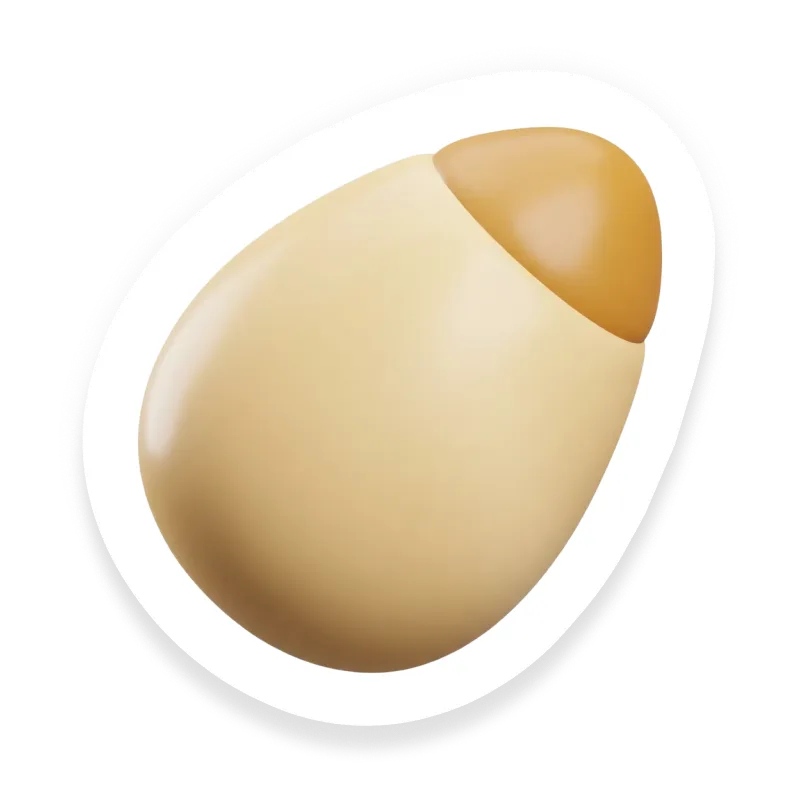
Pine Nut
Treenut
Is Pine Nut Safe for Babies?
Yes, pine nuts can be introduced around 6 months when prepared appropriately, avoiding whole nuts to prevent choking.
Yes, but there are some things to know
At a Glance
Pine nuts are a good iron source, providing plant-based iron that helps the body make hemoglobin. They also supply healthy unsaturated fats, magnesium and vitamin E, which support energy and healthy red blood cells.
These small nuts support digestion because they are high in fiber, which helps stool move more regularly. They are also rich in magnesium and contain healthy fats that help relax gut muscles and support overall gut health.
How Do You Serve Pine Nut?
- 1Finely grind or crush pine nuts until no visible pieces remain, creating a powdery texture to reduce choking risk.
- 2Start with a tiny amount (about the size of a pea) and mix it evenly into soft foods like yogurt, cereal, cooked grains, or mashed fruit so the nut is dispersed.
- 3To make a spread, process until completely smooth and thin with water or yogurt to a very thin, non-sticky consistency — it should drip slowly when lifted so it can be applied thinly.
- 4Serve sparingly and always supervise; introduce pine nuts alone first and watch closely for any signs of an allergic reaction.
Is Pine Nut a Common Allergen?
Pine nuts are tree-nuts and, although allergies are uncommon, they can cause severe reactions in some children. Cross-reactivity with other tree nuts is generally low, but hidden ingredients (e.g., pesto, sauces, baked goods) and individual sensitivity mean caution is needed—always check labels and ask about ingredients. If your child has any nut allergy history, consult an allergist before offering pine nuts and follow their advice about testing and emergency medication.
What Nutrients Does Pine Nut Have?
Pine nuts are nutrient‑dense seeds rich in healthy unsaturated fats and calories, plant protein, iron, zinc, magnesium, copper, folate, B vitamins, vitamin E and K, and lutein—nutrients that support brain and eye development, bone health, and iron status. For babies, the healthy fats and iron are particularly valuable for neural development and preventing iron deficiency, while protein and micronutrients support overall growth. Because pine nuts are calorie‑dense and can go rancid, offer them in small, age‑appropriate forms (finely ground or thinned into a spread) to avoid excess calories and choking. Monitor portion size and storage, and be mindful of possible nut allergy.
Is Pine Nut a Choking Hazard?
High Choking Risk
Whole pine nuts, nut pieces, and thick globs of nut butter are choking hazards for babies and young children. Keep your child seated and calm during meals, stay within arm’s reach, and supervise closely whenever pine nuts are present. Wait until your child has reliable chewing and swallowing skills before offering whole nuts, and make sure an adult nearby knows infant choking first aid and CPR.
Have More Questions?
It depends. Pine nuts should be introduced in pureed or finely ground form to avoid choking, and should be prepared in an age-appropriate way for babies around 6 months old.
It depends. Whole pine nuts are a choking hazard for babies, so they should only be served in pureed, ground, or otherwise soft, processed forms suitable for their age.
It depends. Store opened pine nuts in an airtight container in the refrigerator for up to 2 months or in the freezer for up to 6 months to keep them fresh and safe for baby food preparation.
It depends. Organic pine nuts are often more expensive but may have fewer pesticides; however, both organic and conventional pine nuts are nutrient-dense options for babies.
It depends. Pine nuts can be combined with other pureed foods like fruits or vegetables to introduce new flavors and textures to your baby’s diet, promoting acceptance and dietary variety.
Is Pine Nut safe for your baby?
Get personalized guidance on introducing Pine Nut — with prep tips, allergen alerts, and age-specific serving ideas.
Sources
- World Health Organization — Mycotoxins (includes aflatoxins) who.int
- Olsen & Raab (2013) — Harvesting, Handling, and Storing Nuts from the Home Orchard (Oregon State Extension PDF) extension.oregonstate.edu
- FAO & WHO — Risk Assessment of Food Allergens (Meeting report, Food Safety and Quality Series No. 14) openknowledge.fao.org
- Zuidmeer et al. (2008) — The prevalence of plant food allergies: A systematic review (J Allergy Clin Immunol) — PubMed pubmed.ncbi.nlm.nih.gov
- Brough et al. (2020) — Defining challenge-proven coexistent nut and sesame seed allergy — PubMed pubmed.ncbi.nlm.nih.gov
- Cabanillas & Novak (2015) — Allergic Reactions to Pine Nut: A Review — PubMed pubmed.ncbi.nlm.nih.gov
- Risso et al. (2015) — A potential trigger for pine mouth — Nutrition Research (PMC) pmc.ncbi.nlm.nih.gov
- HealthyChildren.org — Choking Prevention for Babies & Children (American Academy of Pediatrics) healthychildren.org
What Other Treenut Can Babies Eat?
See all →
Backed by Science
Data you can trust.
Every food, guideline, and recommendation in Tummi is sourced from leading health institutions and peer-reviewed research.
 Centers for Disease Control and Prevention
Developmental milestones, nutrition guidelines, and allergen introduction timelines.
 American Academy of Pediatrics
Evidence-based feeding recommendations from the leading pediatric authority.
 National Institutes of Health
Peer-reviewed research on infant nutrition, allergies, and food safety.