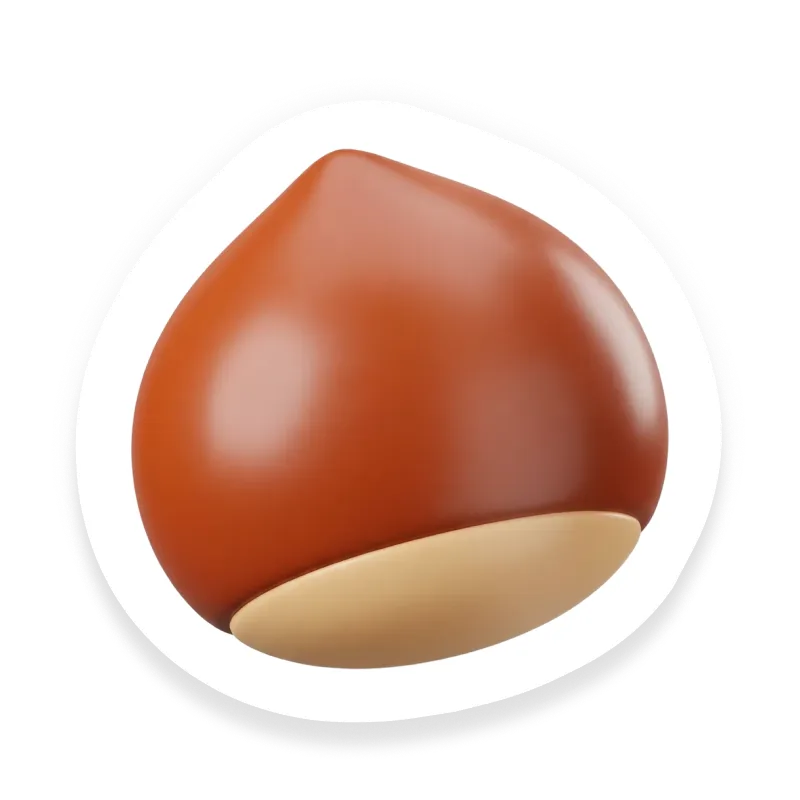
Chestnut
Treenut
Is Chestnut Safe for Babies?
Yes, finely ground or pasteurized chestnut can be introduced around 6 months, but avoid whole or chopped chestnuts due to choking risk.
Yes, but there are some things to know
At a Glance
Chestnuts are high in fiber and have resistant starch content that feeds helpful gut bacteria. These nutrients add bulk and soften stool to support bowel regularity.
How Do You Serve Chestnut?
- 1Fully cook and peel chestnuts, removing all inner and outer skins; grind or blend with a small amount of water, breast milk, or formula until there are no large pieces and you have a smooth, saucy paste.
- 2Aim for a lump-free, spoonable texture that can be stirred into purees or soft foods, and always test temperature before offering.
- 3Because chestnuts are high in fiber, introduce them slowly — start with a teaspoon and increase gradually over several days. Consult a pediatrician if you see persistent gas, rash, vomiting, or breathing changes.
- 4Avoid candied, whole, or firm pieces; these increase choking risk and should not be given.
Is Chestnut a Common Allergen?
Chestnuts are botanically tree nuts and can cause allergic reactions in people with tree‑nut allergies, though not everyone with a tree‑nut allergy will react to chestnuts. Water chestnuts are unrelated and are usually safe for those with tree‑nut allergies. Because cross‑reactivity varies and processed products may be contaminated with other tree nuts, check labels and consult your child’s allergist before offering chestnuts. If your child has a history of severe or multiple food allergies, treat chestnuts as potentially risky and carry emergency medication as advised.
What Nutrients Does Chestnut Have?
Chestnuts are a starchy, lower‑fat nut that supply baby‑friendly carbohydrates for energy and fiber to support gut health, plus important micronutrients including folate (for neural development), vitamin C (helps iron absorption and immunity), vitamin B6 (metabolism), potassium and magnesium (electrolyte balance), and zinc (growth and immune support). They are not a notable source of iron. Benefits for babies include energy-dense, digestible carbs and vitamins that support growth; serve finely ground or thinned paste for safety. Avoid overdoing chestnuts because their high fiber and starch can cause gas or loose stools, and sweetened chestnut pastes add excess sugar; watch for rare cross‑reactive allergies (latex‑fruit syndrome).
Is Chestnut a Choking Hazard?
High Choking Risk
Chestnuts are firm, round, and can be slippery, chewy, or crumbly—qualities that increase their choking risk for young children. Be especially cautious when first introducing them: stay within arm’s reach, keep mealtimes calm and seated, and watch closely for signs of choking. Know infant/toddler choking first aid or have someone trained nearby in case you need it.
Have More Questions?
Yes. Chestnuts can be introduced around 6 months when mashed or pureed, but avoid whole or chopped chestnuts for babies under 1 year due to choking risks.
Yes. Chestnuts are naturally gluten-free and contain beneficial nutrients, making them a healthy option for babies when prepared properly.
No, chestnuts are not a common allergen, but cross-reactivity with latex or certain fruits can occur; monitor for any allergic reactions.
Yes. Because chestnuts are firm and slippery, they pose a choking hazard for babies, especially if served whole or in large pieces.
It depends. Chestnut paste can be introduced once baby is used to solids, but it's best to wait until 6 months and serve in small, manageable amounts.
Is Chestnut safe for your baby?
Get personalized guidance on introducing Chestnut — with prep tips, allergen alerts, and age-specific serving ideas.
Sources
- Changes Induced by Pressure Processing on Immunoreactive Proteins of Tree Nuts (Cuadrado et al., Molecules, 2020) mdpi.com
- Cross-reactivity Syndromes in Food Allergy (García & Lizaso, 2011) jiaci.org
- Oral Allergy Syndrome Induced by Chestnut (Antico, Ann Allergy Asthma Immunol, 1996) doi.org
- Latex allergy (Slater, J Allergy Clin Immunol, 1994) doi.org
- Differential allergen sensitization patterns in chestnut allergy (Sánchez-Monge et al., J Allergy Clin Immunol, 2006) doi.org
- Sugar in Infants, Children and Adolescents: A Position Paper (Fidler Mis et al., ESPGHAN Committee on Nutrition, 2017) pubmed.ncbi.nlm.nih.gov
- Added Sugar and Dental Caries in Children (Chi & Scott, Dent Clin North Am, 2019) pmc.ncbi.nlm.nih.gov
- WHO Guideline for complementary feeding of infants and young children 6–23 months of age (WHO, 2023) who.int
What Other Treenut Can Babies Eat?
See all →

Backed by Science
Data you can trust.
Every food, guideline, and recommendation in Tummi is sourced from leading health institutions and peer-reviewed research.
 Centers for Disease Control and Prevention
Developmental milestones, nutrition guidelines, and allergen introduction timelines.
 American Academy of Pediatrics
Evidence-based feeding recommendations from the leading pediatric authority.
 National Institutes of Health
Peer-reviewed research on infant nutrition, allergies, and food safety.