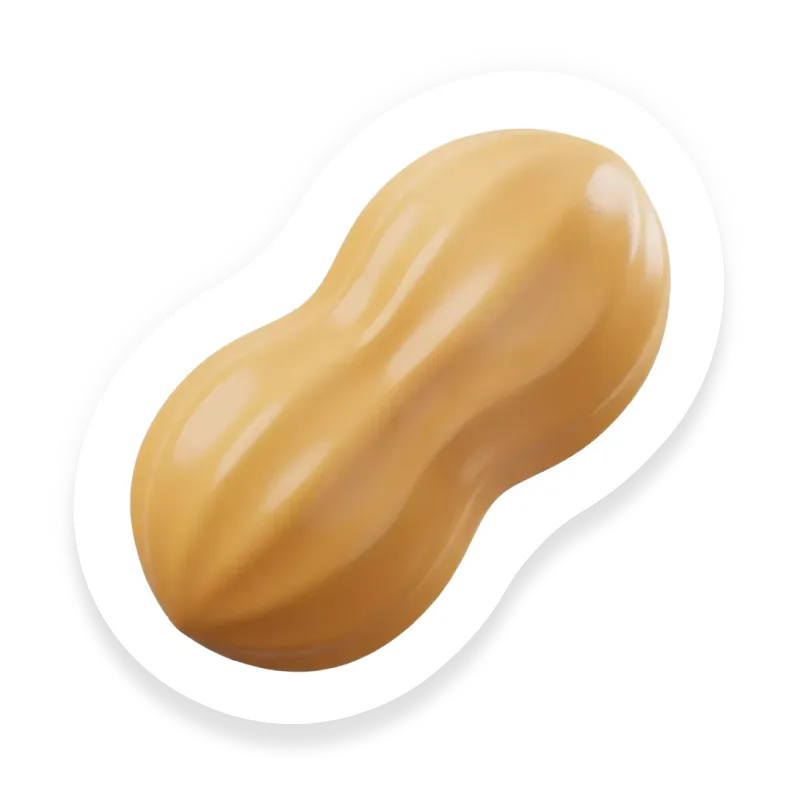
Peanut & Peanut Butter
Treenut
Is Peanut & Peanut Butter Safe for Babies?
Yes, peanuts can be introduced around 6 months old, but should be served as smooth peanut butter or powder to reduce choking risks.
Yes, but there are some things to know
At a Glance
Peanuts contain iron and other minerals that help the body make red blood cells, so they support healthy blood. They are also a good protein source and provide healthy fats and fiber that aid overall nutrition.
Peanuts have a dietary fiber content that adds bulk to stool and helps keep bowel movements regular. They also supply healthy unsaturated fats and minerals like magnesium that support digestion and gentle gut function.
Peanuts are a frequent cause of food reactions because their proteins can trigger immune system reactions in sensitive people. They are also nutrient-rich, serving as a plant protein source and providing heart healthy fats, fiber, niacin and magnesium.
How Do You Serve Peanut & Peanut Butter?
- 1Before introducing peanut, talk with your baby's healthcare provider if they have risk factors such as severe eczema, a known food allergy, or a family history of anaphylaxis.
- 2Thin about 1/8 teaspoon of smooth, honey-free peanut butter with 1–2 teaspoons of warm water, breastmilk, or formula until it is soupy and smooth to reduce choking risk.
- 3Offer a very small taste—about a fingertip smear or 1/4 teaspoon—on a spoon or fingertip while your baby is sitting upright and alert; wait about 10 minutes before offering more.
- 4Watch closely for signs of an allergic reaction (hives, swelling, vomiting, wheeze, difficulty breathing). If mild symptoms occur stop feeding and contact your healthcare provider; if severe signs appear, call emergency services immediately, and continue to observe for at least 2 hours for delayed reactions.
Is Peanut & Peanut Butter a Common Allergen?
Peanuts and peanut butter are common, potentially severe allergens — even trace amounts can trigger reactions in allergic children. Parents should avoid serving peanuts or peanut-containing products to children with peanut allergy and be vigilant about cross‑contamination in mixed foods, schools, and childcare settings. For young children, use smooth peanut butter thinned and spread thinly to reduce choking risk and never give whole peanuts. Always read product labels and follow your child’s allergy action plan.
What Nutrients Does Peanut & Peanut Butter Have?
Peanuts/peanut butter are nutrient-dense — good sources of protein, healthy monounsaturated and polyunsaturated fats (important for brain development), iron, zinc, magnesium, folate, vitamin B6, vitamin E and fiber. These nutrients support growth, brain and nervous‑system development, red‑blood‑cell formation (iron), and provide sustained energy for infants. Because peanuts are calorie‑dense and many commercial butters contain added salt or sugar, avoid large portions; choose unsweetened, honey‑free varieties for under-12‑month babies, and follow age‑appropriate, safe serving methods to reduce choking and manage allergy risk.
Is Peanut & Peanut Butter a Choking Hazard?
Low Choking Risk
Peanuts, nut pieces, and peanut butter are significant choking hazards for babies and young toddlers; whole peanuts are a leading cause of serious food-related choking incidents in children under 3. Always keep baby seated and supervised within arm’s reach during meals, be alert to sticky or dense textures that can block the airway, and have a plan to respond to choking (know infant CPR and emergency steps). Avoid offering whole nuts until your child demonstrates advanced chewing and swallowing skills.
Have More Questions?
Yes. Peanuts can be stored in airtight containers at room temperature for up to a month, or in the refrigerator for longer shelf life. Ensure they are kept dry and away from direct sunlight.
Yes. You can freeze pureed peanuts or peanut butter for up to 3 months in a freezer-safe container. Thaw overnight in the refrigerator before serving.
Yes. Organic peanuts are cultivated without synthetic pesticides or fertilizers, potentially reducing exposure to chemicals, but both organic and conventional peanuts are safe if properly prepared.
Yes. You can combine peanuts with other soft foods like fruit purees or yogurt to introduce new textures and flavors to your baby’s diet, as long as the combination is age-appropriate and safe.
Yes. For babies, portion sizes should be small—about a teaspoon of peanut butter or minimal peanut pieces—adjusted based on your baby’s age and developmental readiness.
Is Peanut & Peanut Butter safe for your baby?
Get personalized guidance on introducing Peanut & Peanut Butter — with prep tips, allergen alerts, and age-specific serving ideas.
Sources
- Health benefits of nut consumption doi.org
- Peanuts as functional food: a review doi.org
- Nutritional Gaps and Supplementation in the First 1000 Days doi.org
- Micronutrient Intake in Healthy Toddlers: A Multinational Perspective doi.org
- Influence of Resveratrol on the Immune Response doi.org
- Resveratrol and Its Effects on the Vascular System doi.org
- Recent advances in understanding and preventing peanut and tree nut hypersensitivity doi.org
- Addendum Guidelines for the Prevention of Peanut Allergy (NIAID, 2017) niaid.nih.gov
- Peanut Allergy (Food Allergy Research & Education) foodallergy.org
- Peanut Oil: The Facts (Anaphylaxis Campaign, 2017) anaphylaxis.org.uk
- Defining the window of opportunity and target populations to prevent peanut allergy doi.org
- Choking Prevention (HealthyChildren.org) healthychildren.org
What Other Treenut Can Babies Eat?
See all →




Backed by Science
Data you can trust.
Every food, guideline, and recommendation in Tummi is sourced from leading health institutions and peer-reviewed research.
 Centers for Disease Control and Prevention
Developmental milestones, nutrition guidelines, and allergen introduction timelines.
 American Academy of Pediatrics
Evidence-based feeding recommendations from the leading pediatric authority.
 National Institutes of Health
Peer-reviewed research on infant nutrition, allergies, and food safety.