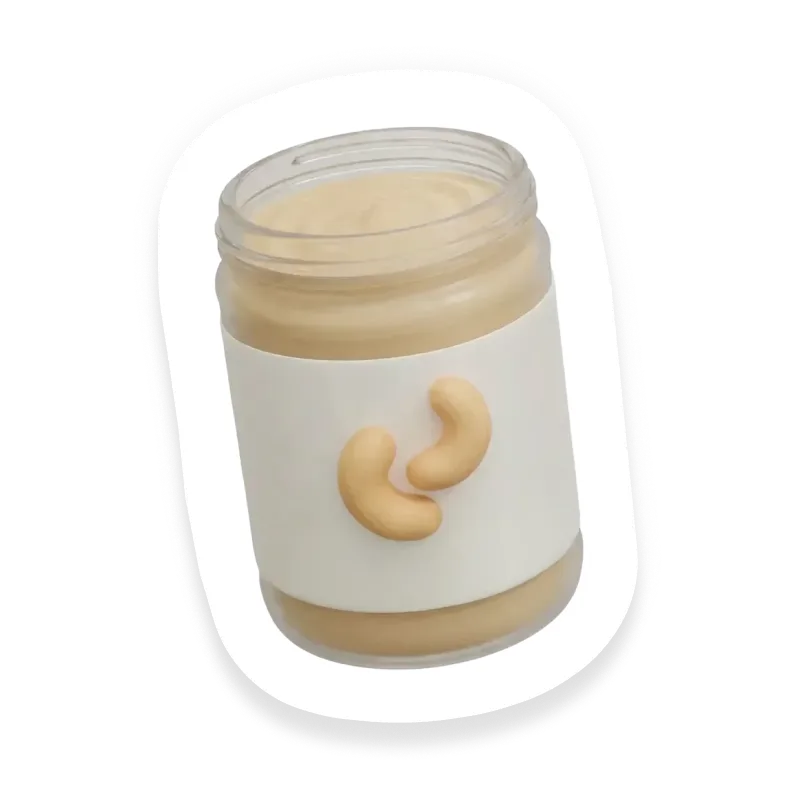
Cashew Butter
Treenut
Is Cashew Butter Safe for Babies?
Yes, babies can have cashew butter when thinned out starting at around 6 months, with careful preparation to avoid choking hazards.
Yes, but there are some things to know
At a Glance
Cashew butter is a good plant source of iron, so a spoonful can help add to daily iron needs for healthy blood. It also contains copper and other minerals that support iron metabolism and help the body use that iron.
Cashew butter can help keep bowel movements regular because its dietary fiber content adds gentle bulk to stool. It also supplies healthy unsaturated fats and magnesium and minerals that support softer, easier-to-pass stools.
Cashew butter can cause allergic reactions in people with tree nut sensitivities because it contains the same nut proteins that trigger immune responses. It also provides healthy monounsaturated fats, is rich in magnesium, and rich in copper, delivering plant protein and minerals that support heart, bone, and energy health.
How Do You Serve Cashew Butter?
- 1Thin a small amount of smooth cashew butter with a teaspoon of breast milk, formula, water, or plain purée until it reaches a loose, runny texture that stirs easily.
- 2Stir the thinned cashew butter into warm cereal, yogurt, or mashed fruits/vegetables so it blends evenly; check temperature before serving.
- 3For toast strips or soft finger foods, spread a very thin layer and press it flat to avoid sticky clumps; serve small portions on manageable pieces.
- 4Offer a few sips of water in an open cup during and after the meal to help wash down sticky bits. Stay within arm’s reach while the child eats and do not use cashew butter that lists honey as an ingredient.
Is Cashew Butter a Common Allergen?
Cashew butter is made from cashews, a common and potentially severe tree‑nut allergen. People with cashew allergy often cross‑react with closely related nuts (especially pistachio) and can experience life‑threatening anaphylaxis, so anyone with a known tree‑nut allergy should avoid it and keep epinephrine available. Parents should read ingredient and cross‑contact warnings on labels and consult their child’s allergist before offering cashew products.
What Nutrients Does Cashew Butter Have?
Cashew butter is nutrient-dense—providing healthy fats and plant protein plus key micronutrients (iron, magnesium, zinc, vitamin E, calcium, potassium) that support blood formation, immunity, bone and brain development. Its iron and zinc are particularly helpful for babies starting solids, though plant (non-heme) iron is better absorbed with vitamin C. Because cashew butter is high in calories/fat and some commercial varieties contain added salt or sugar, offer small, age‑appropriate portions (thin or mixed into foods) so it doesn’t displace other iron-rich foods. Avoid cashew butter with honey for infants under 12 months.
Is Cashew Butter a Choking Hazard?
Low Choking Risk
Cashew butter is thick and sticky and can pose a significant choking hazard for babies and young toddlers. Parents should be aware of its stickiness and supervise closely during introductions, staying within arm’s reach and watching for any signs of choking or distress. Be prepared by learning basic choking first aid so you can respond quickly if needed.
Have More Questions?
Yes. You can store leftover cashew butter in an airtight container in the refrigerator for up to a month, but always check for spoilage before serving to your baby.
Yes. Freezing small portions of thinned cashew purees or butter can extend their shelf life for up to 3 months. Thaw in the refrigerator or warm water bath before serving.
Yes. Organic cashew butter is generally better for babies if you want to avoid pesticides, but conventional brands are also safe if they do not contain added salt, sugar, or preservatives.
Yes. Combining cashew butter with fruits like banana or apple can make a variety of nutritious, baby-friendly spreads, providing different textures and flavors.
Yes. Starting with small portions, such as a teaspoon, and gradually increasing based on your baby's appetite and tolerance, is recommended to meet their nutritional needs.
Is Cashew Butter safe for your baby?
Get personalized guidance on introducing Cashew Butter — with prep tips, allergen alerts, and age-specific serving ideas.
Sources
- Defining challenge-proven coexistent nut and sesame seed allergy: A prospective multicenter European study doi.org
- Clinical Relevance of Cross-Reactivity in Food Allergy doi.org
- Everything You Need to Know about Tree Nut Allergy (American Academy of Allergy, Asthma & Immunology) aaaai.org
- Tree Nut Allergy (Food Allergy Research & Education) foodallergy.org
- Multicentre Double-Blind Placebo-Controlled Food Challenge Study in Children Sensitised to Cashew Nut doi.org
What Other Treenut Can Babies Eat?
See all →
Backed by Science
Data you can trust.
Every food, guideline, and recommendation in Tummi is sourced from leading health institutions and peer-reviewed research.
 Centers for Disease Control and Prevention
Developmental milestones, nutrition guidelines, and allergen introduction timelines.
 American Academy of Pediatrics
Evidence-based feeding recommendations from the leading pediatric authority.
 National Institutes of Health
Peer-reviewed research on infant nutrition, allergies, and food safety.