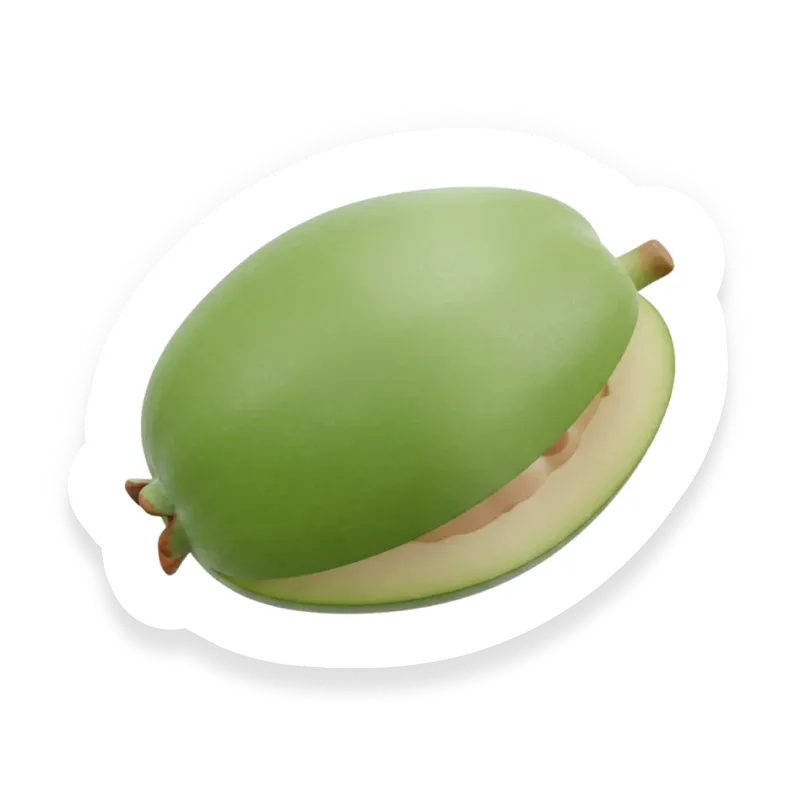
Feijoa
Fruit
Is Feijoa Safe for Babies?
Yes, babies can eat feijoa from around 6 months of age when they are ready to start solids, ensuring it is ripe and prepared in an age-appropriate way.
Yes, but there are some things to know
At a Glance
Feijoa is a small fruit rich in fiber and vitamin C. Its soluble pectin and insoluble fibers feed gut bacteria and help form softer stools.
How Do You Serve Feijoa?
- 1Choose ripe fruit that gives slightly to gentle pressure and smells fragrant — this ensures sweeter, softer pulp.
- 2Rinse, halve and scoop out the pulp, discarding the skin before serving.
- 3Mash the pulp to a smooth, scoopable puree or stir it into porridge or yogurt; if the pulp is still firm, cook until soft by simmering briefly and then cool before serving.
- 4For larger pieces, cut into wedges or quarters so baby can access the soft flesh while you supervise, and remove any large seeds.
- 5Serve lukewarm or cool and do not add sugar or honey; always offer small spoonfuls under supervision.
Is Feijoa a Common Allergen?
Feijoa (pineapple guava) is not a common food allergen and reported reactions are rare, but published information is limited. Because feijoa is related to guava and other myrtle-family fruits, people with known guava/kiwi allergies or pollen-related oral allergy syndrome may get mouth or throat itching, swelling, or hives after eating raw fruit. For children with prior food or pollen allergies, introduce a small amount first and watch closely; seek immediate care for any breathing difficulty or systemic reaction. When in doubt, consult your pediatrician or an allergist before offering feijoa.
What Nutrients Does Feijoa Have?
Feijoa is a good first-food choice because it supplies dietary fiber (supporting digestion and regular stools), vitamin C (30–60 mg per 100 g) which supports immunity and improves plant-iron absorption, plus folate and vitamin B6 that help brain development and metabolic function. Nutrient-dense yet low in calories, it can complement iron-rich foods to boost iron uptake. Overeating is unlikely to cause serious problems, though very large amounts could cause loose stools from excess fiber or mild GI upset from very high vitamin C; offer feijoa as part of a varied diet.
Is Feijoa a Choking Hazard?
Low Choking Risk
Ripe feijoa generally presents a low choking risk for babies, but any food can potentially cause choking. Stay within arm’s reach while your baby is eating and watch how they handle the texture so you can respond quickly if they gag or struggle. Familiarize yourself with choking signs and basic infant/child first-aid so you’re prepared to act if needed.
Have More Questions?
No. Feijoa can be safely introduced to babies when ripe and prepared appropriately, but always supervise and serve in age-appropriate sizes to minimize choking risk.
It depends. Feijoa is fresh and nutritious but should be served mashed or pureed to babies to avoid choking, especially when first introduced.
No. Whole feijoa is a choking hazard for babies and should be prepared into a suitable texture, like mash or puree.
It depends. Always peel and remove the core and seeds before serving to reduce choking risks and ensure the texture is suitable for your baby.
Yes. Storing leftover mashed feijoa in an airtight container in the refrigerator for up to 48 hours is safe, and freezing purees can extend shelf life.
Is Feijoa safe for your baby?
Get personalized guidance on introducing Feijoa — with prep tips, allergen alerts, and age-specific serving ideas.
Sources
- Blanco, C. (2000). The Latex Syndrome. Internet Symposium on Food Allergens, 2(3) semanticscholar.org
- Eriksson N.E. et al. (2003). Self-reported hypersensitivity to exotic fruit in birch pollen-allergic patients. Allergology International, 52:199–206. onlinelibrary.wiley.com
- American Academy of Allergy, Asthma & Immunology. Oral Allergy Syndrome (OAS) aaaai.org
- Nowak-Wegrzyn, A. (2021). Patient Education: Oral Allergy Syndrome (Beyond the Basics). UpToDate. uptodate.com
- Kids With Food Allergies — Asthma & Allergy Foundation of America kidswithfoodallergies.org
What Other Fruit Can Babies Eat?
See all →


Backed by Science
Data you can trust.
Every food, guideline, and recommendation in Tummi is sourced from leading health institutions and peer-reviewed research.
 Centers for Disease Control and Prevention
Developmental milestones, nutrition guidelines, and allergen introduction timelines.
 American Academy of Pediatrics
Evidence-based feeding recommendations from the leading pediatric authority.
 National Institutes of Health
Peer-reviewed research on infant nutrition, allergies, and food safety.