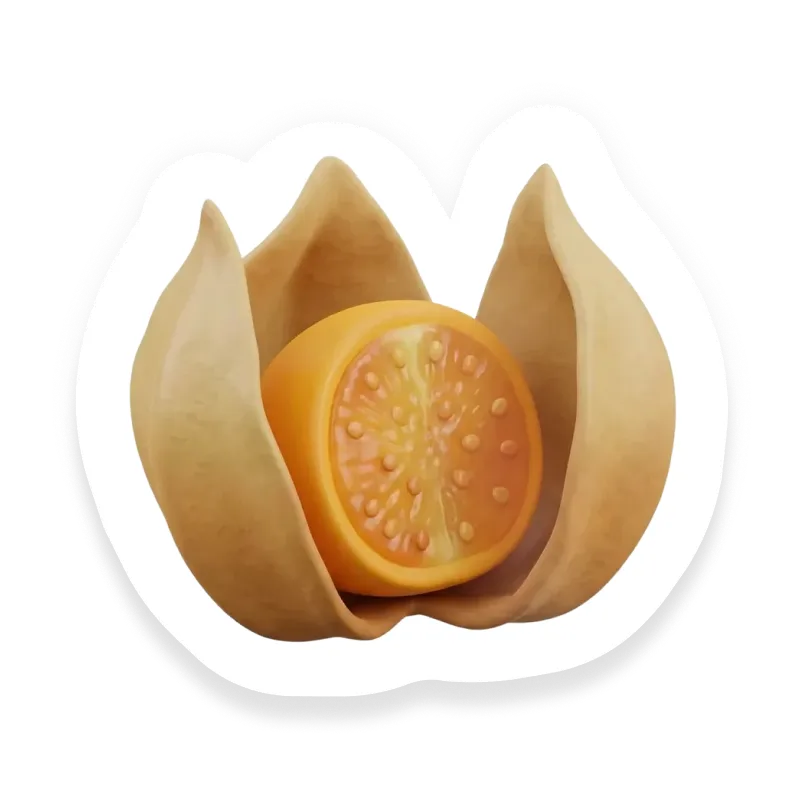
Goldenberry (Uchuva)
Fruit
Is Goldenberry (Uchuva) Safe for Babies?
Yes, goldenberries can be introduced around 6 months when cooked into sauce or chopped to reduce choking risk.
Yes, but there are some things to know
At a Glance
Goldenberries help keep digestion regular because they are high in fiber — a 100 g serving has about 5 g of dietary fiber that adds gentle bulk and eases bowel movements. They are also rich in antioxidants, including vitamin C, tocopherols and phenolic compounds, which can reduce gut inflammation and support the intestinal lining.
How Do You Serve Goldenberry (Uchuva)?
- 1Wash and remove husks and stems, and choose fully ripe goldenberries so they are soft and sweet.
- 2Roughly chop and stir into scoopable foods like yogurt, oatmeal, or mashed banana so pieces stay small and easy to scoop.
- 3For a smoother texture and lower choking risk, blend berries with a little water, formula, or breastmilk until very smooth before mixing into other scoopable foods.
- 4To make a soft sauce or sugar-free compote, simmer chopped berries briefly until they break down, cool completely, and mash if needed.
- 5Always remove any large pieces or seeds and check temperature and texture. Supervise during meals and discard leftovers stored over 24 hours.
Is Goldenberry (Uchuva) a Common Allergen?
Goldenberries (uchuva) are not common food allergens and are not associated with peanuts, dairy, soy, gluten, shellfish, fish, sesame, egg, or tree nuts. However, they belong to the nightshade family (related to tomatoes, eggplant, and peppers), so people with nightshade sensitivities may react. Rare allergic reactions (hives, swelling, breathing difficulty) have been reported—watch for these after first exposure. For young children, remove the papery husk and cut or mash the berries to reduce choking risk; introduce in small amounts.
What Nutrients Does Goldenberry (Uchuva) Have?
Goldenberries are a good source of vitamin C and antioxidants (support immune health and reduce oxidative stress), provide fiber to aid digestion and help with stool bulk, and contain vitamin A for vision development plus small amounts of iron. The vitamin C also helps with iron absorption, but goldenberries are not a reliable iron-rich source on their own. Too much can cause tummy upset, diaper changes, or contact rashes from the fruit’s acidity; avoid underripe berries (toxic) and limit concentrated forms (juices, jams) because of added sugars. Offer modest portions, introduce gradually, and consult your pediatrician if you have allergy or digestion concerns.
Is Goldenberry (Uchuva) a Choking Hazard?
High Choking Risk
Goldenberries are small, round, firm, and slippery, which makes them a higher choking risk for infants and young toddlers. Keep your child seated upright and within arm’s reach during every bite, and be alert for signs of gagging or choking. Make sure caregivers know basic infant choking response and CPR, and monitor closely when introducing this fruit for the first time.
Have More Questions?
Yes. Goldenberries can be introduced to babies around 6 months of age when cooked or chopped to reduce choking risk.
Yes. Goldenberries are nutritious and can be offered to babies when fully ripe, typically around 6 months old, as part of a varied diet.
It depends. Goldenberries should be fully ripe and cooked or mashed before serving to minimize choking risk for babies.
Yes. You can refrigerate cooked or pureed goldenberries in an airtight container for up to 2 days or freeze for longer storage.
It depends. Organic or conventional goldenberries can both be safe; choose high-quality, ripe berries and wash thoroughly.
Is Goldenberry (Uchuva) safe for your baby?
Get personalized guidance on introducing Goldenberry (Uchuva) — with prep tips, allergen alerts, and age-specific serving ideas.
Sources
- Assessment of antidiabetic activity and acute toxicity of leaf extracts from Physalis peruviana L. in guinea-pig. doi.org
- In vitro and In Vivo Immunomodulatory Activity of Physalis angulata Concentrated Ethanolic Extract. doi.org
- A case report of anaphylaxis to Physalis alkekengi fruit: The culprit is the seeds! doi.org
- Closing America's Fiber Intake Gap: Communication Strategies From a Food and Fiber Summit. doi.org
What Other Fruit Can Babies Eat?
See all →



Backed by Science
Data you can trust.
Every food, guideline, and recommendation in Tummi is sourced from leading health institutions and peer-reviewed research.
 Centers for Disease Control and Prevention
Developmental milestones, nutrition guidelines, and allergen introduction timelines.
 American Academy of Pediatrics
Evidence-based feeding recommendations from the leading pediatric authority.
 National Institutes of Health
Peer-reviewed research on infant nutrition, allergies, and food safety.