
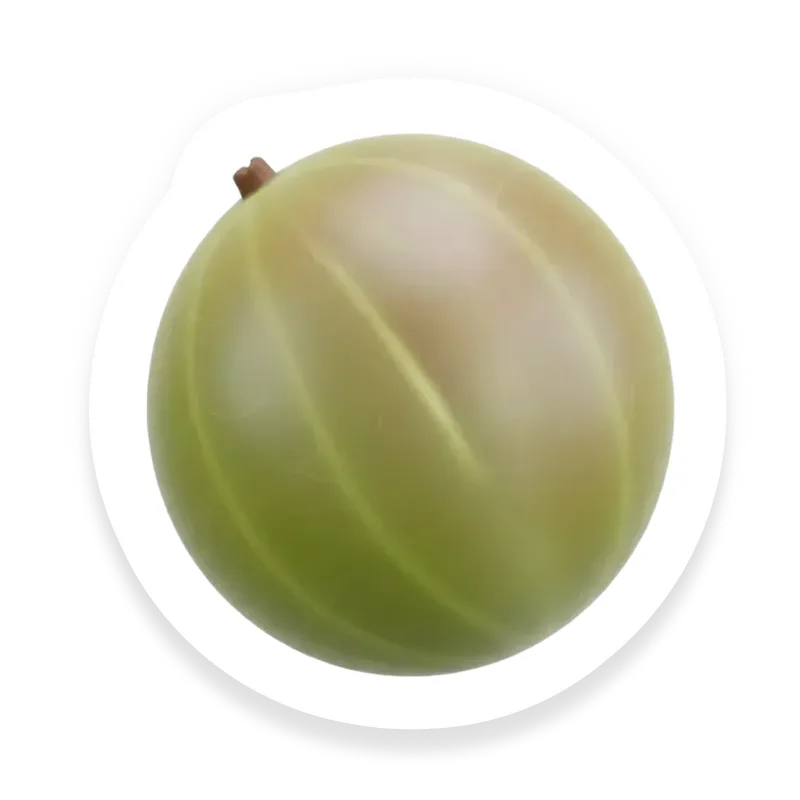
Gooseberry
Fruit
Is Gooseberry Safe for Babies?
Yes, gooseberries can be introduced to babies around 6 months old once they are ready for solids, ensuring they are ripe and prepared properly.
At a Glance
Gooseberries help digestion because they have high dietary fiber, which softens stool and promotes regular bowel movements. They also have a strong antioxidant profile (vitamin C and polyphenols) that helps protect the gut and reduce mild inflammation.
How Do You Serve Gooseberry?
- 1Rinse berries, remove stems and any bruised pieces; leave small seeds as they are edible.
- 2Cook berries in a small saucepan over medium heat until they soften and burst (about 5–10 minutes), stirring occasionally; mash lightly for a smoother texture.
- 3Stir warm mashed berries into scoopable foods like porridge, yogurt, ricotta, or cooked cereals, or simmer with a splash of water to make a loose compote — strain only if you need a finer texture.
- 4Cool to body temperature before serving. Start with small spoonfuls and watch for tolerance or reactions.
Is Gooseberry a Common Allergen?
Gooseberries are not a common allergen for milk, egg, peanut, tree‑nut, soy, sesame, shellfish, fish or gluten. However, people with birch‑pollen (hay fever) can experience oral allergy syndrome from raw gooseberries (itching/tingling of mouth or throat). Allergic reactions are uncommon but possible—introduce slowly if your child has pollen‑related food reactions and seek medical advice for any systemic symptoms.
What Nutrients Does Gooseberry Have?
Gooseberries provide vitamin C, fiber, potassium, and small amounts of B vitamins, plus antioxidant compounds (notably in red/purple varieties). For babies, vitamin C supports immune health and helps dietary iron absorption, fiber and fluids support healthy stooling, and antioxidants offer extra cellular protection. Too much can cause loose stools or tummy upset because of the fruit’s acidity and fiber, so offer small, age‑appropriate servings and watch tolerance. Prepare and serve cooked or mashed for infants starting solids and introduce gradually.
Is Gooseberry a Choking Hazard?
High Choking Risk
Gooseberries are small, round, and can be quite firm—characteristics that raise the risk of choking for young babies. While the tiny edible seeds aren’t usually a choking hazard, the berry’s size and texture still warrant cautious supervision. Stay within arm’s reach during meals, watch for signs of gagging or choking, and consider learning basic infant rescue maneuvers so you’re prepared.
Have More Questions?
Yes. When prepared properly, gooseberries can be a safe and nutritious addition to your baby's diet, providing vitamins and antioxidants.
It depends. Gooseberries are healthy for babies but should be served in appropriate textures and sizes to prevent choking and to aid digestion.
No. Gooseberries are not common allergens, but always introduce new foods gradually and watch for any reactions.
Yes. Due to their size and firmness, gooseberries can be a choking hazard for babies. Serve them in small, soft pieces and supervise meals closely.
It depends. Start with small servings and observe your baby's cues; they will show when they are interested in more or ready to stop.
Is Gooseberry safe for your baby?
Get personalized guidance on introducing Gooseberry — with prep tips, allergen alerts, and age-specific serving ideas.
Sources
- Extractability of polyphenols from black currant, red currant and gooseberry and their antioxidant activity link.springer.com
- Tissue biochemical diversity of 20 gooseberry cultivars and the effect of ethylene supplementation on postharvest life sciencedirect.com
- Allergy to red currant: immunoglobulin E-mediated hypersensitivity to lipid transport proteins (Pru p 3) pubmed.ncbi.nlm.nih.gov
- Kiwi fruit allergy: a review onlinelibrary.wiley.com
- Hypersensitivity reaction to kiwi fruit (Chinese gooseberry, Actinidia chinensis) pubmed.ncbi.nlm.nih.gov
What Other Fruit Can Babies Eat?
See all →



Backed by Science
Data you can trust.
Every food, guideline, and recommendation in Tummi is sourced from leading health institutions and peer-reviewed research.
 Centers for Disease Control and Prevention
Developmental milestones, nutrition guidelines, and allergen introduction timelines.
 American Academy of Pediatrics
Evidence-based feeding recommendations from the leading pediatric authority.
 National Institutes of Health
Peer-reviewed research on infant nutrition, allergies, and food safety.