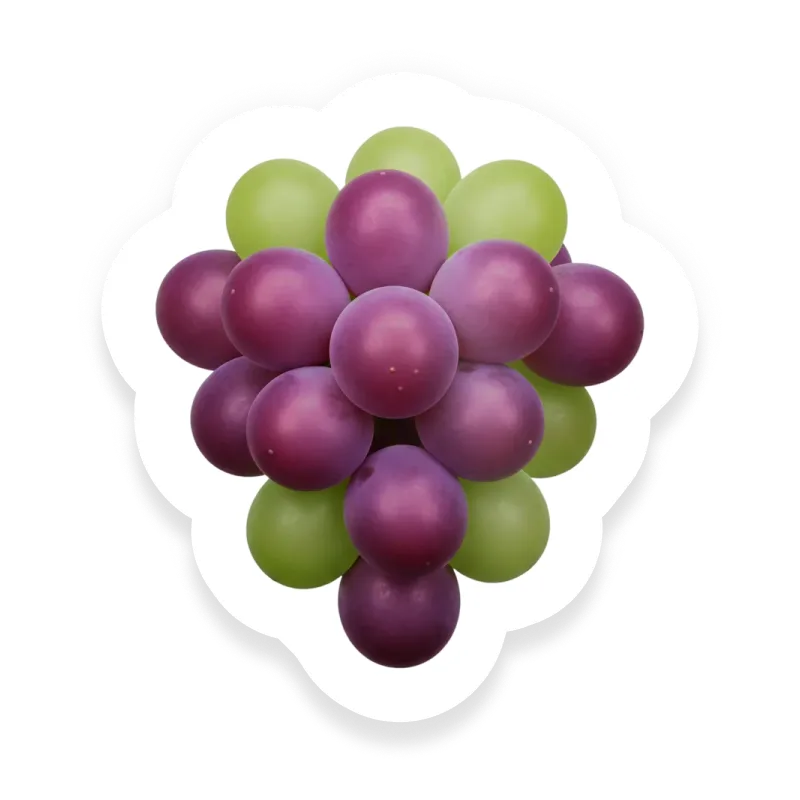
Grape
Fruit
Is Grape Safe for Babies?
Yes, grapes can be introduced at around 6 months old when properly prepared to reduce choking hazards.
Yes, but there are some things to know
At a Glance
Grapes have a high water content and natural dietary fiber, which help soften stool and make bowel movements easier. They also contain plant polyphenols that can support gut bacteria, helping digestion stay regular.
How Do You Serve Grape?
- 1Cook grapes until the skins split and the flesh is very soft — this makes them easier to mash and reduces choking risk.
- 2Puree or mash into a smooth sauce; press through a fine mesh if you want to remove skins and seeds.
- 3Mix the thick sauce into scoopable foods (warm cereal, yogurt, or ricotta) so it clings to the spoon and can be scooped easily.
- 4Cool to lukewarm, check texture and temperature, remove any whole seeds, and always supervise while baby tries new textures.
Is Grape a Common Allergen?
Grapes are not a common allergen, though rare allergic reactions (including oral allergy syndrome in pollen‑allergic people) can occur. The primary safety concern is choking—always cut grapes lengthwise (and remove seeds) before serving to young children, especially under five. Wash grapes thoroughly to remove surface residues. Seek medical help if you notice hives, swelling, vomiting, or breathing difficulties after eating.
What Nutrients Does Grape Have?
Grapes provide quick energy from natural sugars plus water and fiber to support hydration and digestion. They supply potassium (electrolyte and muscle support), vitamin C (immune support and helps iron absorption), vitamin B6 (metabolism and brain development), vitamin K (blood clotting/bone health), and antioxidant polyphenols. For babies, these nutrients support growth, energy, and nutrient absorption, but grapes (and grape juice) are high in sugar—excess intake can increase dental-cavity risk, displace other foods, or cause GI upset, so offer age‑appropriate portions and textures.
Is Grape a Choking Hazard?
High Choking Risk
Grapes are a common choking hazard because they’re round, firm, and slippery, which makes them particularly likely to block a child’s airway. Always keep babies sitting upright and within arm’s reach during meals, watch closely for signs of choking or gagging, and be prepared to administer choking first aid if needed. Only offer whole grapes once the child shows mature chewing and swallowing skills and is closely supervised.
Have More Questions?
Yes. When prepared safely—such as slicing into small pieces—grapes can be introduced to babies around 6 months, once they are ready for solids.
Yes. You can store cut grapes in an airtight container in the refrigerator for up to 24 hours to keep them fresh and safe for your baby.
It depends. Organic grapes may have fewer pesticide residues than conventional ones, but both types are safe for babies when prepared properly.
Yes. Combining grapes with other fruits or foods can diversify your baby’s diet, but ensure they are cut into manageable pieces to prevent choking.
Yes. Baby portions of grapes are typically small—about 1-2 small pieces or 1-2 tablespoons—depending on the child's age and appetite.
Is Grape safe for your baby?
Get personalized guidance on introducing Grape — with prep tips, allergen alerts, and age-specific serving ideas.
Sources
- Anaphylaxis resulting from selective sensitization to Americana grapes jacionline.org
- WHO Guideline for complementary feeding of infants and young children 6–23 months of age (2023) who.int
- Sugar in Infants, Children and Adolescents: A Position Paper of the ESPGHAN Committee on Nutrition (2017) pubmed.ncbi.nlm.nih.gov
What Other Fruit Can Babies Eat?
See all →




Backed by Science
Data you can trust.
Every food, guideline, and recommendation in Tummi is sourced from leading health institutions and peer-reviewed research.
 Centers for Disease Control and Prevention
Developmental milestones, nutrition guidelines, and allergen introduction timelines.
 American Academy of Pediatrics
Evidence-based feeding recommendations from the leading pediatric authority.
 National Institutes of Health
Peer-reviewed research on infant nutrition, allergies, and food safety.