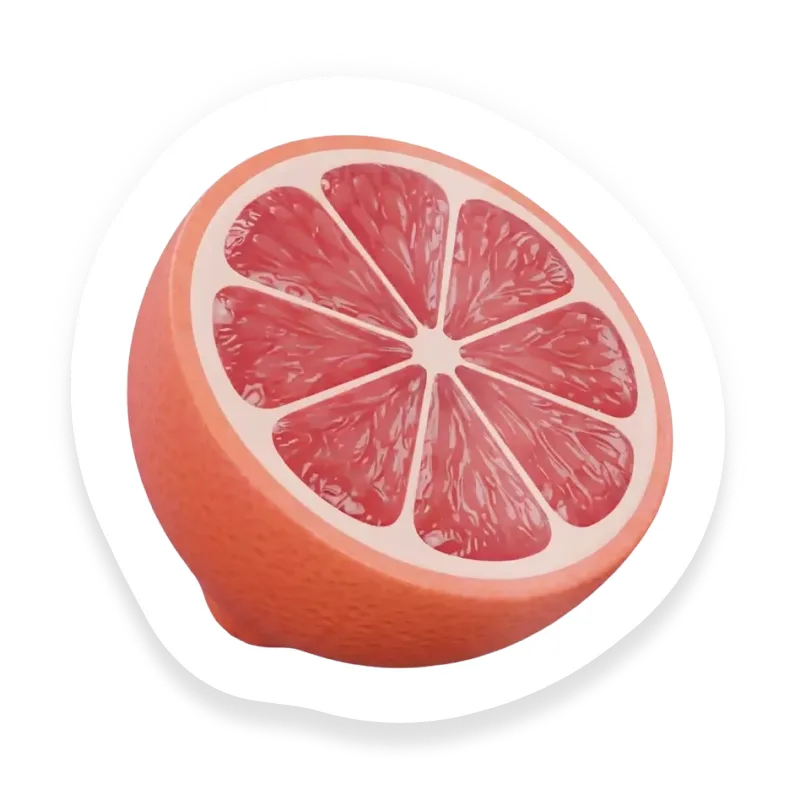
Grapefruit
Fruit
Is Grapefruit Safe for Babies?
Yes, grapefruit can be introduced around 6 months when babies start solids, but monitor for skin rash or diaper irritation due to acidity.
Yes, but there are some things to know
At a Glance
Grapefruit is rich in fiber and has a high water content, which help move food through the gut and support regular bowel movements. It also contains vitamin C and citrus flavonoids that help digestion and support gut bacteria.
How Do You Serve Grapefruit?
- 1Peel each grapefruit segment and remove all membrane and any seeds, then slice into thin, finger-sized strips so they are easy to grasp and mouth.
- 2Offer one piece at a time on the tray or a plate so your baby can pick it up and practise self-feeding.
- 3Stay within arm's reach. Watch closely and be ready to intervene, but do not force the food or put your fingers into your baby's mouth.
- 4If a large bite causes coughing or gagging, stay calm and encourage coughing and seek emergency help if breathing does not recover.
Is Grapefruit a Common Allergen?
Most people are not allergic to grapefruit, and it is not a common trigger among major food allergens (milk, eggs, nuts, shellfish, soy, wheat, peanuts, sesame). However, citrus allergies do occur in some children and can cause hives, swelling, or oral allergy symptoms (itchy or tingling mouth/throat) in those with pollen sensitivities. Grapefruit can also irritate sensitive skin or cause mouth soreness in toddlers, and its seeds/pulp present a choking risk—serve age-appropriate portions and remove seeds. Note: grapefruit can interact with many prescription medications (e.g., certain statins); check with a healthcare provider if your child is on medication.
What Nutrients Does Grapefruit Have?
Grapefruit is a low‑calorie, high‑water fruit that provides vitamin C (supports immunity and iron absorption), fiber (digestive health and regularity), potassium (electrolyte balance), folate (growth and development), and vitamin A/lycopene (vision and antioxidant support). These nutrients help with hydration, digestion, immune function, and cellular growth—making small, peeled segments a nutritious option once solids begin. Avoid giving large amounts or regular juice: excess citrus can irritate the mouth and digestive tract, worsen diaper rash, contribute to tooth decay, and displace other foods; and grapefruit can interact with certain medications, so consult a clinician if the child is on prescription drugs.
Is Grapefruit a Choking Hazard?
Low Choking Risk
Citrus segments left in their membranes can be a choking hazard for babies, and grapefruit seeds may be an aspiration risk. Removing the membrane and any seeds reduces that risk, and you should stay within arm’s reach during meals so you can respond quickly if gagging or choking occurs. If you’re worried, make sure you and any caregivers know infant choking first aid and consult your pediatrician with concerns.
Have More Questions?
It depends. Grapefruit's acidity may cause skin irritation or diaper rash in some babies, and should be introduced cautiously, monitoring for any reactions or discomfort.
Yes. Grapefruit is rich in vitamins and antioxidants that support immune health and development in babies, making it a healthy addition to their diet when introduced appropriately.
No. Grapefruit is not a common allergen, but some children with pollen allergies may experience oral allergy syndrome or skin reactions. Peeling the fruit can reduce some sensitivities.
It depends. Grapefruit seeds can be a choking hazard if not removed, and the segment membranes should be discarded to prevent choking risks.
Yes. You can store peeled or pureed grapefruit in an airtight container in the fridge for up to 24 hours, but it's best to serve fresh for optimal flavor and safety.
Is Grapefruit safe for your baby?
Get personalized guidance on introducing Grapefruit — with prep tips, allergen alerts, and age-specific serving ideas.
Sources
- Bailey DG, Dresser G, Arnold JM. Grapefruit-medication interactions (CMAJ, 2013) doi.org
- Hung WL, Suh JH, Wang Y. Chemistry and health effects of furanocoumarins in grapefruit (J Food Drug Anal, 2017) doi.org
- Guo LQ, Yamazoe Y. Inhibition of cytochrome P450 by furanocoumarins (Acta Pharmacol Sin, 2004) pubmed.ncbi.nlm.nih.gov
- American Academy of Allergy, Asthma & Immunology. Oral allergy syndrome (OAS) aaaai.org
- Iorio RA et al. Citrus allergy from pollen to clinical symptoms (PLOS ONE, 2013) journals.plos.org
- Kashyap RR & Kashyap RS. Oral Allergy Syndrome: An Update for Stomatologists (Journal of Allergy, 2015) hindawi.com
- Cardullo AC et al. Allergic contact dermatitis from citrus peel (J Am Acad Dermatol, 1989) doi.org
- Weber IC et al. Phytophotodermatitis: the other 'lime' disease (J Emerg Med, 1999) pubmed.ncbi.nlm.nih.gov
- World Health Organization. WHO Guideline for complementary feeding of infants and young children 6-23 months (2023) who.int
- Fidler Mis et al. Sugar in Infants, Children and Adolescents (J Pediatr Gastroenterol Nutr, 2017) doi.org
What Other Fruit Can Babies Eat?
See all →





Backed by Science
Data you can trust.
Every food, guideline, and recommendation in Tummi is sourced from leading health institutions and peer-reviewed research.
 Centers for Disease Control and Prevention
Developmental milestones, nutrition guidelines, and allergen introduction timelines.
 American Academy of Pediatrics
Evidence-based feeding recommendations from the leading pediatric authority.
 National Institutes of Health
Peer-reviewed research on infant nutrition, allergies, and food safety.