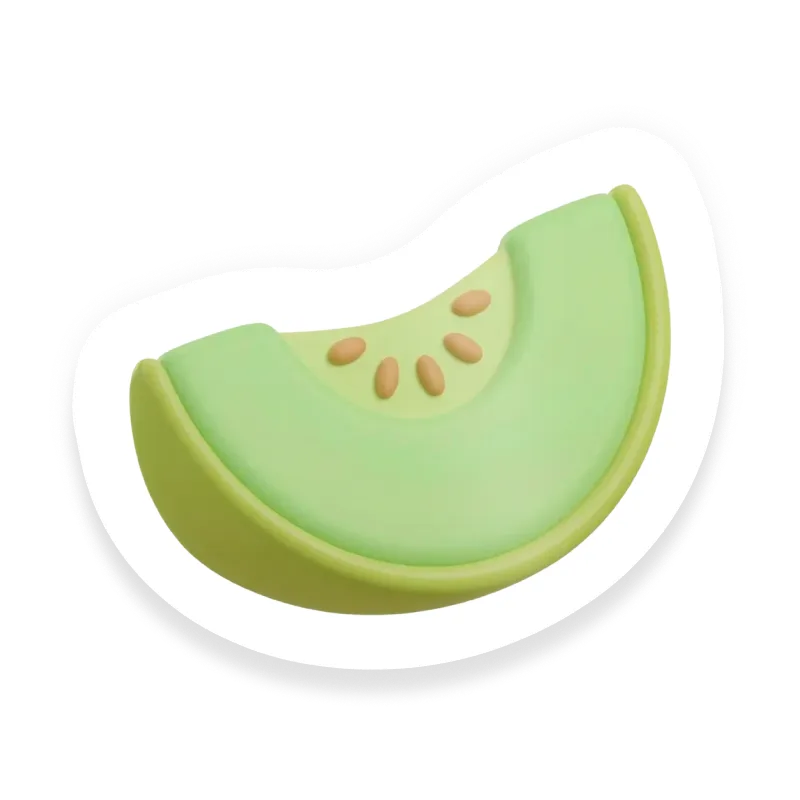
Honeydew Melon
Fruit
Is Honeydew Melon Safe for Babies?
Yes, honeydew melon can be introduced to babies as soon as they are ready to start solids, typically around 6 months, and should be served in small, supervised bites to prevent choking.
Yes, but there are some things to know
At a Glance
Honeydew melon supports digestion because its high water content and dietary fiber content help soften stool. It also provides potassium and vitamin C that support fluid balance and overall gut health.
How Do You Serve Honeydew Melon?
- 1Cut soft, ripe honeydew into long, flat crescent moons or narrow rectangular strips with seeds and rind fully removed so baby can grasp and gum them.
- 2Offer one piece at a time and hold it near your baby's hands to encourage self-feeding and safe grasping.
- 3Avoid melon balls, thick wedges, or large chunks—the firm, slippery texture increases choking risk.
- 4Supervise closely while your baby eats and stop feeding if they cough or struggle; expect only small bites at first.
- 5Choose very ripe, sweet melon since underripe fruit can be harder to chew and swallow.
Is Honeydew Melon a Common Allergen?
Honeydew melon is not a common childhood food allergen, but children with pollen allergies—especially to ragweed or certain grasses—can develop oral allergy syndrome (OAS) from melons, causing itching or tingling of the mouth, lips, or throat. Cooking or processing the fruit usually prevents OAS reactions. Severe systemic reactions are uncommon, but seek urgent care if your child develops facial or throat swelling, hives, vomiting, or breathing difficulty after eating melon. If your child has known pollen or latex sensitivities, talk with your pediatrician or allergist before offering honeydew.
What Nutrients Does Honeydew Melon Have?
Honeydew is hydrating and nutrient-dense for its calories—high in vitamin C, potassium, folate, and vitamin B6 and containing antioxidants (phenolics/flavonoids) that support immunity, growth, electrolyte balance, and metabolism. Vitamin C helps immune function and boosts iron absorption; folate supports rapid growth and neural development; potassium helps maintain fluid balance and muscle function. Honeydew is low in iron, so it shouldn’t be relied on as an iron source—pair with iron-rich foods or vitamin-C–rich foods when introducing complementary solids. Because it’s high in water and natural sugars, large amounts can cause loose stools or displace other nutrient-dense foods, so serve age-appropriate portions and monitor tolerance.
Is Honeydew Melon a Choking Hazard?
Moderate Choking Risk
Honeydew melon is firm and slippery, which makes it a high choking risk—especially when offered as melon balls, large chunks, or if underripe. Parents should stay within arm’s reach and supervise closely, be familiar with the signs of choking, and know basic infant choking first aid.
Have More Questions?
Yes. Honeydew melon can be stored in the refrigerator for 1-2 days once cut. Keep it in an airtight container to maintain freshness and prevent it from absorbing other odors.
Yes. You can freeze pureed honeydew melon for 2-3 months. Use freezer-safe containers, leaving space for expansion, and thaw in the refrigerator before serving.
It depends. Choosing organic honeydew melons reduces exposure to pesticides, but conventional ones are safe if thoroughly washed before preparing for your baby.
Yes. Combining honeydew melon with other fruits, like banana or berries, can introduce your baby to new flavors and textures, supporting varied taste development.
It depends. Typical portion sizes for babies start at 1-2 tablespoons of mashed or pureed fruit per feeding, adjusting based on your child's appetite and developmental stage.
Is Honeydew Melon safe for your baby?
Get personalized guidance on introducing Honeydew Melon — with prep tips, allergen alerts, and age-specific serving ideas.
Sources
- Nutritional Composition and Health Benefits of Various Botanical Types of Melon (Cucumis melo L.) doi.org
- Food safety tips for melons — Government of Canada canada.ca
- Oral Allergy Syndrome (OAS) or Pollen Food Syndrome (PFS) — American Academy of Allergy, Asthma & Immunology aaaai.org
- Oral Allergy Syndrome: An Update for Stomatologists — Journal of Allergy (2015) doi.org
What Other Fruit Can Babies Eat?
See all →


Backed by Science
Data you can trust.
Every food, guideline, and recommendation in Tummi is sourced from leading health institutions and peer-reviewed research.
 Centers for Disease Control and Prevention
Developmental milestones, nutrition guidelines, and allergen introduction timelines.
 American Academy of Pediatrics
Evidence-based feeding recommendations from the leading pediatric authority.
 National Institutes of Health
Peer-reviewed research on infant nutrition, allergies, and food safety.