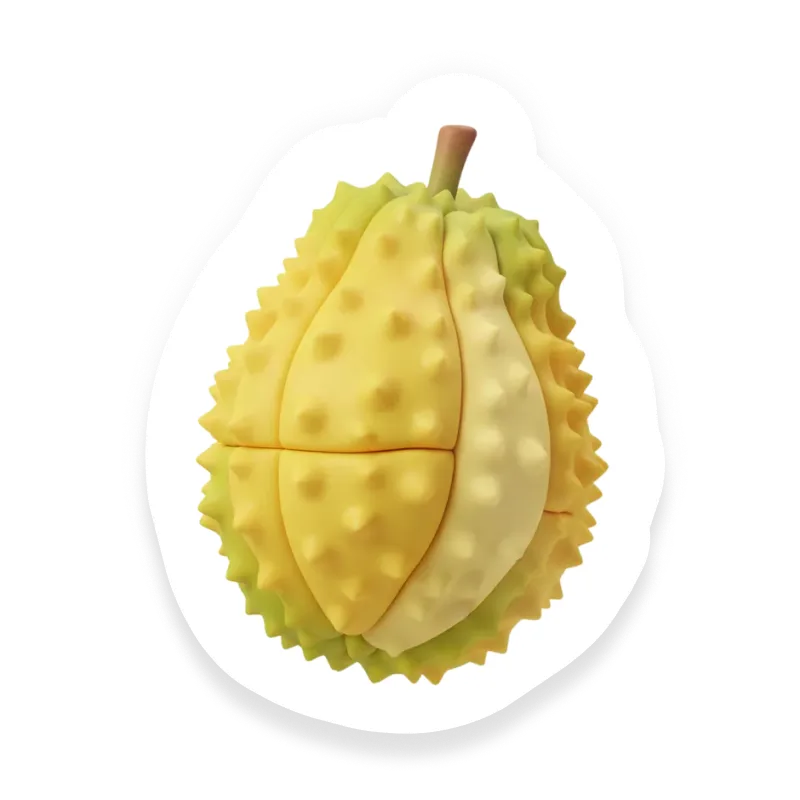
Jackfruit
Fruit
Is Jackfruit Safe for Babies?
Yes, babies can eat ripe, cooked jackfruit starting around 6 months as part of a well-balanced diet, ensuring it's prepared appropriately.
Yes, but there are some things to know
At a Glance
Jackfruit is high in fiber and contains resistant starch, so it adds bulk and helps food move through the gut. Its seeds and flesh have prebiotic starches that support gut bacteria, which can help keep bowel movements regular.
How Do You Serve Jackfruit?
- 1Separate the ripe jackfruit bulbs from the core, remove each seed, and finely chop or shred the fruit into very small, soft pieces so they are easy to scoop and chew.
- 2For a smooth option, blend or mash the chopped bulbs into a soft, scoopable purée; for a thicker texture, cook the deseeded fruit gently until very soft and then mash to the desired consistency.
- 3If using seeds, boil or roast them until tender, peel away the thin membranes, and mash or finely chop before serving.
- 4Serve small spoonfuls at warm (not hot) temperature, avoid adding sugar or salt, and watch for any signs of intolerance when introducing jackfruit for the first time.
Is Jackfruit a Common Allergen?
Jackfruit is not a common allergen, but rare allergic reactions (including anaphylaxis) have been reported. Cases have been linked to cross‑reactivity in people with latex allergy and to birch‑pollen‑related oral allergy syndrome. If your child has a known latex allergy, birch pollen allergy, or prior fruit allergies, introduce jackfruit cautiously and watch for hives, swelling, vomiting, or breathing difficulty. Seek immediate medical care for any signs of a severe reaction.
What Nutrients Does Jackfruit Have?
Jackfruit supplies B vitamins (B6, folate, B1), fiber, watery pulp, carotenoids (beta‑carotene, lutein, zeaxanthin), and healthy fats; jackfruit seeds add protein, fiber, starch, calcium, and some iron when cooked. These nutrients support neurological development, vision, digestion, and provide modest energy and healthy fats for brain growth; seeds are a concentrated protein/fiber source but must be cooked and mashed. Cautions: seeds are unsafe raw and can choke if not prepared; ripe pulp is fibrous—large amounts may cause loose stools—and canned jackfruit in syrup or brine can be high in added sugar or sodium. Introduce small portions, watch for rare latex/birch pollen cross‑reactivity, and keep baby supervised while eating.
Is Jackfruit a Choking Hazard?
Low Choking Risk
Jackfruit can be a choking hazard: its fibrous flesh is often hard for babies to chew and the seeds are a particular risk. Remove seeds and make sure any seeds are cooked until soft, and always keep baby within arm’s reach while they eat so you can intervene quickly if they struggle. If a piece feels firm or elastic in your hands, remove it and replace it with a softer piece.
Have More Questions?
Yes, babies can eat jackfruit once they start solids around 6 months. Ensure the fruit is soft, appropriately prepared, and served in manageable pieces.
Yes, cooked jackfruit seeds are safe for babies to eat. Make sure to boil or roast the seeds until soft, remove the membranes, and mash them to a suitable texture.
Yes, but select canned jackfruit without added sodium or sugar, and rinse it thoroughly before serving to your baby.
Yes, jackfruit can be a healthy meat substitute for babies' meals, providing flavor and nutrition, especially when prepared with low-sodium ingredients.
Yes, it's important to supervise your baby while eating jackfruit, especially since the flesh can be challenging to chew and pose a choking risk.
Is Jackfruit safe for your baby?
Get personalized guidance on introducing Jackfruit — with prep tips, allergen alerts, and age-specific serving ideas.
Sources
- Ranasinghe et al. (2019) Nutritional and Health Benefits of Jackfruit (Artocarpus heterophyllus Lam.): A Review doi.org
- Trejo Rodríguez et al. (2021) Physicochemical Properties, Antioxidant Capacity, Prebiotic Activity and Anticancer Potential in Human Cells of Jackfruit Seed Flour doi.org
- Wongrakpanich et al. (2015) Jackfruit anaphylaxis in a latex allergic patient doi.org
- Bolhaar et al. (2004) Allergy to jackfruit: A novel example of Bet v 1-related food allergy doi.org
- Kashyap & Kashyap (2015) Oral Allergy Syndrome: An Update for Stomatologists doi.org
- Hettiaratchi et al. (2011) Nutritional assessment of a jackfruit meal doi.org
- Zhang et al. (2021) Synergistic Effects of the Jackfruit Seed Sourced Resistant Starch and Bifidobacterium pseudolongum on Suppression of Hyperlipidemia in Mice doi.org
What Other Fruit Can Babies Eat?
See all →



Backed by Science
Data you can trust.
Every food, guideline, and recommendation in Tummi is sourced from leading health institutions and peer-reviewed research.
 Centers for Disease Control and Prevention
Developmental milestones, nutrition guidelines, and allergen introduction timelines.
 American Academy of Pediatrics
Evidence-based feeding recommendations from the leading pediatric authority.
 National Institutes of Health
Peer-reviewed research on infant nutrition, allergies, and food safety.