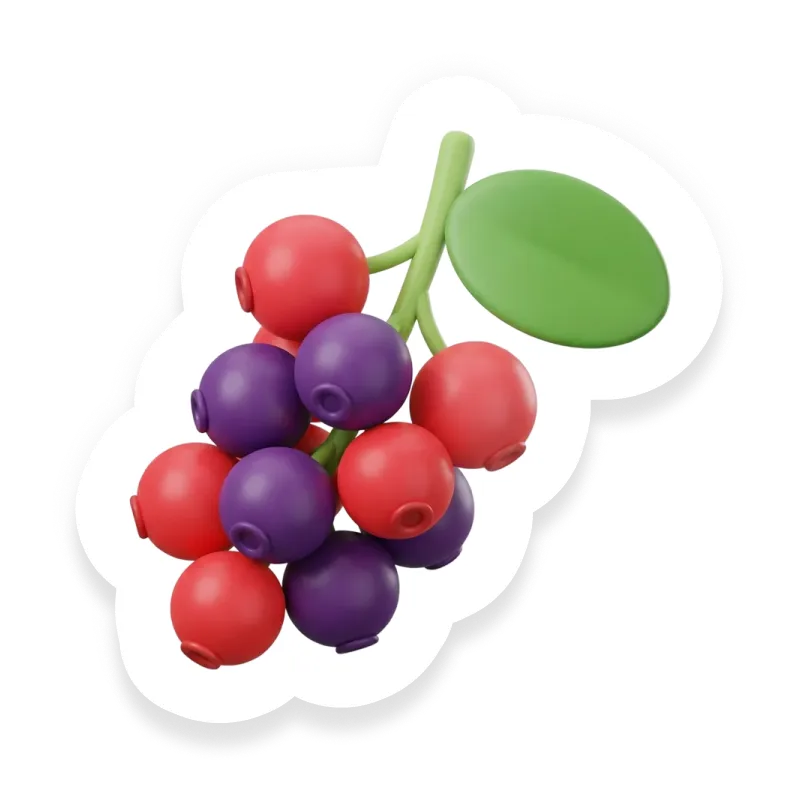
Juneberry
Fruit
Is Juneberry Safe for Babies?
Yes, Juneberries can be introduced at around 6 months once babies are ready for solids; serve cooked or pureed to reduce potential cyanogenic compounds.
Yes, but there are some things to know
How Do You Serve Juneberry?
- 1Smash fresh or cooked juneberries into a lumpy, spoonable mash; leave small soft pieces so baby can practice picking and scooping.
- 2If offering raw berries, serve a very small portion (about 1/4 cup) and introduce them alone so you can watch closely for any reaction.
- 3Remove stems and pits before mashing — remove any pits to prevent choking.
- 4Serve as a thin spread or spoonable topping on thick yogurt, oatmeal, or mashed potatoes so it’s easy to scoop, or offer a small spoonful on a soft finger food for self-feeding.
- 5Always seat baby upright and supervise all feedings; stop and seek help if you notice coughing, gagging, hives, swelling, or trouble breathing.
Is Juneberry a Common Allergen?
Juneberries (saskatoon/serviceberries) are not common allergens, but people with birch‑pollen or related pollen allergies can experience oral allergy syndrome (itching or mild swelling of the mouth/throat). For infants and toddlers, whole berries can be a choking hazard—serve mashed, pureed, or cut into very small pieces for young children. Introduce juneberries as you would any new food and watch closely for hives, swelling, vomiting, or breathing difficulty; seek medical care if those occur.
What Nutrients Does Juneberry Have?
Juneberries provide fiber, vitamins A and E, B vitamins, anthocyanin antioxidants, and small amounts of iron—nutrients that support digestion, vision and cell function, neurological development, and antioxidant protection. Anthocyanins may offer anti-inflammatory and antioxidant benefits important for growing babies. Because juneberries can contain variable levels of cyanogenic glycosides (amygdalin/prunasin), limit raw portions (≈¼ cup for infants under 12 months, ½ cup for older toddlers) and consider cooking into a sauce to reduce cyanide potential. Introduce small amounts when first offering and watch for oral allergy symptoms in pollen-sensitive children.
Is Juneberry a Choking Hazard?
High Choking Risk
Juneberries pose a choking risk due to their small, round shape which can more easily block a young child's airway. Parents should supervise closely and keep babies seated upright and within arm's reach during meals, and be ready to respond quickly if choking occurs. Consider getting infant first-aid/CPR training so you know how to act in an emergency.
Have More Questions?
Yes, parents can store juneberries in the refrigerator for up to a week, preferably in a breathable container to maintain freshness.
Yes, you can freeze pureed juneberries in an airtight container or ice cube tray for up to 6 months, which makes meal prep easier.
Yes, choosing organic juneberries can reduce pesticide exposure, though conventional berries are safe if washed thoroughly.
Yes, you can combine juneberries with other fruits like blueberries or strawberries to introduce variety and new flavors to your baby’s diet.
Yes, babies typically need about 1 to 4 tablespoons of fruit purees per feeding, depending on age and appetite.
Is Juneberry safe for your baby?
Get personalized guidance on introducing Juneberry — with prep tips, allergen alerts, and age-specific serving ideas.
Sources
- Mazza, G.; Cottrell, T. (2008). Carotenoids and cyanogenic glucosides in saskatoon berries (Amelanchier alnifolia Nutt.). Journal of Food Composition and Analysis doi.org
- Fang, J. (2021). Nutritional composition of saskatoon berries: a review. Botany doi.org
- Majak W.; McDiarmid R.E.; Hall J.W. (1981). The cyanide potential of saskatoon serviceberry and chokeberry. Can J Anim Sci. doi.org
- Quinton, D.A. (1985). Saskatoon serviceberry toxic to deer. The Journal of Wildlife Management doi.org
- He, X.-Y.; Wu, L.-J.; Wang, W.-X.; Xie, P.-J.; Chen, Y.-H.; Wang, F. (2020). Amygdalin—A pharmacological and toxicological review. Journal of Ethnopharmacology doi.org
- Abraham, K.; Buhrke, T.; Lampen, A. (2016). Bioavailability of cyanide after consumption of a single meal of foods containing high levels of cyanogenic glycosides. Archives of Toxicology doi.org
- Lim, T.K. (2012). Amelanchier alnifolia, Edible Medicinal And Non-Medicinal Plants doi.org
- Kuliahsari, D.E.; et al. (2021). Cyanide detoxification methods in food: A review. IOP Conference Series: Earth and Environmental Science doi.org
- American Academy of Allergy Asthma & Immunology. Oral Allergy Syndrome (OAS) or Pollen Fruit Syndrome (PFS) aaaai.org
What Other Fruit Can Babies Eat?
See all →


Backed by Science
Data you can trust.
Every food, guideline, and recommendation in Tummi is sourced from leading health institutions and peer-reviewed research.
 Centers for Disease Control and Prevention
Developmental milestones, nutrition guidelines, and allergen introduction timelines.
 American Academy of Pediatrics
Evidence-based feeding recommendations from the leading pediatric authority.
 National Institutes of Health
Peer-reviewed research on infant nutrition, allergies, and food safety.