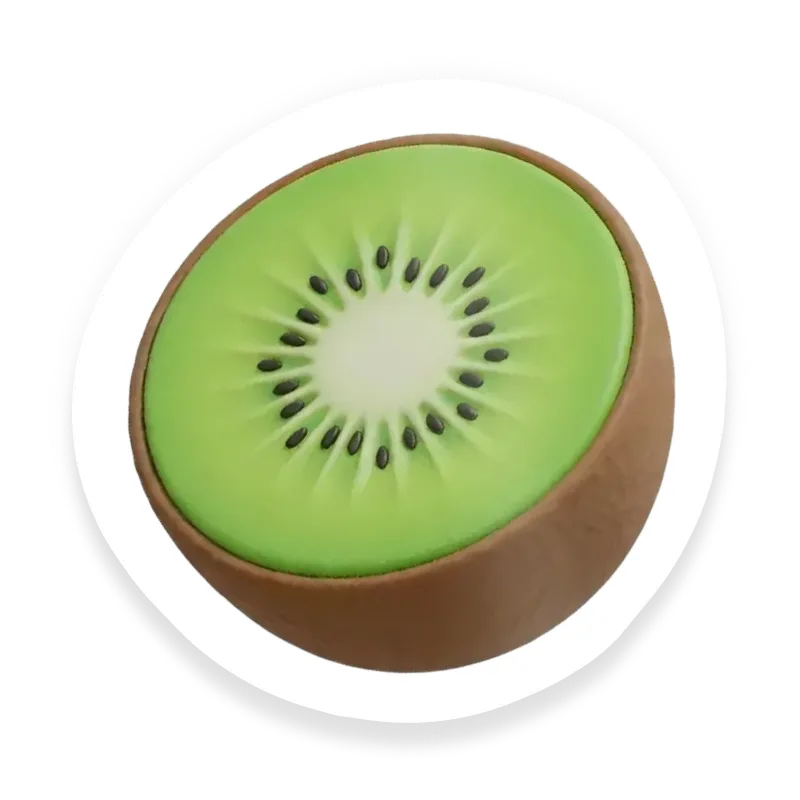
Kiwi
Fruit
Is Kiwi Safe for Babies?
Yes, babies can eat ripe, peeled kiwi from around 6 months old, when they are ready to start solids.
Yes, but there are some things to know
At a Glance
Kiwi has a high fiber content and lots of water, which help soften stools and speed bowel transit. It also contains the digestive enzyme actinidin, which helps break down proteins and may ease digestion.
How Do You Serve Kiwi?
- 1Serve ripe, very soft kiwis halved or in large segments so baby can hold and gnaw; leaving a bit of skin can help with grip.
- 2Check ripeness by pressing lightly — the kiwi should yield easily with no hard center.
- 3For spoon-feeding, mash or finely chop kiwi and mix into yogurt, ricotta, or coconut cream to mellow the texture and flavor.
- 4Always supervise during meals; if the kiwi isn't very soft, peel and cut into small, manageable pieces to reduce choking risk.
Is Kiwi a Common Allergen?
Kiwi is not one of the major common allergens (peanut, dairy, egg, soy, wheat/gluten, tree nuts, fish, shellfish, sesame), but it can still cause allergic reactions in some people. Reactions may include oral allergy syndrome (tingling/itching in the mouth) or more serious responses; kiwi can cross-react with latex and birch pollen. When introducing kiwi to infants, offer a small amount first and watch for hives, swelling, vomiting, or breathing difficulties, and seek medical care for severe symptoms. If there is a personal or family history of fruit, pollen, or latex allergies, consult your pediatrician before introducing kiwi.
What Nutrients Does Kiwi Have?
Kiwi is an excellent source of vitamin C and provides notable amounts of dietary fiber, potassium, folate and vitamin K — nutrients important for immune support, iron absorption, gut health and growth. The fiber (both soluble and insoluble) and the enzyme actinidin can aid digestion and help regulate stools, which can be beneficial for babies starting solids. Too much kiwi (or very underripe kiwi) can cause mouth irritation or loose stools and, rarely, allergic reactions in sensitive children, so offer small, age‑appropriate portions and watch for reactions.
Is Kiwi a Choking Hazard?
Low Choking Risk
Kiwi can pose a choking risk because its flesh is often firm and slippery, which increases the chance that a piece could block a baby’s airway. Stay within arm’s reach and watch closely for gagging or signs of choking, and make sure you know infant choking first-aid procedures. If you have concerns about your child’s chewing or swallowing skills, consult your pediatrician for individualized guidance.
Have More Questions?
Yes. For babies, ensure the kiwi is fully ripe and serve in small, manageable pieces to minimize choking risk. Peeling and mashing or cutting into tiny bits can be helpful for younger babies.
Yes. Store peeled and cut kiwi in an airtight container in the refrigerator for up to 24 hours to maintain freshness and safety.
Yes. Freezing pureed kiwi in small portions helps preserve nutrients and extends shelf life; thaw in the refrigerator before serving.
It depends. Organic kiwi reduces pesticide exposure, but both organic and conventional kiwi are nutritious; washing thoroughly is essential regardless.
Yes. Combining kiwi with fruits like banana or pear creates a balanced and flavorful mix suitable for babies, supporting variety in their diet.
Is Kiwi safe for your baby?
Get personalized guidance on introducing Kiwi — with prep tips, allergen alerts, and age-specific serving ideas.
Sources
- Bioactivities of Phenolic Compounds from Kiwifruit and Persimmon doi.org
- Effects of kiwi consumption on plasma lipids, fibrinogen and insulin resistance doi.org
- The nutritional and health attributes of kiwifruit: a review doi.org
- Kiwi fruit is a significant allergen and is associated with differing patterns of reactivity in children and adults doi.org
- Influence of Geographical Location of Orchards on Green Kiwifruit Bioactive Components doi.org
- Immunoglobulin E recognition patterns to purified Kiwifruit allergens doi.org
- Asthma caused by Ficus benjamina latex: evidence of cross-reactivity with fig fruit and papain doi.org
- High frequency of IgE sensitization towards kiwi seed storage proteins among peanut allergic individuals doi.org
- The Latex-Fruit Syndrome doi.org
- Oral allergy syndrome (OAS) — American Academy of Allergy, Asthma, & Immunology aaaai.org
- Oral Allergy Syndrome: An Update for Stomatologists doi.org
- Contact dermatitis — Cleveland Clinic my.clevelandclinic.org
What Other Fruit Can Babies Eat?
See all →




Backed by Science
Data you can trust.
Every food, guideline, and recommendation in Tummi is sourced from leading health institutions and peer-reviewed research.
 Centers for Disease Control and Prevention
Developmental milestones, nutrition guidelines, and allergen introduction timelines.
 American Academy of Pediatrics
Evidence-based feeding recommendations from the leading pediatric authority.
 National Institutes of Health
Peer-reviewed research on infant nutrition, allergies, and food safety.