
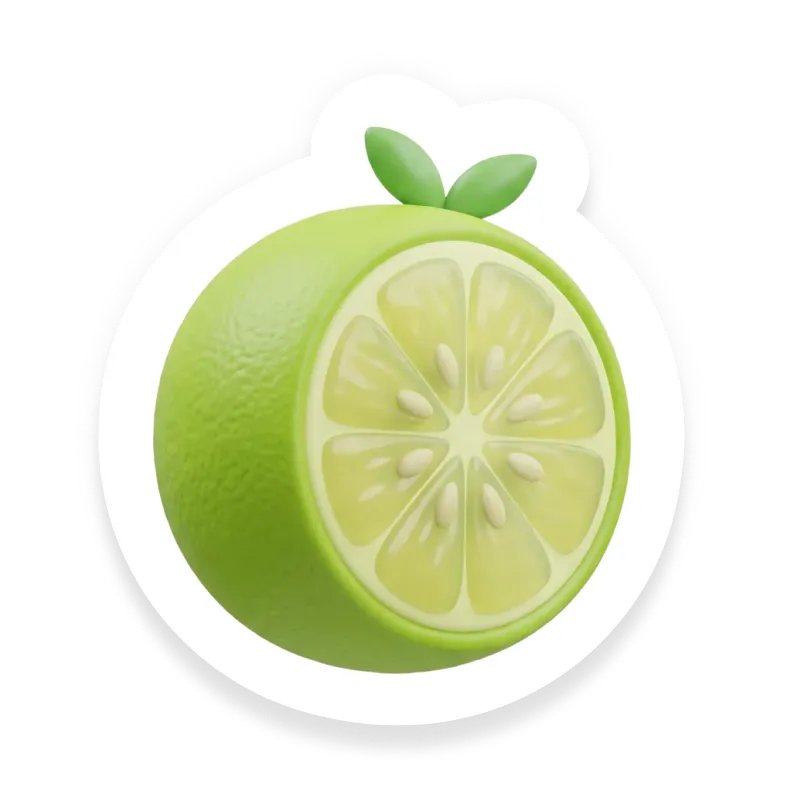
Lemon
Fruit
Is Lemon Safe for Babies?
Yes, lemons can be introduced to babies around 6 months, but due to their acidity, they may cause skin rash or diaper rash, so introduce gradually.
Yes, but there are some things to know
How Do You Serve Lemon?
- 1Start with a very small amount — a few drops of juice or a light sprinkle of finely grated zest — to add flavor without overwhelming baby.
- 2Remove seeds and membranes; for larger lemons, offer a supervised half-cut for guided exploration rather than an intact wedge.
- 3Mix a few drops of juice into iron-rich purees (for example, lentils or spinach) to boost vitamin C and support iron absorption; use only a few drops per serving.
- 4Rinse skin promptly after contact and avoid prolonged contact in the diaper area, since lemon's acidity can cause irritation.
Is Lemon a Common Allergen?
Lemons are not a common food allergen and are typically safe for most children. However, some individuals may have sensitivity or a rare citrus allergy that causes skin or mouth reactions, so avoid if a child has known citrus allergy. Also note lemon juice is highly acidic and can irritate skin, lips, or existing eczema—rinse after contact and avoid on broken skin.
What Nutrients Does Lemon Have?
Lemons are low-calorie but supply vitamin C (boosts immune function and helps absorption of plant-based iron), small amounts of folate, potassium, and vitamin B6, plus fiber and antioxidant flavonoids—mainly in the peel. For babies, a little lemon can enhance iron absorption and add vitamin C and flavor, but large or frequent servings aren’t necessary; the acidity can irritate skin, worsen diaper rash, and may contribute to tooth enamel erosion if given often as juice. Offer lemon in small amounts (seasoning, a de-seeded wedge for tasting) and avoid regular sweetened lemonade for young children.
Is Lemon a Choking Hazard?
Very Low Choking Risk
Lemon is generally a low choking risk for babies, but like any food, large or firm pieces can pose a hazard. Always stay within arm’s reach and closely supervise your child during mealtimes. Refresh your knowledge of infant choking first aid so you’re ready to respond if needed.
Have More Questions?
It depends. Lemon can be introduced around 6 months but should be served in small, diluted amounts to minimize acidity and potential skin contact reactions.
Yes, lemons are healthy as they provide vitamin C and other nutrients, but they should be given in small, diluted portions to prevent irritation and acid reflux.
No, lemons are not a common allergen, but some babies may experience sensitivity or oral allergy syndrome, especially if they have pollen allergies.
No, lemons are not a choking hazard if the juice is properly diluted and served in appropriate forms like puree or thinly sliced.
It depends. Small amounts of lemon juice can be given after 12 months, but it’s better to wait until after age 2 to reduce the risk of dental issues and gastrointestinal discomfort.
Is Lemon safe for your baby?
Get personalized guidance on introducing Lemon — with prep tips, allergen alerts, and age-specific serving ideas.
Sources
- Quality Characteristics and Antioxidant Potential of Lemon (Citrus limon Burm. f.) Seed Oil Extracted by Different Methods doi.org
- Citrus Peel Flavonoid Extracts: Health-Beneficial Bioactivities and Regulation of Intestinal Microecology in vitro doi.org
- Citrus allergy from pollen to clinical symptoms doi.org
- Oral Allergy Syndrome: An Update for Stomatologists doi.org
- Allergic contact dermatitis resulting from sensitivity to citrus peel, geraniol, and citral doi.org
- Immunostimulatory effect of kumquat (Fortunella crassifolia) and its constituents, β-cryptoxanthin and R-limonene doi.org
- Phytophotodermatitis: the other "lime" disease doi.org
- Sugar in Infants, Children and Adolescents: A Position Paper of the European Society for Paediatric Gastroenterology, Hepatology and Nutrition doi.org
- WHO Guideline for complementary feeding of infants and young children 6–23 months of age who.int
What Other Fruit Can Babies Eat?
See all →







Backed by Science
Data you can trust.
Every food, guideline, and recommendation in Tummi is sourced from leading health institutions and peer-reviewed research.
 Centers for Disease Control and Prevention
Developmental milestones, nutrition guidelines, and allergen introduction timelines.
 American Academy of Pediatrics
Evidence-based feeding recommendations from the leading pediatric authority.
 National Institutes of Health
Peer-reviewed research on infant nutrition, allergies, and food safety.