
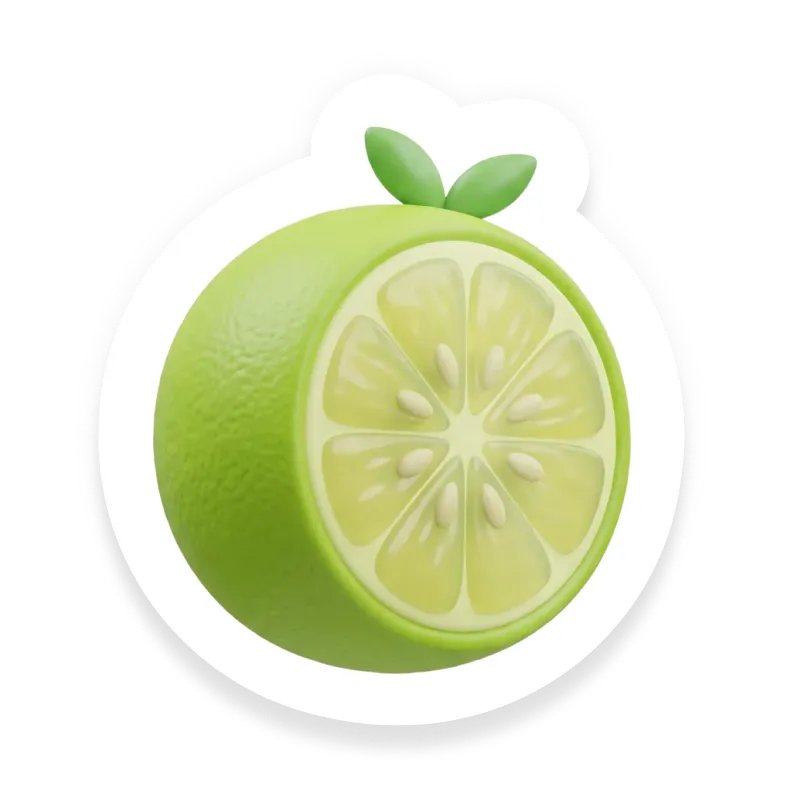
Lime
Fruit
Is Lime Safe for Babies?
No, limes should be introduced around 6 months, but due to their high acidity, monitor for skin or diaper rash reactions.
Yes, but there are some things to know
How Do You Serve Lime?
- 1Add a small amount of lime juice or a light sprinkle of zest to fruits, vegetables, grains, or purees to brighten flavor and support vitamin C intake—mix it into the food rather than applying it directly.
- 2Start with just a few drops of juice or a pinch of zest to test tolerance; remove all seeds and for very large limes use no more than half at a time.
- 3Offer tiny tastes and wait a few days between new exposures so you can monitor for any mouth or skin sensitivity from the acidity.
- 4Always supervise feeding, keep your child within arm's reach while they explore new flavors, and stop and rinse if irritation occurs.
Is Lime a Common Allergen?
Lime is not a common major allergen, but some people—especially those with pollen allergies—can experience oral allergy syndrome, causing itching or swelling of the lips, mouth, or throat after eating raw citrus. Citrus (including lime) can also irritate skin or cause contact dermatitis, and concentrated lime juice may irritate or burn sensitive skin or cause mouth irritation in infants. Watch for hives, facial or throat swelling, difficulty breathing, or persistent vomiting—seek emergency care if these occur. When introducing lime to children, start with a small amount and avoid applying acidic juice to the skin.
What Nutrients Does Lime Have?
Lime is low in calories but rich in vitamin C and provides small amounts of fiber, potassium, and vitamin B6—nutrients that support immune function, aid iron absorption from plant foods, and contribute to hydration and digestion. For babies, a small squeeze of lime or a bit of zest can boost vitamin C and flavor without adding sugar, but whole lime juice or regular limeade should be limited (wait until after 12 months and avoid frequent servings) because the acidity can irritate the skin, worsen diaper rash, and risk dental erosion. Introduce tiny amounts first and avoid excessive skin contact or sun exposure after handling fresh lime juice to reduce phytophotodermatitis risk.
Is Lime a Choking Hazard?
Very Low Choking Risk
Lime presents a low choking risk for babies, though any food can theoretically cause choking. Stay within arm’s reach and closely supervise babies during meals so you can intervene quickly if needed. Be familiar with the signs of choking versus gagging and know basic infant choking first-aid.
Have More Questions?
It depends. Lime is highly acidic and may cause skin rash or diaper rash in some babies, so introduce in small amounts and monitor for reactions.
It depends. Small amounts of lime can be introduced after 6 months, but due to its acidity, it may irritate sensitive skin or stomachs; always start with small servings.
It depends. Lime peel contains compounds like limonene which can cause contact dermatitis in sensitive individuals; peeling or cooking may help minimize reactions.
No. Lime itself is not a common allergen, but citrus sensitivity or oral allergy syndrome can cause reactions in some babies, usually mild.
It depends. Lime is safe for babies when prepared properly, but always supervise feeding and avoid chunks or unprocessed pieces to prevent choking.
Is Lime safe for your baby?
Get personalized guidance on introducing Lime — with prep tips, allergen alerts, and age-specific serving ideas.
Sources
- Quality Characteristics and Antioxidant Potential of Lemon (Citrus limon Burm. f.) Seed Oil Extracted by Different Methods (Frontiers in Nutrition, 2021) frontiersin.org
- Citrus Peel Flavonoid Extracts: Health-Beneficial Bioactivities and Regulation of Intestinal Microecology in vitro (Frontiers in Nutrition, 2022) frontiersin.org
- Oral Allergy Syndrome (OAS) — American Academy of Allergy, Asthma & Immunology aaaai.org
- Citrus Allergy from Pollen to Clinical Symptoms (PLOS One, 2013) journals.plos.org
- Oral Allergy Syndrome: An Update for Stomatologists (Journal of Allergy, 2015) pubmed.ncbi.nlm.nih.gov
- Allergic contact dermatitis resulting from sensitivity to citrus peel, geraniol, and citral (J Am Acad Dermatol, 1989) pubmed.ncbi.nlm.nih.gov
- Phytophotodermatitis: the other "lime" disease (J Emerg Med, 1999) pubmed.ncbi.nlm.nih.gov
- WHO Guideline for complementary feeding of infants and young children 6–23 months of age (WHO, 2023) who.int
- Sugar in Infants, Children and Adolescents: A Position Paper (J Pediatr Gastroenterol Nutr, 2017) pubmed.ncbi.nlm.nih.gov
What Other Fruit Can Babies Eat?
See all →









Backed by Science
Data you can trust.
Every food, guideline, and recommendation in Tummi is sourced from leading health institutions and peer-reviewed research.
 Centers for Disease Control and Prevention
Developmental milestones, nutrition guidelines, and allergen introduction timelines.
 American Academy of Pediatrics
Evidence-based feeding recommendations from the leading pediatric authority.
 National Institutes of Health
Peer-reviewed research on infant nutrition, allergies, and food safety.