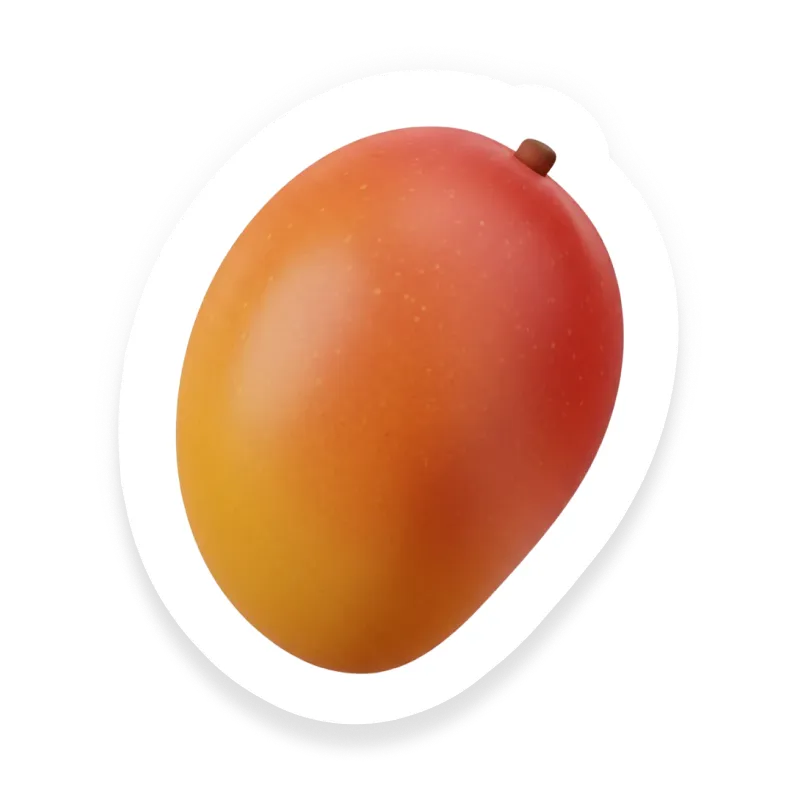
Mango
Fruit
Is Mango Safe for Babies?
Yes, babies can have mango starting at around 6 months when they are ready to start solids, ensuring it's ripe, peeled, and pureed for safe eating.
Yes, but there are some things to know
At a Glance
Mango is rich in fiber and contains plant polyphenols, which help soften stool and support regular bowel movements. Its water and these plant compounds feed beneficial gut bacteria and support healthy digestion.
How Do You Serve Mango?
- 1Peel the mango and remove most of the flesh so a pit or short spear remains; make sure the remaining flesh is very soft and can be mashed between your thumb and forefinger.
- 2Serve the pit upright or cut into short spears for gnawing; if pieces are slippery, roll them in grated coconut or finely ground nuts or dry infant cereal for a better grip.
- 3For a safer, spoon-fed option, finely mince mango and spoon a small amount onto plain yogurt or ricotta.
- 4Always supervise at arm’s reach during eating and immediately discard any pieces that become hard, break off, or could fit wholly in a child’s mouth.
Is Mango a Common Allergen?
Mango is not a common top-9 food allergen and is safe for most children; however, the skin and sap contain urushiol and can cause contact dermatitis, and rare immediate (IgE) reactions or oral allergy syndrome can occur—especially in people sensitized to birch pollen, latex, or related tree nuts (e.g., cashew/pistachio). To reduce risk, peel and wash mango before serving and avoid letting children handle or eat the skin; be extra cautious if your child has known tree-nut, latex, or pollen allergies. Seek medical advice if a child has hives, swelling, breathing difficulty, or any concerning reaction after contact or ingestion.
What Nutrients Does Mango Have?
Mangoes are a nutritious, energy-dense fruit rich in vitamin A (beta-carotene), vitamin C, vitamin B6, folate, potassium, fiber and antioxidants—nutrients that support vision and immune function, aid iron absorption, support brain development and growth, and help digestion. Their natural sugars provide quick energy, while fiber and fluid content support hydration and stool regularity. There’s no risk of vitamin toxicity from typical mango servings, but frequent large portions or juice can contribute excess sugar, diarrhea, or increased dental cavity risk, so offer in age-appropriate textures and in moderation. Avoid dried mango for young babies and introduce pasteurized mango juice only after 12 months sparingly.
Is Mango a Choking Hazard?
Low Choking Risk
Mango can be firm and slippery, which increases the risk of choking for babies as they learn to handle new textures. Closely watch your child and stay within arm’s reach when introducing mango so you can quickly respond if they gag or choke. If you’re unsure whether your baby is ready for more textured foods, consult your pediatrician or a feeding specialist.
Have More Questions?
Yes. Mango can be stored in an airtight container in the refrigerator for up to 2 days, but it’s best to serve it fresh for optimal flavor and texture.
Yes. Freeze mango puree in small portions in an airtight container, and thaw in the refrigerator as needed, to extend shelf life and preserve nutrients.
It depends. Choosing organic mangoes may reduce exposure to pesticides, but conventional mangoes are also safe if washed thoroughly before preparation.
Yes. You can combine mango with other fruits or vegetables in purees or finger foods, but introduce each new ingredient separately to monitor for reactions.
Yes. Typical portion sizes for a baby starting solids around 6 months are about 1-2 teaspoons of mashed or pureed mango, gradually increasing based on appetite.
Is Mango safe for your baby?
Get personalized guidance on introducing Mango — with prep tips, allergen alerts, and age-specific serving ideas.
Sources
- Anaphylactic reaction in patient allergic to mango doi.org
- Hypersensitivity manifestations to the fruit mango doi.org
- Mango contact allergy doi.org
- Exposure assessment of food preservatives (sulphites, benzoic and sorbic acid) in Austria doi.org
- Sulfite oxidase activity of cytochrome c: Role of hydrogen peroxide doi.org
- A test of four evolutionary hypotheses of pregnancy food cravings: evidence for the social bargaining model doi.org
- Nutritional composition and bioactive compounds in three different parts of mango fruit doi.org
- The nature of raw starch digestion doi.org
- Sugar in Infants, Children and Adolescents: A Position Paper of the European Society for Paediatric Gastroenterology, Hepatology and Nutrition Committee on Nutrition doi.org
What Other Fruit Can Babies Eat?
See all →





Backed by Science
Data you can trust.
Every food, guideline, and recommendation in Tummi is sourced from leading health institutions and peer-reviewed research.
 Centers for Disease Control and Prevention
Developmental milestones, nutrition guidelines, and allergen introduction timelines.
 American Academy of Pediatrics
Evidence-based feeding recommendations from the leading pediatric authority.
 National Institutes of Health
Peer-reviewed research on infant nutrition, allergies, and food safety.