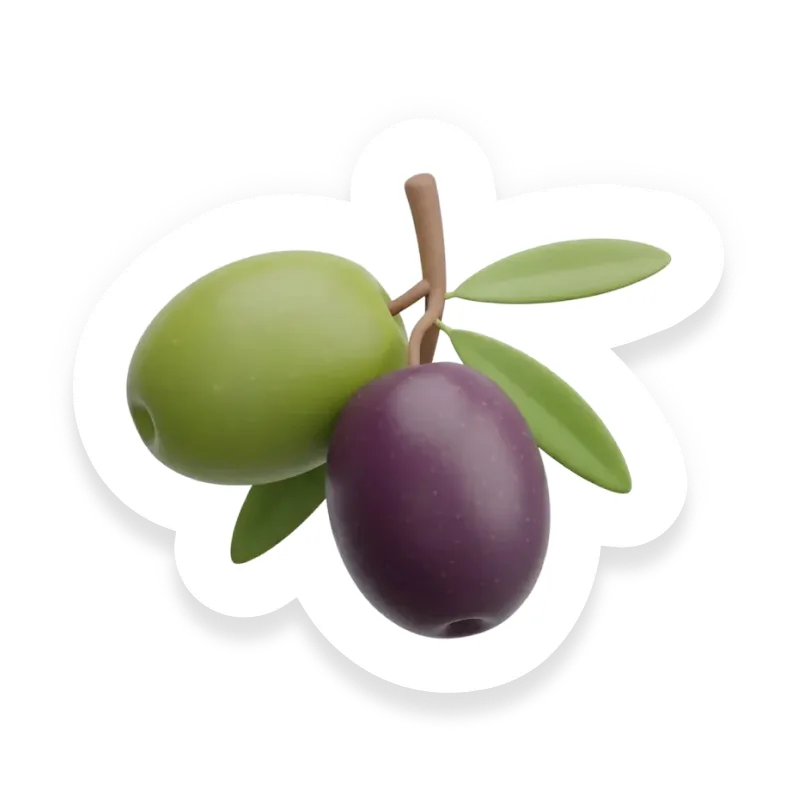
Olives
Fruit
Is Olives Safe for Babies?
Yes, babies can eat olives around 6 months old when they are ready to start solids, ensuring they are properly prepared.
Yes, but there are some things to know
At a Glance
Olives are a good iron source that also provide vitamin E and antioxidants to help carry oxygen in the blood and protect cells. They contain healthy monounsaturated fats and plant polyphenols that support heart health and lower inflammation.
How Do You Serve Olives?
- 1Confirm the child can reliably chew and swallow soft foods and has already eaten whole pitted olives safely; only proceed when you're confident they're ready.
- 2Start with an olive variety that naturally separates from its pit (for example, Castelvetrano), and demonstrate gently biting the olive, tilting the head forward, then removing the pit with fingers or a small utensil.
- 3Show how to remove and discard the pit — do not swallow the pit — then let the child try while you supervise closely and keep your hands ready to assist.
- 4If the child bites the pit, stop eating and spit it out immediately. Keep a small cup or tissue nearby so the pit can be disposed of safely.
- 5Practice briefly and often in supervised sessions, praising attempts and only increasing independence after consistent safe success.
Is Olives a Common Allergen?
Olives are not a common top food allergen and true olive allergy is rare, though people sensitized to olive/tree pollen can get mild oral allergy syndrome (mouth or throat itching). Many prepared olives are stuffed or marinated (for example with anchovies, cheese, or nuts) or cured in brine that may contain sulfites—always check labels for added fish, dairy, nuts, or sulfites. Olives are high in sodium and whole olives with pits are a choking hazard for young children, so remove pits and offer age‑appropriate portions. If you suspect an allergic reaction or your child has known pollen/food allergies, consult your pediatrician or an allergist.
What Nutrients Does Olives Have?
Olives are a good source of heart-healthy monounsaturated fat (mainly oleic acid), vitamin E (an antioxidant), small amounts of iron and calcium, fiber, and polyphenols—nutrients that support brain development, fat-soluble vitamin absorption, and gut health. Because most table olives are cured in brine and can be high in sodium, serve very small amounts, rinse when possible, and avoid frequent large servings for infants. Use olives as a flavorful way to add healthy fats and vitamin E to mixed or pureed foods rather than a primary food source.
Is Olives a Choking Hazard?
Elevated Choking Risk
Olives are a choking hazard because they’re round, slippery, can be firm or springy, and often contain a hard pit. Even pitted olives can be risky if swallowed whole, so stay within arm’s reach and closely supervise when olives are present. If a pit gets into the mouth, stay calm, encourage spitting, and seek emergency help if the child shows any signs of airway obstruction.
Have More Questions?
It depends. Olives can be introduced as soon as baby is ready for solids, typically around 6 months, but ensure they are properly prepared and served appropriately for their age.
Yes. Olives are nutritious for babies, providing healthy fats, iron, calcium, vitamins E and K, and antioxidants, which support overall growth and development.
No. Olives are not a common allergen; however, some pollen-allergic individuals or those with Oral Allergy Syndrome may react, so start with small amounts and monitor for reactions.
Yes. Olives pose a choking risk because of their round, slippery texture and potential pits; always ensure they are pitted and served in a safe, age-appropriate manner.
It depends. The amount of olives a baby needs varies, but generally, start with small servings, observing how they respond, and gradually increase as they become accustomed to the texture.
Is Olives safe for your baby?
Get personalized guidance on introducing Olives — with prep tips, allergen alerts, and age-specific serving ideas.
Sources
- Health Effects of Phenolic Compounds Found in Extra-Virgin Olive Oil, By-Products, and Leaf of Olea europaea L. — Romani et al. (2019) doi.org
- Does salt intake in the first two years of life affect the development of cardiovascular disorders in adulthood? — Strazzullo et al. (2012) doi.org
- Infants' and Children's Salt Taste Perception and Liking: A Review — Liem (2017) doi.org
- Analysis of olive allergens — Esteve et al. (2012) doi.org
- Food allergy due to olive — Unsel et al. (2009) pubmed.ncbi.nlm.nih.gov
- Oral Allergy Syndrome (OAS) or Pollen Fruit Syndrome (PFS) — American Academy of Allergy Asthma & Immunology aaaai.org
What Other Fruit Can Babies Eat?
See all →



Backed by Science
Data you can trust.
Every food, guideline, and recommendation in Tummi is sourced from leading health institutions and peer-reviewed research.
 Centers for Disease Control and Prevention
Developmental milestones, nutrition guidelines, and allergen introduction timelines.
 American Academy of Pediatrics
Evidence-based feeding recommendations from the leading pediatric authority.
 National Institutes of Health
Peer-reviewed research on infant nutrition, allergies, and food safety.