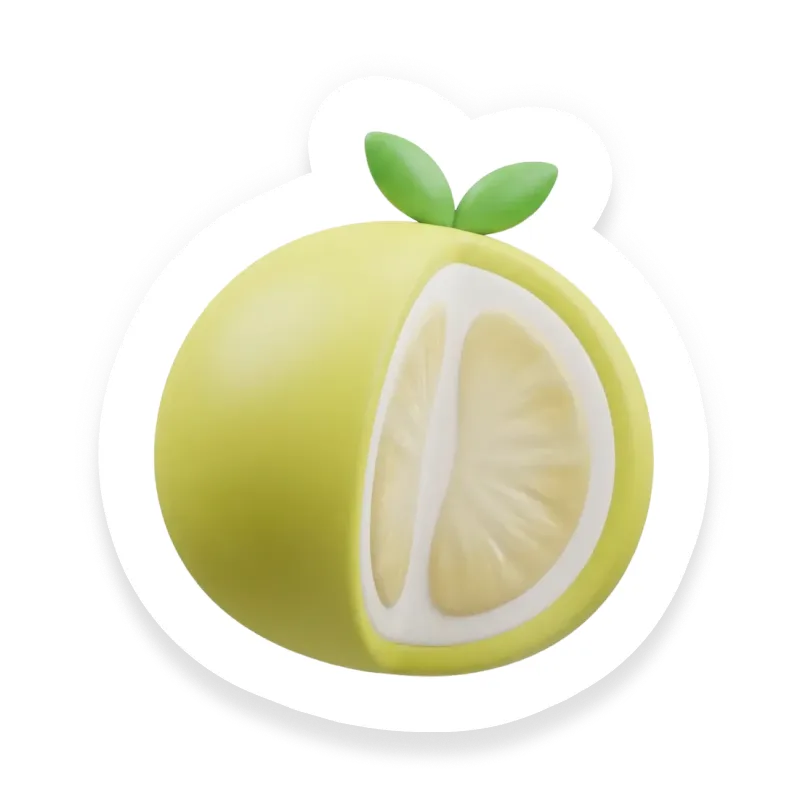
Oroblanco
Fruit
Is Oroblanco Safe for Babies?
Yes, oroblanco can be introduced around 6 months of age when starting solids; remove skin and offer in small, manageable pieces.
Yes, but there are some things to know
At a Glance
Oroblanco is full of fiber and has plenty of water, so it can help soften stool and keep bowel movements regular. It also provides vitamin C and is a natural pectin source, which supports healthy gut bacteria and gentle digestion.
How Do You Serve Oroblanco?
- 1Cut a large wedge or whole segment, removing all membranes and any seeds.
- 2Leave a small strip of peel on one side so the baby can hold the wedge while gumming it.
- 3Size the piece so it cannot fit fully into the baby's mouth to reduce choking risk.
- 4Avoid offering segments with membranes still attached or small torn pieces that could detach. Always supervise within arm’s reach while the baby is eating.
Is Oroblanco a Common Allergen?
Oroblanco is a citrus hybrid (pomelo × grapefruit) and is not a common allergen for most children. Rarely, citrus can cause true allergic reactions or trigger oral allergy syndrome in people with pollen allergies, producing itching or tingling in the mouth or throat. If your child has known citrus or latex allergies, a history of severe food allergies, or unexplained reactions to fruits, check with your pediatrician or allergist before offering Oroblanco. Always remove seeds and cut fruit into age-appropriate pieces to lower choking risk.
What Nutrients Does Oroblanco Have?
Oroblanco is a good source of vitamin C, fluid, and dietary fiber, with smaller amounts of B vitamins, potassium, and folate—nutrients that support immune function, help iron absorption, and aid gentle digestion. Its fiber and high water content can help soften stools and support regular bowel movements in babies. Because oroblanco is acidic, offering large amounts can irritate the mouth, worsen diaper rash, or cause mild GI upset; it also may contain furanocoumarins that interact with some medications, so consult your pediatrician if baby is taking medicines. Offer moderate portions as part of a varied diet and remove membranes and seeds for safety.
Is Oroblanco a Choking Hazard?
Low Choking Risk
Oroblanco segments with the surrounding membrane intact can be a choking hazard, and stray seeds pose an aspiration risk. Although many oroblancos are seedless, they’re not guaranteed to be, so inspect the fruit before offering it. Always stay within an arm’s reach during meals and be prepared to respond if gagging or choking occurs.
Have More Questions?
Yes. You can store oroblanco in the refrigerator for up to a week, and it is best to keep it whole or in segments to maintain freshness. To freeze, peel and segment the fruit, then place in an airtight container for up to 3 months.
Yes. Freezing oroblanco puree in small portions allows for easy use later. Make sure the puree is cooled before sealing, and use within 3 months for best quality.
It depends. Organic oroblanco can be a better choice for babies sensitive to pesticides, but conventional options are also safe if properly washed and peeled.
Yes. Combining oroblanco with other fruits like bananas or strawberries can introduce variety and different nutrients to your baby's diet, provided the combined foods are appropriate for your baby's age.
It depends. Portion sizes for babies depend on their age and appetite, but generally, small segments or a few tablespoons of pureed oroblanco are suitable for young babies starting solids.
Is Oroblanco safe for your baby?
Get personalized guidance on introducing Oroblanco — with prep tips, allergen alerts, and age-specific serving ideas.
Sources
- Grapefruit–medication interactions: Forbidden fruit or avoidable consequences? (CMAJ) pmc.ncbi.nlm.nih.gov
- Chemistry and health effects of furanocoumarins in grapefruit (J Food Drug Anal, 2017) pubmed.ncbi.nlm.nih.gov
- Oral Allergy Syndrome (OAS) – American Academy of Allergy, Asthma & Immunology aaaai.org
- Citrus Allergy from Pollen to Clinical Symptoms (PLOS ONE, 2013) pmc.ncbi.nlm.nih.gov
- Oral Allergy Syndrome: An Update for Stomatologists (J Allergy, 2015) onlinelibrary.wiley.com
- Dermatitis de contacto por alimentos (Actas Dermo-Sifiliográficas, 2007) sciencedirect.com
- Phytophotodermatitis review (J Clin/derm review, PMC) pmc.ncbi.nlm.nih.gov
What Other Fruit Can Babies Eat?
See all →






Backed by Science
Data you can trust.
Every food, guideline, and recommendation in Tummi is sourced from leading health institutions and peer-reviewed research.
 Centers for Disease Control and Prevention
Developmental milestones, nutrition guidelines, and allergen introduction timelines.
 American Academy of Pediatrics
Evidence-based feeding recommendations from the leading pediatric authority.
 National Institutes of Health
Peer-reviewed research on infant nutrition, allergies, and food safety.