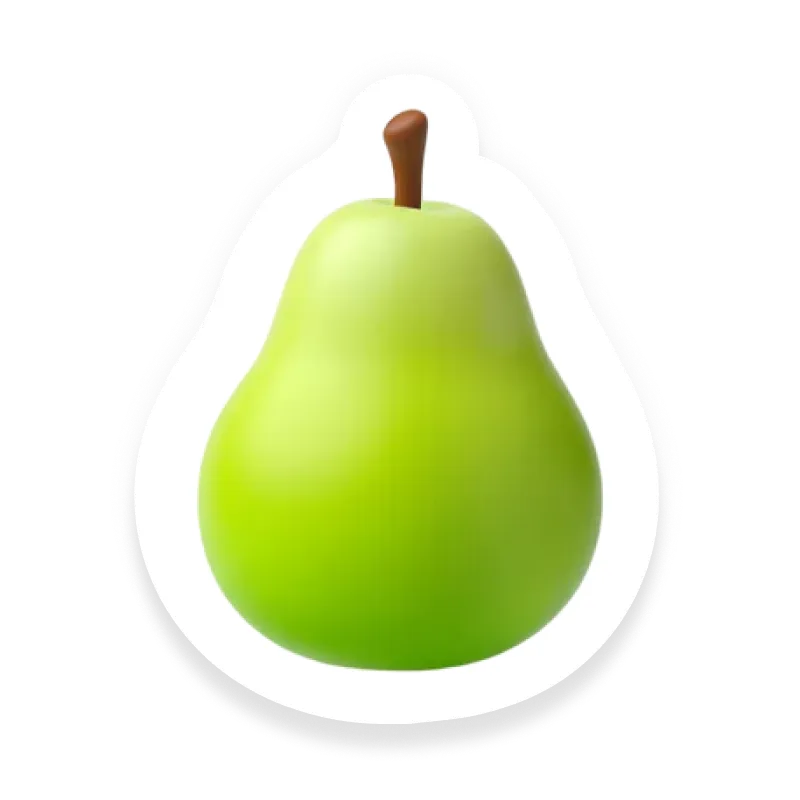
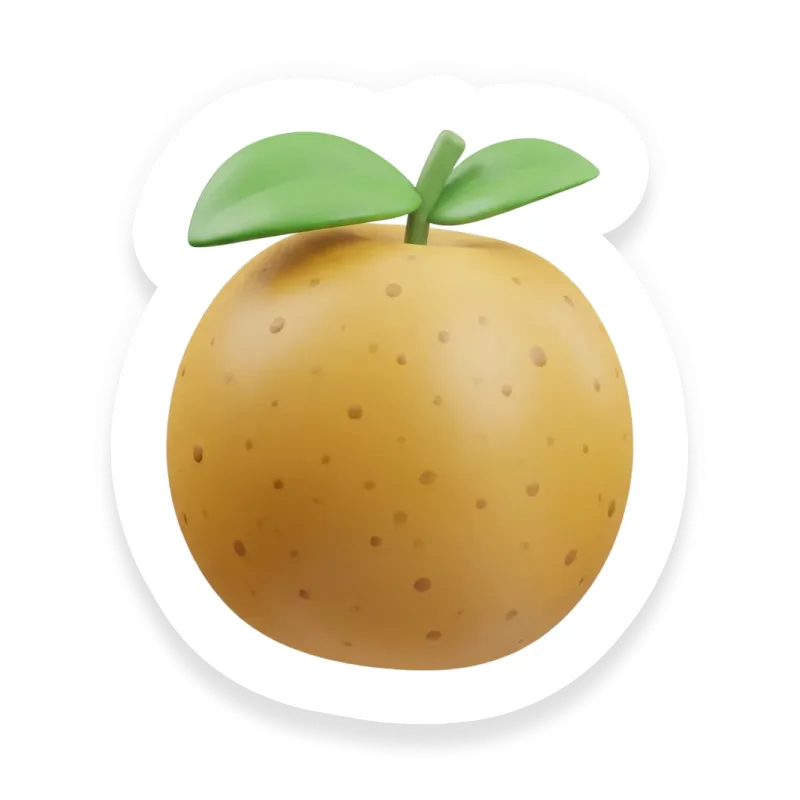
Pear
Fruit
Is Pear Safe for Babies?
Yes, pears can be introduced to babies around 6 months old when they are ready to start solids, ensuring they are prepared safely.
Yes, but there are some things to know
At a Glance
Pears are gentle on tummies because they are rich in fiber, and their water helps soften stool and keep digestion regular. They also contain natural sorbitol and pectin, plant compounds that feed friendly gut bacteria and can help ease constipation.
How Do You Serve Pear?
- 1Select ripe pears or cook until very soft; test by pressing the flesh — it should give easily.
- 2Remove the core and halve the pear, then steam, simmer, or bake until very soft (about 8–12 minutes steaming or 15–20 minutes baking depending on size).
- 3Leave the skin on if the pear is very soft, or peel if it feels grainy. Peeling reduces chewiness.
- 4For self-feeding offer a whole very soft half (core removed); for spoon-feeding grate or mash and mix into cereal or yogurt, check there are no firm lumps, cool to a safe temperature, and always supervise while the baby eats.
Is Pear a Common Allergen?
Pears are not a common allergen and are usually safe for most children. Some people with birch pollen allergy may experience oral allergy syndrome (itchy or tingling mouth/throat) after eating raw pears. Pears are not one of the top allergens (milk, egg, peanut, tree nuts, soy, wheat, fish, shellfish, sesame), but introduce new foods one at a time and monitor for reactions. For infants, serve pears in age-appropriate, soft or mashed forms to reduce choking risk.
What Nutrients Does Pear Have?
Pears provide easily digested carbohydrates for energy, soluble fiber and fluid that help relieve constipation, potassium for electrolyte balance and hydration, small amounts of copper for growth, and vitamins C (supports immunity and enhances iron absorption) and K (helps blood clotting). They are low-allergen and not a source of iron; vitamin C is useful when pairing pears with iron-rich foods. Too much pear or pear juice can add excess sugars, contribute to loose stools from high fiber, and increase risk of dental cavities—limit juice until after 12 months and serve age‑appropriate portions.
Is Pear a Choking Hazard?
Moderate Choking Risk
Pears can be a choking hazard—especially when underripe, since firm, slippery pieces are harder for babies to manage. Be aware of this increased risk and always supervise meals within arm’s reach, never leaving a baby unattended while eating. Learn the difference between gagging and choking and be familiar with basic infant choking first aid.
Have More Questions?
It depends. For babies, pears should be peeled, cooked until soft if firm, and served in a safe, mushy form to prevent choking.
It depends. You can store homemade pear puree in an airtight container in the refrigerator for up to 24-48 hours, or freeze in ice cube trays for longer storage.
It depends. For babies, opt for organic pears when possible to reduce exposure to pesticides, especially since they are often peeled and eaten in pureed form.
It depends. When combining pears with other foods, ensure they are age-appropriate textures and introduced one at a time to monitor for reactions.
It depends. Portion sizes for babies vary based on age and appetite, but start with a few teaspoons, gradually increasing as the baby grows and shows readiness.
Is Pear safe for your baby?
Get personalized guidance on introducing Pear — with prep tips, allergen alerts, and age-specific serving ideas.
Sources
- Birch Pollen Related Pear Allergy: A Single-Blind Oral Challenge TRIAL with 2 Pear Cultivars (Nutrients, 2021) mdpi.com
- Oral Allergy Syndrome (OAS) Defined (American Academy of Allergy, Asthma & Immunology) aaaai.org
- Oral Allergy Syndrome in Birch Pollen-Sensitized Patients (Journal of Korean Medical Science, 2018) pmc.ncbi.nlm.nih.gov
- Clinical cross-reactivity among foods of the Rosaceae family (Journal of Allergy and Clinical Immunology, 2000) pubmed.ncbi.nlm.nih.gov
- Rosaceae food allergy: a review (Critical Reviews in Food Science and Nutrition, 2022) tandfonline.com
- WHO Guideline for complementary feeding of infants and young children 6–23 months of age (2023) who.int
- Sugar in Infants, Children and Adolescents: A Position Paper (J Pediatr Gastroenterol Nutr, 2017) pubmed.ncbi.nlm.nih.gov
What Other Fruit Can Babies Eat?
See all →

Backed by Science
Data you can trust.
Every food, guideline, and recommendation in Tummi is sourced from leading health institutions and peer-reviewed research.
 Centers for Disease Control and Prevention
Developmental milestones, nutrition guidelines, and allergen introduction timelines.
 American Academy of Pediatrics
Evidence-based feeding recommendations from the leading pediatric authority.
 National Institutes of Health
Peer-reviewed research on infant nutrition, allergies, and food safety.