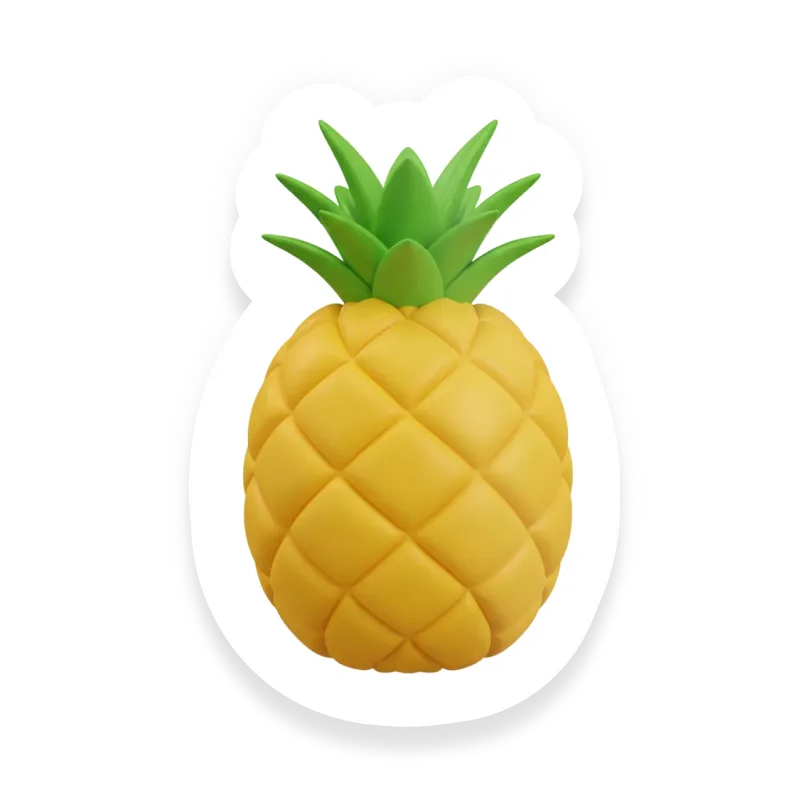
Pineapple
Fruit
Is Pineapple Safe for Babies?
Yes, babies can eat pineapple starting at around 6 months, ensuring it's ripe, peeled, and served in small, manageable pieces.
Yes, but there are some things to know
At a Glance
Pineapple is rich in fiber which helps add bulk and soften stool to support regular bowel movements. It also contains bromelain enzyme, a natural digestive enzyme that helps break down proteins and can ease digestion.
How Do You Serve Pineapple?
- 1Choose a ripe pineapple — check ripeness with the squish test: a small piece gives slightly under gentle pressure.
- 2Offer the core as a teether or slice it into long, flat strips about the width of two adult fingers to reduce choking risk.
- 3Stop offering the core once the child can bite through it, and serve pineapple alongside a creamy food (yogurt or coconut milk) to help reduce tongue acidity.
- 4Avoid pre-cut cubes or firm canned chunks; if using cubes, finely chop them into small, soft pieces to lower choking risk.
Is Pineapple a Common Allergen?
Pineapple is not a common top food allergen but can cause oral allergy syndrome (itching or swelling of the mouth, lips, tongue) in people with pollen allergies and, more rarely, true allergic reactions. The fruit contains bromelain, an enzyme that can irritate mucous membranes or cause contact reactions in sensitive individuals. If your child has known pollen or latex allergies, introduce pineapple cautiously and watch for immediate oral swelling, hives, vomiting, or breathing difficulty; seek medical care for severe reactions. For mild mouth itching, rinsing the mouth and avoiding more pineapple usually helps, but consult your pediatrician or allergist if concerned.
What Nutrients Does Pineapple Have?
Pineapple is a vitamin-C–rich fruit that also provides manganese, vitamin B6, folate, fiber, and antioxidants—nutrients that support immune function, iron absorption, digestion, and overall growth in babies. Small servings of ripe pineapple can be a nutritious complement to other foods, but the fruit’s natural sugars, acidity, and the enzyme bromelain (which can irritate the mouth) mean it should be offered in moderation and prepared age-appropriately. Avoid routine juice for infants (wait until after 12 months for occasional juice), watch for mouth or skin irritation, and introduce gradually while monitoring for allergic reactions.
Is Pineapple a Choking Hazard?
Elevated Choking Risk
Pineapple can be firm and slippery, which increases choking risk, and its mixed consistency of juice and fibrous flesh may cause coughing as babies learn to manage different textures. Stay within arm’s reach and closely supervise your baby while they try pineapple so you can intervene quickly if they gag or choke. Make sure all caregivers know the signs of choking and how to perform infant choking first aid.
Have More Questions?
It depends. While pineapple can be part of a balanced diet for babies, it is best introduced gradually to monitor for any adverse reactions or sensitivities.
It depends. Freezing puree or chunks of pineapple can be a convenient way to store leftovers, but be sure to use airtight containers to prevent freezer burn and ensure freshness.
It depends. Organic pineapple may have fewer pesticide residues, but conventional pineapple is also safe; washing thoroughly is key for both.
It depends. Combining pineapple with other foods can introduce your baby to complex flavors, but start with one new ingredient at a time to monitor for reactions.
It depends. Typical portion sizes for babies vary, but generally, a small amount (about 1-2 tablespoons) is a good starting point for introducing pineapple.
Is Pineapple safe for your baby?
Get personalized guidance on introducing Pineapple — with prep tips, allergen alerts, and age-specific serving ideas.
Sources
- Arampath PC & Dekker M (2019). Bulk storage of mango and pineapple pulp. Journal of the Science of Food and Agriculture. doi.org
- Knox S, Lang D & Hoyt A (2019). The many flavors of pineapple reactions. Annals of Allergy, Asthma & Immunology. doi.org
- Nucera E et al. (2020). Latex Allergy: Current Status and Future Perspectives. Journal of Asthma and Allergy. doi.org
- National Center for Complementary and Integrative Health. (2020). Bromelain. nccih.nih.gov
- Nettis E et al. (2001). IgE-mediated allergy to bromelain. Allergy. doi.org
- Gailhofer G et al. (1988). Asthma caused by bromelain. Clinical Allergy. doi.org
- Bedolla-Barajas M et al. (2017). Prevalence of oral allergy syndrome in children. Allergologia et Immunopathologia. doi.org
- Brehler R et al. (1997). 'Latex-fruit syndrome'. Allergy. doi.org
- American Academy of Allergy, Asthma & Immunology. Oral Allergy Syndrome (OAS). aaaai.org
- Kashyap RR & Kashyap RS (2015). Oral Allergy Syndrome: An Update for Stomatologists. Journal of Allergy. doi.org
- World Health Organization (2023). WHO Guideline for complementary feeding of infants and young children 6-23 months of age. who.int
- Fidler Mis N et al. (2017). Sugar in Infants, Children and Adolescents: Position Paper. Journal of Pediatric Gastroenterology and Nutrition. doi.org
What Other Fruit Can Babies Eat?
See all →


Backed by Science
Data you can trust.
Every food, guideline, and recommendation in Tummi is sourced from leading health institutions and peer-reviewed research.
 Centers for Disease Control and Prevention
Developmental milestones, nutrition guidelines, and allergen introduction timelines.
 American Academy of Pediatrics
Evidence-based feeding recommendations from the leading pediatric authority.
 National Institutes of Health
Peer-reviewed research on infant nutrition, allergies, and food safety.