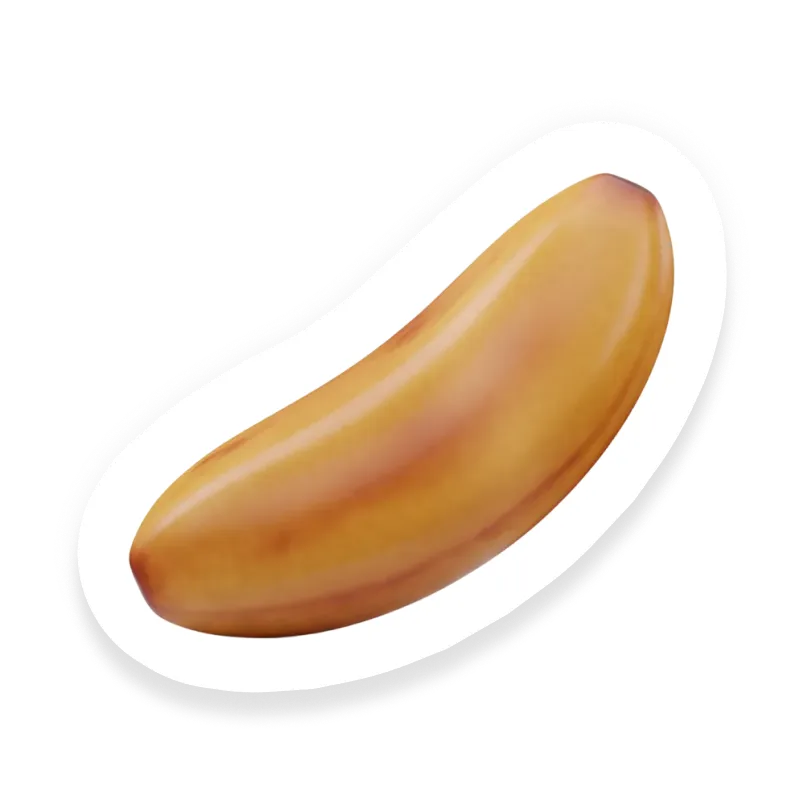
Plantain
Fruit
Is Plantain Safe for Babies?
Yes, plantains can be introduced around 6 months once baby is ready for solids, ensuring they are cooked and mashed to prevent choking.
Yes, but there are some things to know
At a Glance
Plantains are gentle on digestion because they are high in fiber, which adds bulk to stool and helps food move steadily through the bowels. Unripe plantains also have a high resistant starch content that feeds beneficial gut bacteria and supports regular bowel movements.
How Do You Serve Plantain?
- 1Cook plantain (boil, steam, or bake) until very soft and a skewer passes through easily; peel and let cool to lukewarm before serving.
- 2Offer one long chunk about the width and thickness of two adult fingers pressed together so the baby can grasp and gum it; keep the piece large to reduce choking risk.
- 3Alternatively, mash cooked plantain and thin to a scoopable, not runny, consistency with coconut milk, formula, or stock. Serve on a pre-loaded spoon or let the baby scoop with their hands to practise self-feeding.
- 4Always supervise closely, check for loose skin or small pieces, and remove anything that could break off before offering.
Is Plantain a Common Allergen?
Plantain is a fruit (related to banana) and is not a common top‑9 food allergen (milk, egg, peanut, tree nuts, fish, shellfish, soy, wheat/gluten, sesame). However, people with banana allergy or latex allergy can sometimes react to related fruits (latex‑fruit syndrome/cross‑reactivity). Also watch for cross‑contact during preparation (e.g., fried in peanut oil or on shared equipment). If a child has known banana or latex allergy, consult an allergist before introducing plantain.
What Nutrients Does Plantain Have?
Plantains are a starchy, energy-dense food that provides carbohydrates and fiber plus important micronutrients for babies — notably potassium (electrolyte and muscle function), vitamin B6 (brain and nervous-system support), vitamin C (immune support and helps iron absorption), folate, magnesium, and vitamin K. These nutrients help fuel movement, support gut health, aid metabolic processes, and assist nutrient absorption when paired with iron-rich foods. Plantains are not a good source of iron, so pair them with iron-rich foods or vitamin C-containing foods to improve iron uptake. Too much can add excess carbs/sugars or cause digestive upset (gas, constipation); infants with kidney problems may need potassium limits, so keep servings age-appropriate and varied within the diet.
Is Plantain a Choking Hazard?
Low Choking Risk
Plantains can be a choking hazard: firm, crispy preparations (like fried pieces, tostones, or chips) are harder to chew and increase the risk of airway obstruction, while softer, well-cooked plantain is typically more mashable and less likely to block the airway. Always stay within arm’s reach during meals and watch for signs of gagging or difficulty breathing. Keep your infant rescue skills up to date so you can respond quickly if needed.
Have More Questions?
Yes. To store, keep ripe plantains in a paper bag at room temperature until they soften or turn black, then peel and refrigerate for up to 2 days. For freezing, peel, cut into pieces, and freeze in an airtight container for up to a month.
Yes. To freeze pureed plantains, peel and mash the fruit, then transfer to a freezer-safe container or bag, removing excess air before sealing. Thaw in the fridge before serving to your baby.
It depends. Organic and conventional plantains are similar in nutrients; choose based on your preference or availability, but both are safe options for babies.
Yes. Combining plantains with other soft fruits, vegetables, or proteins can introduce new flavors and textures to your baby’s diet, fostering varied taste development.
Yes. Portion sizes for babies vary; start with small servings, such as 1-2 tablespoons, and observe your baby’s cues for hunger and fullness.
Is Plantain safe for your baby?
Get personalized guidance on introducing Plantain — with prep tips, allergen alerts, and age-specific serving ideas.
Sources
- Oral Allergy Syndrome (OAS) Defined | AAAAI aaaai.org
- Food allergy - Symptoms and causes | Mayo Clinic mayoclinic.org
- Banana Allergy | Anaphylaxis UK anaphylaxis.org.uk
What Other Fruit Can Babies Eat?
See all →


Backed by Science
Data you can trust.
Every food, guideline, and recommendation in Tummi is sourced from leading health institutions and peer-reviewed research.
 Centers for Disease Control and Prevention
Developmental milestones, nutrition guidelines, and allergen introduction timelines.
 American Academy of Pediatrics
Evidence-based feeding recommendations from the leading pediatric authority.
 National Institutes of Health
Peer-reviewed research on infant nutrition, allergies, and food safety.