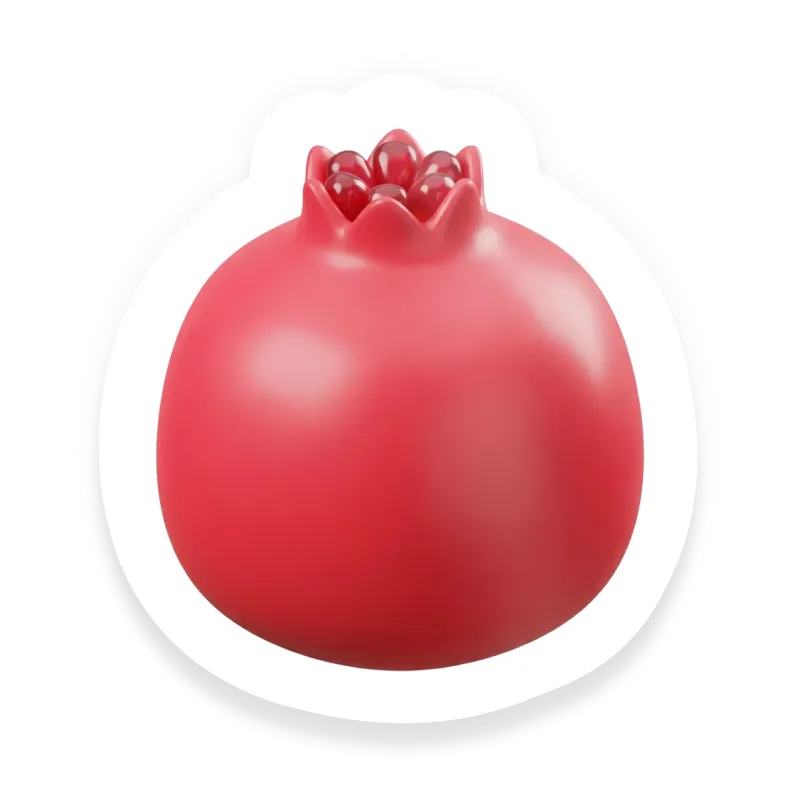
Pomegranate
Fruit
Is Pomegranate Safe for Babies?
Yes, pomegranate seeds can be introduced around 6 months when your baby starts solids, but ensure the seeds are finely mashed to prevent choking.
Yes, but there are some things to know
At a Glance
Pomegranate is high in fiber, and that fiber helps add bulk and keep stools soft and regular. It is also rich in polyphenols, plant compounds that feed good gut bacteria and support healthy digestion.
How Do You Serve Pomegranate?
- 1Crush or fully mash pomegranate arils so no whole seeds remain, then stir them into a thick, scoopable food like yogurt, mashed banana, or warm cereal to prevent choking.
- 2Offer a small spoonful at first to check tolerance and reduce acidity; wait briefly before giving more.
- 3Serve while the child is sitting upright and stay within arm’s reach to respond quickly if they cough or gag.
- 4To lessen tang and stomach upset, mix the mashed arils into a larger portion of yogurt or cereal so the flavor is diluted.
Is Pomegranate a Common Allergen?
Pomegranate is not a common top‑9 allergen and true IgE‑mediated allergy is rare, though case reports exist; people with birch‑pollen related oral allergy syndrome may get itching or mild swelling in the mouth/throat after fresh pomegranate. Whole pomegranate seeds can be a choking hazard for infants and young children—crush or mash seeds for babies and avoid serving whole seeds to children who are still learning to chew (commonly recommended until ~4 years depending on the child). Introduce pomegranate cautiously in children with known pollen/fruit allergies and seek medical advice if you see hives, swelling, breathing difficulty, or other systemic symptoms.
What Nutrients Does Pomegranate Have?
Pomegranate provides vitamin C (supports immune function and helps iron absorption), folate (important for growth and brain development), potassium (electrolyte balance), zinc and vitamin B6 (growth and immune support), vitamin K (blood clotting), fiber (digestive health), plus antioxidant polyphenols. These nutrients can support growth, digestion, and overall immune and metabolic health in babies when offered in age‑appropriate forms. Avoid excess pomegranate juice or large amounts at once — too much sugary juice can increase dental cavities and displace other foods, and very high intake of fiber or polyphenols may cause GI upset.
Is Pomegranate a Choking Hazard?
High Choking Risk
Pomegranate seeds are small, round, firm, and slippery, which increases the risk of choking for infants and young toddlers. When introducing pomegranate, stay within an arm’s reach and closely supervise meals so you can react immediately if your child gags or chokes. Learn the signs of choking (such as ineffective coughing or inability to breathe) and be prepared to perform infant choking first aid or call emergency services. Keep mealtimes calm and free of distractions so you can watch your child’s chewing and breathing.
Have More Questions?
Yes. Pomegranate seeds can be introduced to babies around 6 months old, once they are ready for solids, but they should be prepared appropriately to minimize choking risk.
Yes. Pomegranates are healthy for babies as they provide essential vitamins, minerals, antioxidants, and hydration, supporting overall growth and immunity.
No. Pomegranate allergy is rare, but some individuals with Oral Allergy Syndrome may react; monitor your baby for any signs of sensitivity.
Yes. Pomegranate seeds are small and slippery, which can increase choking risk; serve them in an age-appropriate, safe manner and supervise your baby during eating.
Wait until your baby is over 12 months before offering pomegranate juice regularly. Small, occasional servings after age 1 are generally safe.
Is Pomegranate safe for your baby?
Get personalized guidance on introducing Pomegranate — with prep tips, allergen alerts, and age-specific serving ideas.
Sources
- Anaphylactic reactions to pomegranate: identification and characterization of eliciting IgE-reactive compounds doi.org
- Oral Allergy Syndrome in Birch Pollen-Sensitized Patients from a Korean University Hospital doi.org
- WHO Guideline for complementary feeding of infants and young children 6-23 months of age who.int
- Sugar in Infants, Children and Adolescents: A Position Paper of the European Society for Paediatric Gastroenterology, Hepatology and Nutrition doi.org
What Other Fruit Can Babies Eat?
See all →



Backed by Science
Data you can trust.
Every food, guideline, and recommendation in Tummi is sourced from leading health institutions and peer-reviewed research.
 Centers for Disease Control and Prevention
Developmental milestones, nutrition guidelines, and allergen introduction timelines.
 American Academy of Pediatrics
Evidence-based feeding recommendations from the leading pediatric authority.
 National Institutes of Health
Peer-reviewed research on infant nutrition, allergies, and food safety.