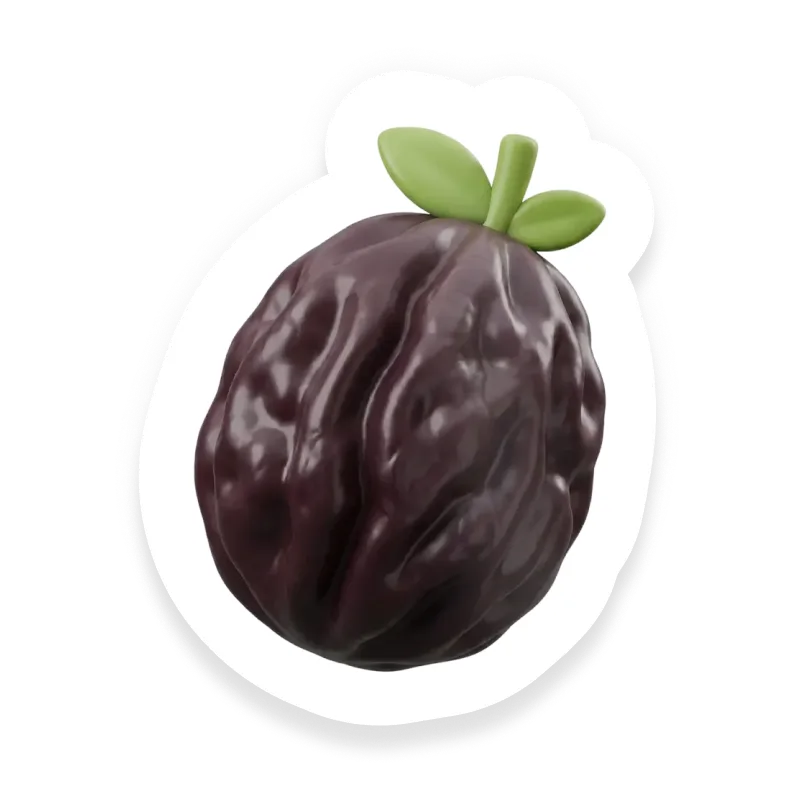
Prune
Fruit
Is Prune Safe for Babies?
Yes, pitted prunes can be introduced around 6 months once your baby is ready for solids, offering a nutritious dried fruit option.
Yes, but there are some things to know
At a Glance
Prunes help with constipation and make bowel movements more regular because they are rich in fiber and a natural sugar called sorbitol. Their high in fiber and natural sorbitol sugar draw water into the intestines to soften stool and speed its passage.
How Do You Serve Prune?
- 1Remove pits and soak dried prunes in hot water for 10–15 minutes until very soft.
- 2Drain and finely chop, mash, or puree to a smooth consistency; add a little soaking water if needed to thin.
- 3Mix a small spoonful into foods like porridge or yogurt to introduce it, and observe tolerance before increasing.
- 4Increase slowly over several days; prunes contain sorbitol, which can loosen stools or cause gas—reduce or pause if this happens.
Is Prune a Common Allergen?
Prunes (dried plums) are not a common food allergen for most children, though those with plum/stone-fruit allergies or oral allergy syndrome can react. Dried prunes may contain sulfite preservatives that can trigger asthma or sulfite sensitivity in susceptible individuals—check product labels. For infants and toddlers, whole or sticky prunes are a choking hazard, so offer pureed or finely chopped forms; also note prunes are high in fiber and sorbitol and can have a laxative effect if given in excess. If you suspect an allergic or sulfite reaction, contact your pediatrician or an allergist.
What Nutrients Does Prune Have?
Prunes are a concentrated source of carbohydrates and soluble fiber (plus sorbitol), which can help soften stools and relieve constipation. They also provide baby-relevant micronutrients—iron (supports red blood cell production), potassium (electrolyte balance), calcium (bone health), and vitamins B6 and K—making them a nutrient-dense snack in small amounts. Because dried prunes are higher in natural sugars and fiber, offer small portions to avoid gas, loose stools, or extra calories.
Is Prune a Choking Hazard?
Low Choking Risk
Prunes can be firm and sticky, making them a choking hazard for babies and younger toddlers who haven’t developed strong chewing skills. Always supervise closely—stay within arm’s reach during meals and be prepared to respond if your child gags or chokes. If you’re unsure about your child’s chewing ability, wait to offer whole pieces until they reliably chew and manage textured foods.
Have More Questions?
Yes. Prunes can be stored in an airtight container at room temperature for up to a week or frozen for longer storage, making it easy to prepare fresh portions as needed.
Yes. You can freeze prune purees in small, airtight containers or silicone molds for up to 3 months, allowing for convenient and quick preparation of baby food.
Yes. Organic prunes are grown without synthetic pesticides or fertilizers, but conventional prunes are also a healthy choice if thoroughly washed, as most pesticides are removed during processing.
It depends. Combining prunes with other fruits like apples or pears can introduce your baby to new flavors and textures, but always ensure the combined texture is suitable for your baby's stage of eating.
Typically, a portion size of about 1 to 2 tablespoons of prune puree is appropriate for a 6-12 month old, but always follow your pediatrician's guidance based on your baby's needs.
Is Prune safe for your baby?
Get personalized guidance on introducing Prune — with prep tips, allergen alerts, and age-specific serving ideas.
Sources
- Oral Allergy Syndrome (OAS) or Fruit Pollen Syndrome (PFS) - American Academy of Allergy, Asthma, and Immunology aaaai.org
- Food Allergy - Mayo Clinic mayoclinic.org
- Allergenic cross-reactivity among peach, apricot, plum, and cherry in patients with oral allergy syndrome (Pastorello et al., 1994) doi.org
- The effect of prunes on stool output, gut transit time and gastrointestinal microbiota (Lever et al., 2019) doi.org
What Other Fruit Can Babies Eat?
See all →


Backed by Science
Data you can trust.
Every food, guideline, and recommendation in Tummi is sourced from leading health institutions and peer-reviewed research.
 Centers for Disease Control and Prevention
Developmental milestones, nutrition guidelines, and allergen introduction timelines.
 American Academy of Pediatrics
Evidence-based feeding recommendations from the leading pediatric authority.
 National Institutes of Health
Peer-reviewed research on infant nutrition, allergies, and food safety.