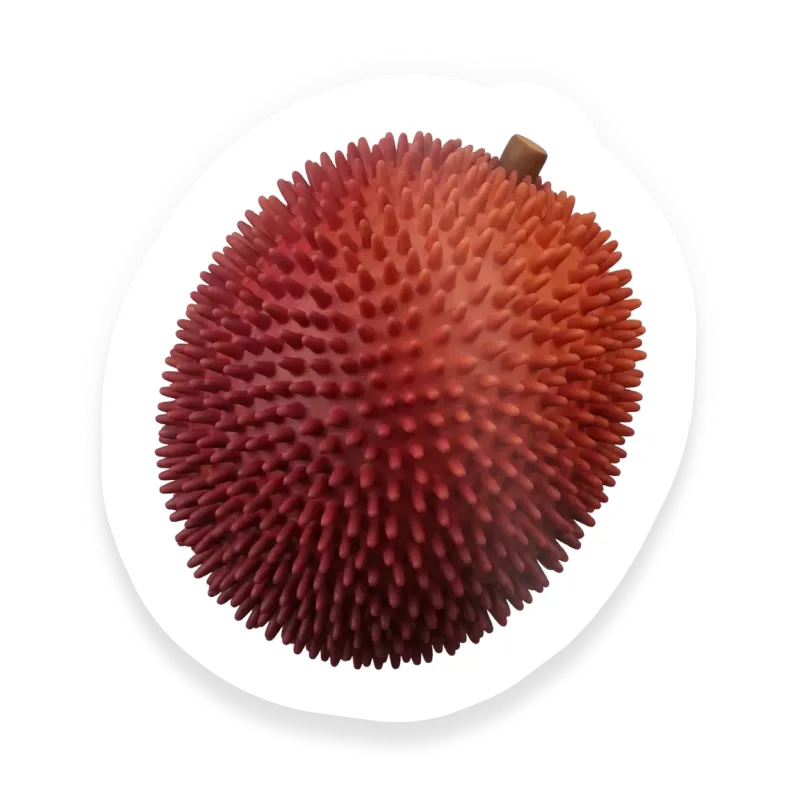
Pulasan
Fruit
Is Pulasan Safe for Babies?
Yes, babies can eat pulasan around 6 months when they are ready for solids, ensuring the flesh is peeled and served in small, manageable pieces to avoid choking.
Yes, but there are some things to know
At a Glance
Pulasan is very juicy and has high water content, and it contains dietary fiber that helps keep stools soft and regular. It also provides vitamin C and antioxidants that support healthy bacteria and the gut lining.
How Do You Serve Pulasan?
- 1Remove the pulasan shell and discard the seed; only use the soft flesh.
- 2Finely chop the flesh into very small pieces (pea-size or smaller) so they mash easily in the mouth.
- 3Mix the chopped pulasan into a soft, scoopable base like congee, mashed plantain, or plain yogurt until smooth; keep pieces very soft so they are easy to swallow.
- 4Feed from within arm’s reach, offering small spoonfuls and checking the temperature before serving.
- 5When introducing this fruit for the first time, offer it alone and watch for any reaction for 2–3 days.
Is Pulasan a Common Allergen?
Pulasan is a tropical fruit related to rambutan and lychee and is not a common food allergen. However, people with pollen‑related oral allergy syndrome or known sensitivity to lychee/rambutan may experience mild mouth or throat itching, and rare severe reactions have been reported for related fruits. Do not eat the seeds (they are bitter and potentially harmful), introduce pulasan cautiously to children with known fruit allergies, and stop feeding and seek care if any allergic signs appear.
What Nutrients Does Pulasan Have?
Pulasan is a vitamin C–rich fruit that also supplies potassium, some calcium, antioxidants, carbohydrates for quick energy, and modest fiber—nutrients that support iron absorption, bone and heart health, and gut development in infants. It is not a significant source of iron or protein, so pair pulasan with iron-rich foods and offer small, age-appropriate portions to avoid excess natural sugars; very large servings may cause loose stools. Always remove the seed/shell and prepare age-appropriate textures so babies get the benefits safely.
Is Pulasan a Choking Hazard?
High Choking Risk
Pulasan poses a notable choking risk: its flesh is chewy, firm, and slippery, and the inner seed is hard and rounded. These textures make pieces easy to slip into a baby’s airway, so closely supervise any introduction and stay within arm’s reach during meals. Have basic choking-response knowledge and be ready to act if your child gags or has trouble breathing.
Have More Questions?
Yes. Pulasan can be stored in the refrigerator for up to 2-3 days once ripe. For longer storage, it can be frozen in airtight containers, but fresh is best for flavor and texture.
Yes. To freeze pureed pulasan for your baby, place it in small, airtight containers or ice cube trays. Freeze until solid, then transfer to a freezer bag for up to 3 months.
It depends. Choosing organic pulasan reduces exposure to pesticides, but conventional pulasan is also safe once properly washed. Select high-quality, fresh fruit for your baby.
Yes. You can combine pulasan with other baby-friendly fruits like mango or banana to introduce new flavors gradually, ensuring the textures are appropriate for your baby's developmental stage.
It depends. Appropriate portion sizes vary by age and appetite, but generally 1-2 tablespoons of mashed pulasan per serving are suitable for babies around 6-8 months old, gradually increasing as they mature.
Is Pulasan safe for your baby?
Get personalized guidance on introducing Pulasan — with prep tips, allergen alerts, and age-specific serving ideas.
Sources
- Malaysian Food Composition Database — Pulasan (MyFCD) myfcd.moh.gov.my
- Hairunisa et al. (2021). Antioxidant Activities in Different Parts of Pulasan. IOP Conf. Ser.: Earth Environ. Sci. 736 012018 iopscience.iop.org
- Raap U., Schaefer T., Kapp A., Wedi B. (2007). Exotic food allergy: anaphylactic reaction to lychee. pubmed.ncbi.nlm.nih.gov
- Kelso J.M., Jones R.T., Yunginger J.W. (1998). Anaphylaxis after initial ingestion of rambutan. pubmed.ncbi.nlm.nih.gov
- Jirapongsananuruk O., et al. (2011). Glyceraldehyde-3-phosphate dehydrogenase as a major allergen in rambutan-induced anaphylaxis. pubmed.ncbi.nlm.nih.gov
- Rank M.A., Li J.T. (2007). A case of food allergy due to longan fruit. pubmed.ncbi.nlm.nih.gov
- Valsecchi R., Leghissa P. (2012). Contact allergy due to lychee. pubmed.ncbi.nlm.nih.gov
What Other Fruit Can Babies Eat?
See all →



Backed by Science
Data you can trust.
Every food, guideline, and recommendation in Tummi is sourced from leading health institutions and peer-reviewed research.
 Centers for Disease Control and Prevention
Developmental milestones, nutrition guidelines, and allergen introduction timelines.
 American Academy of Pediatrics
Evidence-based feeding recommendations from the leading pediatric authority.
 National Institutes of Health
Peer-reviewed research on infant nutrition, allergies, and food safety.