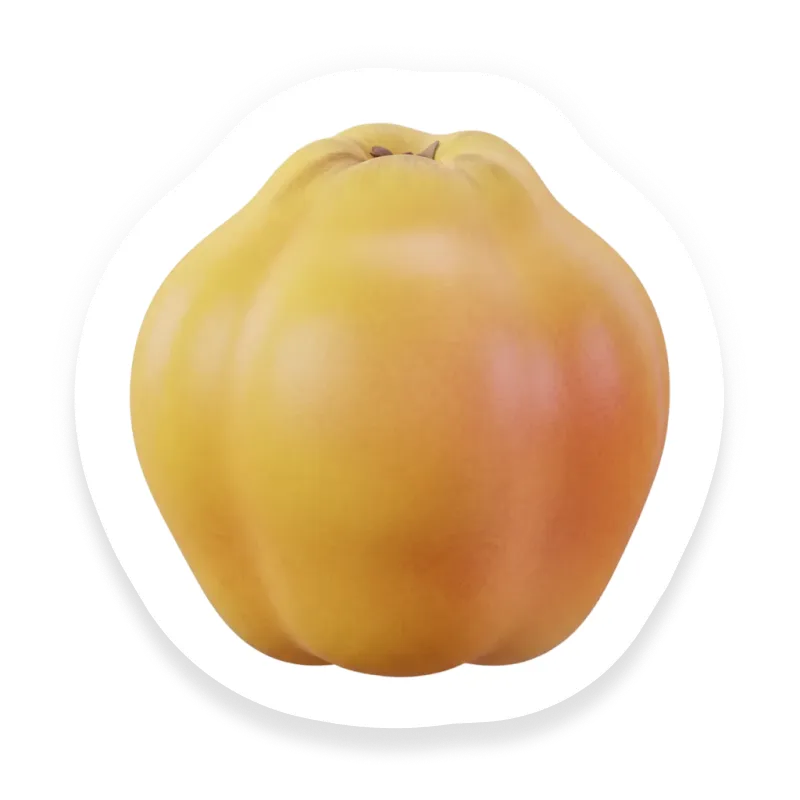
Quince
Fruit
Is Quince Safe for Babies?
Yes, cooked quince can be introduced around 6 months, after removing seeds and softening the fruit for easy baby handling.
Yes, but there are some things to know
At a Glance
Quince is high in fiber, which helps soften stools and keeps bowel movements regular. It is also rich in pectin, a soluble fiber that absorbs water and helps form softer, easier-to-pass stools.
How Do You Serve Quince?
- 1Peel if the skin seems tough, remove all seeds and the core, and cut into large halves or wedges for cooking.
- 2Cook by simmering, baking, or steaming until the flesh is very soft (about 15–30 minutes depending on size).
- 3Offer large, well-cooked halves or slices for your child to hold and gum; if they struggle with pieces, mash or puree the cooked quince and stir into porridge or yogurt.
- 4Avoid quince jams or jellies because of added sugar — serve plain cooked fruit only.
Is Quince a Common Allergen?
Quince is not a common food allergen for most children, but raw quince can trigger oral allergy syndrome (itchy mouth/throat) in people with birch‑pollen sensitivity. The seeds contain cyanogenic compounds and aren’t meant to be eaten whole. Processed quince products (pastes/compotes) may contain added sulfites or additives—always check labels if your child is sulfite‑sensitive. If your child has pollen allergies or a history of sulfite reactions, consult your pediatrician before offering quince.
What Nutrients Does Quince Have?
Quince is a fiber- and water-rich fruit that’s particularly notable for vitamin B6 and zinc, and also provides small amounts of iron, potassium, carotenoids, and polyphenols (antioxidants). For babies, cooked, deseeded quince can support digestion and softer stools (pectin), and contribute to growth, brain development, and antioxidant protection. Remove all seeds (they contain cyanogenic compounds), avoid sweetened quince products until closer to age 2, and offer moderate portions—very large amounts of high-fiber quince may loosen stools.
Is Quince a Choking Hazard?
Moderate Choking Risk
Quince can be a choking hazard when raw because most varieties are very firm — remove the seeds and cook the fruit until it’s very soft to reduce risk. The skin can be tough and difficult to chew, so peel it if your baby struggles with pieces. Always stay within arm’s reach during meals and create a safe eating environment so you can quickly intervene if needed.
Have More Questions?
Yes, cooked quince can be introduced to babies around 6 months old. Ensure the fruit is cooked until soft and seed-free before serving.
Yes, quince is non-allergenic for most babies, though individual sensitivities can occur. Always offer a small amount first and monitor for any reactions.
It depends on the preparation. Fresh raw quince is very firm and not suitable for babies; it must be cooked until soft to ensure safety and digestibility.
Yes, for babies, it's best to start with small portions of pureed cooked quince. As they grow, you can graduallyincrease the texture.
Yes, quince can be stored in the refrigerator for up to 48 hours once prepared and should be refrigerated promptly to ensure safety.
Is Quince safe for your baby?
Get personalized guidance on introducing Quince — with prep tips, allergen alerts, and age-specific serving ideas.
Sources
- Fattouch S et al. (2007). Antimicrobial activity of Tunisian quince (Cydonia oblonga Miller) pulp and peel polyphenolic extracts. J Agric Food Chem. doi.org
- Noubarani M et al. (2020). Protective Effects of Cydonia oblonga Mill. Fruit on Carbon Tetrachloride-induced Hepatotoxicity. Iran J Pharm Res. doi.org
- Panche AN et al. (2016). Flavonoids: an overview. Journal of Nutritional Science. doi.org
- Antolín-Amérigo D et al. (2015). Allergy to quince. Allergologia et immunopathologia. doi.org
- Rodríguez J et al. (2000). Clinical cross-reactivity among foods of the Rosaceae family. J Allergy Clin Immunol. doi.org
- Muluk NB & Cingi C. (2018). Oral allergy syndrome. American Journal of Rhinology & Allergy. doi.org
- Thomas M et al. (2000). Dietary fibre and cell-wall polysaccharides in the fruits of Japanese quince. LWT - Food Science and Technology. doi.org
What Other Fruit Can Babies Eat?
See all →



Backed by Science
Data you can trust.
Every food, guideline, and recommendation in Tummi is sourced from leading health institutions and peer-reviewed research.
 Centers for Disease Control and Prevention
Developmental milestones, nutrition guidelines, and allergen introduction timelines.
 American Academy of Pediatrics
Evidence-based feeding recommendations from the leading pediatric authority.
 National Institutes of Health
Peer-reviewed research on infant nutrition, allergies, and food safety.