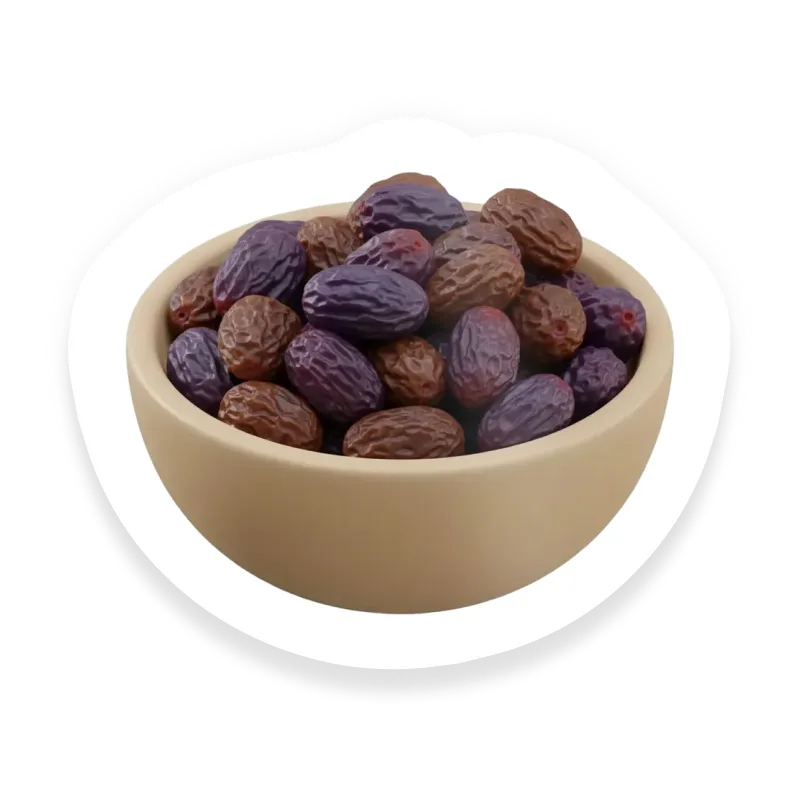
Raisins
Fruit
Is Raisins Safe for Babies?
Yes, babies can eat raisins starting around 6 months old when they are able to handle solids, preferably soaked or finely chopped to prevent choking.
Yes, but there are some things to know
At a Glance
Raisins are high in fiber, which adds bulk to stool and helps food move through the gut. They also contain natural sorbitol, a sugar alcohol that draws water into the bowel to soften stools and support regular movements.
How Do You Serve Raisins?
- 1Rehydrate raisins by pouring very hot (just off-boil) water over them and soak about 15 minutes until very soft, then drain and reserve a little soaking liquid to thin if needed.
- 2Puree, finely chop, or thoroughly mash into a smooth or nearly-smooth consistency before offering. Reduces choking risk.
- 3Mix a small amount into oatmeal or yogurt, or offer a tiny spoonful on its own to introduce flavor and observe tolerance; begin with a very small portion because concentrated sugars and fiber can cause gas.
- 4Always check temperature before serving, supervise closely during meals, and refrigerate any leftovers and use within 24 hours.
Is Raisins a Common Allergen?
Raisins are not among the common major food allergens, but some commercial raisins may contain sulfite preservatives—check ingredient labels if your child has a sulfite sensitivity. Whole raisins and other dried fruits can pose a choking risk for babies and young toddlers (avoid for infants under 1 year; prepare age‑appropriately and supervise children under 4—consider chopping or softening). Also watch for possible cross-contact with nuts or other allergens during processing and read packaging for allergy statements.
What Nutrients Does Raisins Have?
Raisins are calorie-dense and rich in concentrated natural sugars and carbohydrates, plus fiber, iron, potassium, calcium and vitamin B6—nutrients that support energy, digestion, healthy red blood cells, electrolyte balance and bone development. Their fiber can help with constipation (poop-friendly) while iron and B6 support hemoglobin and metabolism; small amounts mixed into oatmeal or yogurt can boost nutrient intake. Because raisins are concentrated sugars and can cause gas, tooth decay, and choking if served whole, offer age-appropriate rehydrated or finely chopped servings and avoid overfeeding.
Is Raisins a Choking Hazard?
High Choking Risk
Raisins are a notable choking hazard: dried fruit can be firm and sticky, making pieces hard to chew and easy to block a baby’s airway. Stay within arm’s reach while baby eats, supervise closely, and be ready to act with age-appropriate rescue maneuvers if gagging or airway obstruction occurs.
Have More Questions?
Yes. Raisins can be stored in an airtight container at room temperature or in the fridge to extend their freshness, making them convenient for baby snack time or to add to meals.
Yes. To freeze raisins, place them in a sealable freezer bag or container. Frozen raisins make a cool, tasty snack and help preserve their quality for several months.
Yes. When choosing raisins for babies, opt for organic varieties if possible to avoid potential pesticide residues, but conventionally grown raisins are safe when thoroughly washed.
Yes. Raisins can be combined with other soft fruits or cereals to create a nutritious, varied meal or snack that exposes your baby to different flavors and textures.
Yes. Portion sizes for raisins should be small—about a teaspoon or less—especially for younger babies—to prevent taking in too much natural sugar at once.
Is Raisins safe for your baby?
Get personalized guidance on introducing Raisins — with prep tips, allergen alerts, and age-specific serving ideas.
Sources
- Starting Solid Foods - HealthyChildren.org healthychildren.org
- Preparing food safely for babies - NHS nhs.uk
- Choking Hazards | Infant and Toddler Nutrition - CDC cdc.gov
- USDA FoodData Central - Food Search fdc.nal.usda.gov
What Other Fruit Can Babies Eat?
See all →




Backed by Science
Data you can trust.
Every food, guideline, and recommendation in Tummi is sourced from leading health institutions and peer-reviewed research.
 Centers for Disease Control and Prevention
Developmental milestones, nutrition guidelines, and allergen introduction timelines.
 American Academy of Pediatrics
Evidence-based feeding recommendations from the leading pediatric authority.
 National Institutes of Health
Peer-reviewed research on infant nutrition, allergies, and food safety.